Showing posts with label Alaska. Show all posts
Showing posts with label Alaska. Show all posts
Friday, May 16, 2014
Video: Surviving the Iditarod Trail Invitational (Part 4)
Our friends at EpicTV have brought us the next installment of the Sport & Survival series, in which host Patrick Sweeney is attempting to complete the incredibly difficult Iditarod Trail Invitational, an endurance event that follows the same route as the famous Iditarod sled dog race. This time out, our intrepid host races the most dangerous section of the trail, which includes a wild climb and descent of the treacherous Rainy Pass at night. Good stuff as always, and a great look at this amazing event.

Tuesday, May 6, 2014
Video: Surviving the Iditarod Trail Invitational (Part 3)
The third episode of the new web series entitled Sport & Survival is now online. The show has ben chronicling host Patrick Sweeney as he trains for, and sets out on the Iditarod Trail Invitational, a 1000-mile long endurance event that takes place in Alaska each winter. In the video below, we see Patrick start to realize just what he's gotten himself into, as the extreme cold and fierce winds start to take their toll.
Wednesday, April 30, 2014
Video: Surviving The Iditarod Trail Invitational (Part 2)
A few weeks back, I posted the first in a new series of videos from EpicTV entitled Sport & Survival. The host of that series, Patrick Sweeney, specializes in showing us how to properly train to take on challenging endurance activities. In this case, he was showing us how to prepare for the Iditarod Trail Invitational, a grueling 1000-mile long ultra-event that takes place on the Iditarod Sled Dog Trail in the winter.
Below is the second part of what will ultimately be a five part series. In this episode, Patrick wraps up his final prep work, and begins the race in earnest. But just one day in, he finds out why this is one of the toughest events in the world.
Below is the second part of what will ultimately be a five part series. In this episode, Patrick wraps up his final prep work, and begins the race in earnest. But just one day in, he finds out why this is one of the toughest events in the world.
Wednesday, April 23, 2014
Video: Scenes From Alaska
This is another great video that will more than likely inspire you to want to visit the featured destination. In this case, that's Alaska, which remains one of the last truly great wildernesses on our planet. The scenery is breathtaking and the images captured here are spectacular. If you didn't want to go before, you'll probably want to now.
Alaska from Ryan Lightbourn on Vimeo.
Friday, April 18, 2014
Video: Alaska In Full Technicolor
We'll round out the week with this beautiful video, which is a timelapse taken in Alaska, and capturing the night sky in all of its glory. Simple, beautiful, and breathtaking.
Technicolour Alaska from Alexis Coram on Vimeo.
Thursday, April 17, 2014
Video: Training For One Of The Hardest Races In The World - The Iditarod Trail Invitational
The Iditarod Trail Invitational is quite possibly the hardest race in the world. It features athletes who run, ski, and mountain bike along the same 1000-mile (1600 km) long trail that the famous sled dog race follows on its way from Anchorage to Nome. The IDI takes place in the dead of winter as well, which adds just another challenge to this tough ultra-endurance event. Many try to complete it each year, few succeed.
Just how do you train for such an event? Check out the video below, which comes our way via EpicTV, and marks the start of a new series entitled Sport & Survival.
Just how do you train for such an event? Check out the video below, which comes our way via EpicTV, and marks the start of a new series entitled Sport & Survival.
Wednesday, April 9, 2014
Video: The World Beyond The World
This three-and-a-half-minute video is as beautiful and mesmerizing as anything that I've seen recently. It features narration based on the words of Robert Marshall's "Alaska Wilderness: Exploring the Brooks Range" from 1939, with unbelievable photos taken from an expedition into that region from 2013. It is a very creative and wonderful clip that will inspire you to get out and explore. I hope you enjoy it as much as I did.
The World Beyond the World from Paxson Woelber on Vimeo.
Thursday, March 27, 2014
Video: Bigger Than Life Ice Caves
This video puts GoPro cameras and flying drones to good use exploring ice caves in Alaska. The imagery they capture is incredibly mesmerizing and very beautiful to watch. This is a great example of how technology is changing the face of exploration in the 21st century, giving us the ability to visit and capture places like never before. Incredible stuff to say the least.
Bigger Than Life - Ice Caves from Firefight Films on Vimeo.
Friday, March 21, 2014
Video: GoPro Captures Grizzly Bear Romp
This video shows the clever use of GoPro cameras. Filmmaker Brad Josephs set up a couple of the cameras along a river in Alaska, where he captured a family of grizzly bears playing in the water. The animals romped in the water, chased birds, caught fish, and even eventually became aware of the camera itself. This is great footage and definitely fun to watch.
Thursday, March 13, 2014
Rider Sets New Speed Record For Iditarod Trail Invitational
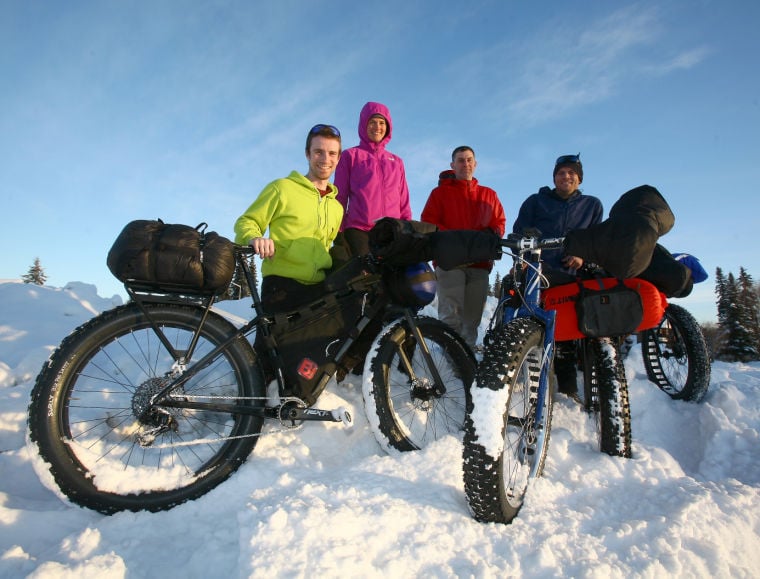
Mountain biker Jeff Oatley had planned on taking three weeks off from work to ride in the Invitational. He was even prepared to ask for additional time off if he needed it, just so he could complete the entire course. Instead, he managed to ride the entire trail in just 10 days, 2 hours, and 53 minutes, besting the old record by nearly 5 days.
If you followed the Iditarod Trail Sled Dog race, you probably know that the mushers were lamenting the conditions out on the route. There hasn't been much snow in Alaska this year, and it has been warmer than normal there this winter, which did not make for good conditions for pulling a sled. But those same factors sure made for great mountain biking, as they presented Oatley with the best conditions that the race has seen in its 14-year history. It also cleared the way for the new record, although shattering it by that much time is still a shock.
No matter how you slice it, covering nearly 1000 miles in 10 days on a mountain bike in the winter, is impressive stuff. Congratulations to Jeff for winning the event and setting the new record. It is going to be tough to beat that one.
Tuesday, March 11, 2014
Iditarod 2014: Dallas Seavey Wins In Wild Finish!

Seavey's win seemed highly improbable heading into the final stages of the race. He was more than three hours behind Zirkle and four-time champ Jeff King out of the checkpoint at Elim. But high winds forced King to scratch on the way into Safety, the final CP before the finish in Nome. It was during that stage that Zirkle actually took the lead and seemed poised to finally claim victory. But Seavey blasted through Safety while she rested her team, and continued on to victory in Nome. He managed to hold off Zirkle's late charge with just seven dogs remaining on his team, while Aliy pursued him with ten.
The second place finish only adds to Zirkle's frustration with coming up just short in the race. Not only did she lose to Dallas in 2012, she finished second to his father Mitch last year as well. No matter the outcome though, Aliy has established herself as one of the top mushers in the Iditarod, and it seems like only a matter of time before she breaks through and claims a win of her own.
As of this writing, Dallas and Aliy are the only two mushers into Nome. Currently in third place is Mitch Seavey, who is out of Safety and on his way to the finish line himself. He holds a comfortable lead over Joar Leifseth Ulsom and Sonny Lindner, who are running in fourth and fifth place
respectively.
The race won't end just because a winner is crowned. There are still 49 other mushers out on the course, and most will still try to make it to Nome if they can. Finishing this 1000-mile long race is an accomplishment in and of itself, and the racers take great pride in doing just that. Most will trickle across the finish line over the next day or two, but for some there are still hundreds of miles to go. In the true spirit of Alaska, the won't give up until they've completed the trail.
Congratulations to Dallas Seavey on the big win and claiming his second Iditarod championship. This young man will probably be winning a few more titles before his career is done.
Monday, March 10, 2014
Video: Action Cam Footage From The Iditarod
While we're on the subject of the Iditarod, have you ever wondered what it feels like to be a musher in the "Last Great Race?" If so, this video is definitely for you. It was shot on an action cam worn by Jeff King in one of the early stages of event near Rainy Pass. Considering the fact that King is a four-time Iditarod champ, and a threat to win again this year, you can pick up some interesting tidbits from one of the best mushers to ever compete in the race. It is also just very cool to see the dogs run down the trail, which they are doing now on the final push to Nome.
Iditarod 2014: Jeff King Leads Out Of Elim, Zirkle In Pursuit

As of this writing, four-time Iditarod champ Jeff King leads the race by 8 minutes over Aliy Zirkle. Both mushers have left the CP in Elim and are now making their way towards White Mountain, which falls at the 898 mile (1445 km) mark. After that, the only the checkpoint in Safety remains between them and the finish line in Nome.
The only other musher out of Elim at the moment is Dallas Seavey, the 2012 champ. He put in a strong showing over the weekend to move into third place, about 2 hours behind King and Zirkle. Martin Buser and defending champ Mitch Savey are currently in fourth and fifth place respectively. Both men are into Elim, but haven't checked out from that point at this time. The only other racer to reach that point is Sonny Lidner, who is currently running in sixth place.
All of the remaining mushers in this year's race have now completed their mandatory 24-hour and 8-hour rests. That leaves them free and clear to run the rest of the way to Nome, using whatever strategy works best for them. King is one of the most experienced mushers in the field and consistently finishes in the top ten each year, while Zirkle has been a runner-up the past two races. And don't count Dallas Seavey out just yet. He's running faster than either of the two front runners at the moment, although he has just 8 dogs left on his team, which could come back to haunt him on the stretch run.
Either way, we should have a new Iditarod champ crowned sometime tomorrow. With more than a hundred miles left to be run, there is still plenty of time for drama to develop. We'll soon see if Zirkle can finally break through and claim victory, or if she'll have to settle for another second place finish behind one of the true legends of the sport.
Friday, March 7, 2014
Iditarod 2014: Zirkle Leads, Buser Lurks In Galena

As of this writing, Aliy Zirkle leads the race as the first musher into the Galena checkpoint, which falls at the 545 mile mark. Also into Galena is Martin Buser, who arrived 2 hours and 43 minutes behind Zirkle. But Buser, who is a four-time Iditarod champ, has a big advantage over the leader at the moment. He has already completed both his mandatory 24-hour rest break and 8-hour break as well, which means he is free to run all the way to Nome if possible. Whether or not he can grab the lead, and hold onto it all the way to the finish line remains to be seen. At this point, there is still 430 miles to go, and a lot can happen.
Currently running in third place is Aaron Burmeister, with Robert Sorlie and Nicolas Petit in fourth and fifth respectively. Sorlie and Petit have also completed both of their mandatory rest periods however, so they have a leg up on Burmeister. All three men are out of the Ruby checkpoint and on the trail to Galena.
Former champs Mitch Seavey and Jeff King are both out of Ruby as well. They are running in 7th and 8th place respectively.
It should be an interesting weekend out on the trail. There is still a lot of jockeying for position and strategies have yet to unfold. For instance, Buser's gambit to take his rest periods early may lead to a fresher team at this point of the race, but will they grow more tired on the stretch run for Nome? Will he still have to balance in some longer rest periods to keep a steady pace? Can Zirkle finally break through and win the race? Lots of questions yet to be answered. We'll find the answers early next week!
Thursday, March 6, 2014
Iditarod 2014: Jeff King Takes Control Out Of Cripple
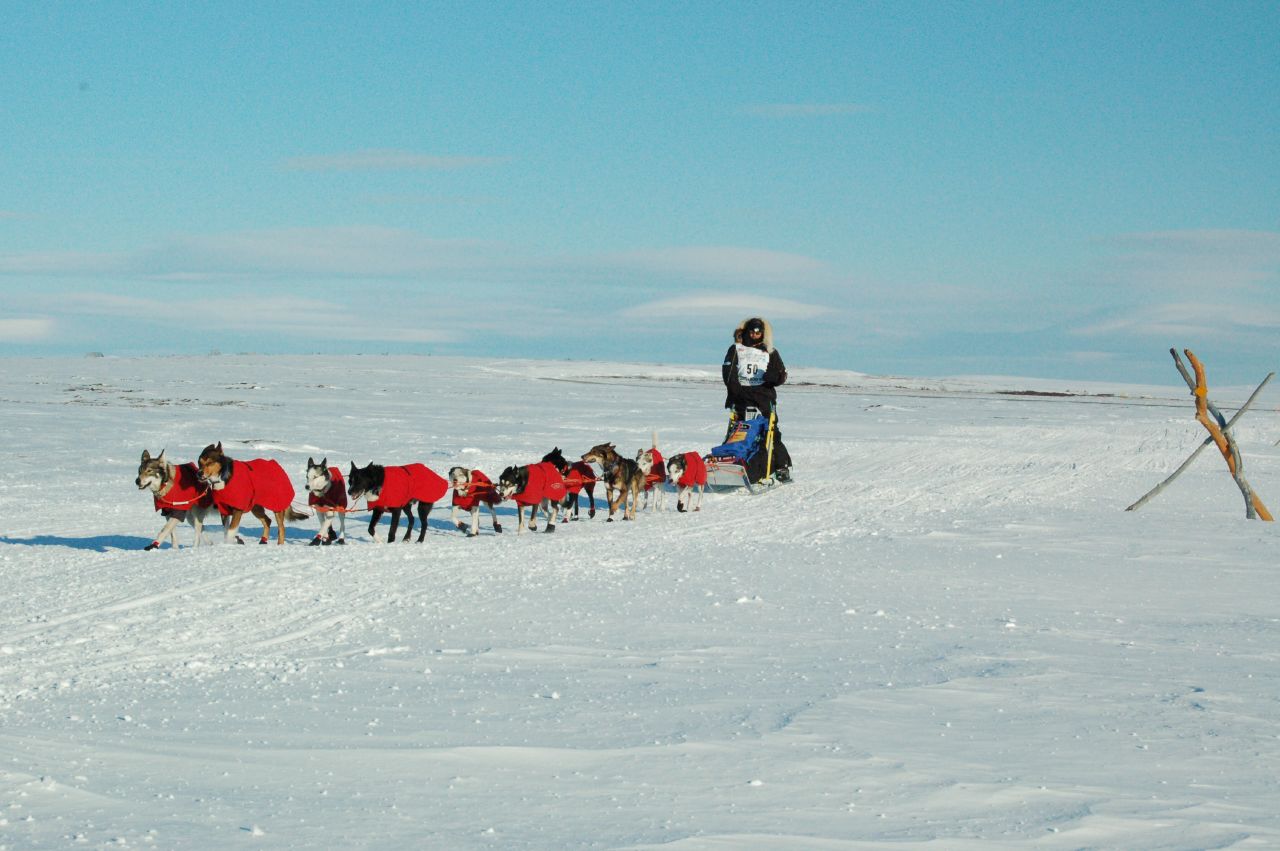
Four-time champ Jeff King has claimed the lead out on the course by being the first musher out of the checkpoint at Cripple. He is be shadowed closely by Iditarod veteran Sonny Lidner, who is the only other musher out of that checkpoint at this time. The two men are now on their way to Ruby, where the first musher to reach the Yukon each year receives a gourmet meal courtesy of the Millennium Hotel. Reports indicate that not only would King like to earn that meal, but he intends to take his mandatory 24-hour layover in Ruby as well.
Currently running in third place is Aaron Burmeister, who was actually the first into Cripple, which won him a prize of $3000 in gold nuggets. Burmeister has elected to take his 24-hour rest there, which allowed King and Lidner to slip past him. John Baker and Paul Gebhardt are currently in fourth and fifth place respectively, with both men into Cripple as well.
The rest of the leader board is stacked with potential winners just lurking off the pace. More importantly, everyone in 6th place (Martin Buser) or lower has already taken their 24-hour rest, which will give them an opportunity to close the gap when the frontrunners stop. That group includes the likes of Hugh Neff, Aliy Zirkle, and Dallas and Mitch Seavey. Anyone of whom could emerge in a great position over the next day or two.
The Ruby checkpoint marks the 495 mile mark, leaving 480 miles to go until the sled dog teams reach Nome. There is still a lot of racing to be done, and all of the racers will need to take a mandatory 8 hour rest stop in there as well. That means there should be a lot of jockeying for position over the next few days, as the racers turn towards the final stretch. It should be interesting to see who emerges as the leader heading out of White Mountain and Safety, on the stretch run across the frozen Bering Sea.
One musher who has had quite an ordeal in this year's race is Scott Janssen. He was forced to withdraw after suffering an injury on his his way to Nikolai after passing through the checkpoint in Rohn. After crashing his sled, Janssen was knocked unconscious. But determined to press on, he got his sled dog team moving again, only to later break an ankle after falling through the ice on Tin Creek. Janssen had to be airlifted from the course after that, and is now home resting comfortably. His story is an indication of how treacherous the Iditarod can be at times.
It will be several days yet before the winner is crowned in Nome. There are many miles to go and if the Iditarod has taught us anything over the years, it is to expect the unexpected. I'm sure there will be several more lead changes before this race is decided. Who will ultimately win the race has yet to be seen, but it should be fun to follow along as everything unfolds over the next few days.
Tuesday, March 4, 2014
Iditarod 2014: Buser Leads Into Nikolai
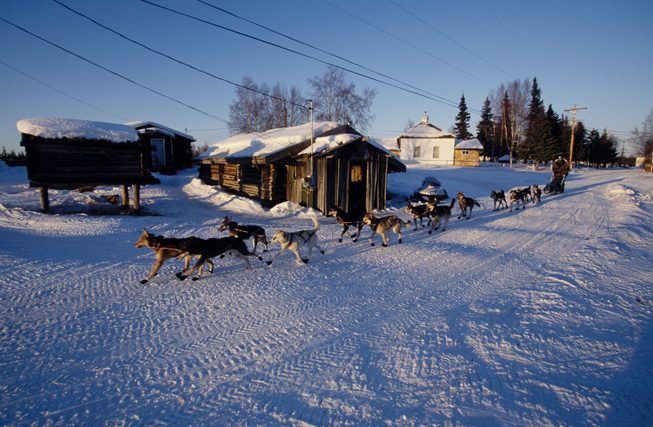
After the ceremonial start in Anchorage on Saturday, the race officially restarted in Willow on Sunday. Since then the top racers have been burning up the trail, and now – just two days later – they are approaching the Nikolai checkpoint, which is 263 miles (423 km) into the competition.
As of this writing, the only musher to reach that point is 4-time champ Martin Buser, who clocked into Nikolai shortly after 1:00 AM local time this morning. In pursuit are Aliy Zirkle in second place and Sonny Lidner currently running in third. Nicolas Petit and Hugh Neff round out the top five, all of which are out of Rohn and chasing Buser.
Buser has taken the strategy of pushing his team early on in the hopes of building a big enough lead to help carry him through to late in the race. This has caused his challengers to up their game as well, as they try to keep pace. Buser attempted something similar last season, but came up short in the end, losing out to Mitch Seavey in Nome. The 2013 champ is currently running 9th place, while his son Dallas – also a former champ – is in 7th. Iditarod legend Jeff King is lurking on the leaderboard as always too. He is in 6th place out of Rohn.
There is still plenty of racing to go in the Idtarod, so it is too early to say just who will be the front runner as the teams turn towards Nome. But there are a lot of very experienced mushers at the top right of the leader board right now, and it shaping up to be an exciting race. For his part, Buser says he has one of his best dog teams ever, which is saying something. Will they be enough to get him to Nome in front of the competition? The next few days will tell.
Wednesday, February 26, 2014
2014 Iditarod Begins Saturday!

On Saturday, the ceremonial start will take place in downtown Anchorage, with 69 mushers setting out across the first stage, which is an 11-mile long run to Campbell Airstrip. From there, the racers will load up their sleds and teams of sled dogs, and travel overland to the town of Willow, where the race will officially restart on Sunday. After that, it is non-stop race all the way to Nome, with the exception of two mandatory 8-hour rests and a 24-hour layover. This year, the Iditarod will be taking the Northern Route, which will take the teams through the villages of Cripple, Ruby, and Galena, amongst others. That route is only taken in even numbered years in order to keep the trail in good condition and share the media attention amongst some of the more remote villages.
The field is once again filled with talented mushers this year, including past champions Mitch and Dallas Seavey, Jeff King, and Martin Buser. Fan favorites DeeDee Jonrow and Aliy Zirkle will be competing as well, although Lance Mackey is out of race as he deals with health issues. It'll be interesting to see who jumps out in front, but judging from recent history, several of these mushers will be battling it out down the stretch. Zirkle has been in the running the past couple of years, and she may well claim the crown for the ladies once again.
Stay tuned for regular updates from the trail once the race officially gets rolling.
Wednesday, January 22, 2014
Video: Crisp - A Film About Mountain Biking The Iditarod Trail
Yesterday I posted a video from the 2001 Iditasport adventure race along the Iditarod sled dog trail. In the years since that video was made, the event has morphed into the Iditarod Trail International, which is amongst the most grueling endurance events in the world. Last year, European mountain bikers Ausilia Vistarini and Sebastiano Favaro took on the 1800 km (1100 mile) trail in the dead of winter. It tested their resolve and pushed them to their limits as they rode their bikes through one of the harshest winter environments on the planet. The creative team and Explore MediaLab made a documenter about that experience and the trailer for the film can be found below. It looks amazing.
Thanks to Filippo Salvioni for sharing this with me!
Crisp - Official Trailer from Explore MediaLab on Vimeo.
Thanks to Filippo Salvioni for sharing this with me!
Tuesday, January 21, 2014
Video: A Thin White Line - A Documentary of the Iditasport Adventure Race
In terms of impressive feats of human endurance, the Iditasport trail race has always been intriguing one. It pits athletes against one another as they travel on bike, skis and foot to follow the entire 1000-mile route of the Iditarod sled dog race. It is a grueling and demanding race, which you'll discover for yourself in this hour-long documentary on the 2001 edition of the race. This is one you'll want to grab a snack and get comfortable for. It is definitely well worth watching!
A Thin White Line from Brüdder on Vimeo.
Friday, January 17, 2014
Brooks Range Traverse Cancelled

Early on, John and Evan admitted that the conditions were more challenging than they had expected. Posting to their Facebook page, the hinted that the extremely cold temperatures and high winds were making progress incredibly difficult. But as the week progressed, they seemed to hit their stride to a degree and gained confidence in their ability to make progress across the arctic landscape they were passing through. Weather conditions improved a bit as well, with the winds dying down to a degree.
But last night, they posted a new update that indicated that Cantor had contracted frostbite in one of his fingers early on and it has continued to worsen over the days. If he were to stay out on the trail, there is the real possibility that he could lose the finger altogether, and put both himself and Evan at greater risk. On top of that, the chance of a rescue operation being safely conducted in their remote location became a factor too. So, with that in mind, they decided the wisest option was to pull the plug and head home.
This is a good reminder that not all expeditions are successful. The world is still filled with wild and difficult places, and the Brooks Range is one of them. The conditions there are trying at the best of times, and during the winter they are all but inhospitable. I'm sure John and Evan are disappointed in having to go home, but it sounds like it was the right decision.
Subscribe to:
Posts (Atom)