Showing posts with label Technology. Show all posts

Thursday, May 8, 2014

Gear Closet: FlipBelt and Kenu Highline iPhone Safety Leash

As you can probably imagine, I see a great deal of unique and interesting pieces of gear come across my desk, some of it good, some of it disappointing. I'm fortunate that a lot of those items are often from high profile companies, who create excellent products for use in our outdoor pursuits. But sometimes you seem interesting items from smaller companies who are making innovative and interesting pieces of gear that fill a niche, but just haven't been seen by a larger audience just yet. I have two such products today, that I think could come in handy for the outdoor athlete, particularly as we move on into the warmer months of the year.

The FlipBelt
We'll start with a product called the FlipBelt, which is one of those items that is so simple in design, you'll wonder why you didn't come up with it first. Boiled down to it's most basic element, the FlipBelt is an elastic tube that fits around the waist of runners, cyclists, and other athletes, providing them with storage for all of the small items they like to carry with them on a workout, which comes in pretty handy considering most of my workout gear has gone fairly minimal in design, and doesn't leave a lot of room for carry extra items.

Made from moisture wicking, breathing materials, the FlipBelt is comfortable to wear, stays securely in place while you run, and actually looks like it belongs on a runner's body. It is available in eight different colors, so you can choose one that best fits your wardrobe, or makes you more visible to traffic. I went with basic black, which fits in nicely with my running gear.

The FlipBelt is actually tubular in design, with a snug fit that is designed to keep all of your small items, such as keys, an ID, cash, a smartphone, etc.,  securely in place. Four strategically placed slits in the fabric grant access to the interior of the tube, so you can place your items inside. One of the pockets even has a key clip, to add an extra sense of security.


While I didn't really see the need to wear the FlipBelt while riding my bikes, after all my cycling jerseys have ample pockets, I did find it was a nice piece of gear to have while running. After wearing the belt for a short time, it actually felt very natural, and I soon forgot I even had it on. Meanwhile, the three-inch cloth tube was easily holding my 5th generation iPod Touch, a set of keys, my drivers license, and a few dollars in cash.

The FlipBelt actually performed exactly as advertised. Not only did it safely carry my small items while running, it didn't add much in the way of bulk, nor did it generate much excess heat. It has been quite warm already where I live, so I've already been running without a shirt. Thankfully, the FlipBelt's ability to breathe and wick moisture, proved to be up to the task as well.

With a price tag of $28.99, the FlipBelt isn't a very expensive accessory for yourself, or the runner in your life. It is comfortable, useful, and versatile, three things that come in handy while out on a long run. This is a handy product that you'll be glad you have in your gear closet for when you really need it.

Kenu Highline iPhone Safety Leash

For most of us, a smartphone is an indispensable piece of gear that we rarely leave home without these days. But sometimes it can be dangerous to try to use our phones while also taking part in our favorite outdoor activities, such as mountain biking, skiing, or trail running. The combination of moving over uneven ground, while operating our sleek, impossibly thin, devices – often with sweaty hands – can be a recipe for disaster. More than a few of us have probably dropped our iPhones under just those circumstances, probably while trying to take a photo of something amazing.
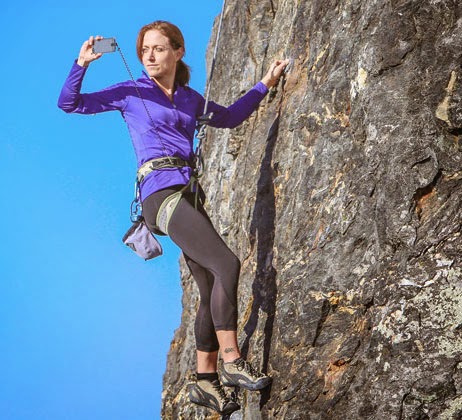
But iPhone accessory company Kenu has come up with a simple, but elegant solution, for protecting our expensive smartphones while still being active in the outdoors. They've created a the Highline Safety Leash to prevent untimely drops that could render our phones severely damaged, or even non-functional. Built specifically with Apple's smartphone in mind, the Highline features a specially designed clip that fits into the Lightning connector port on the iPhone 5 and 5S, or the 30-pin connector port on older iPhones. Once locked into place, the other end of the Highline can than be quickly and easily attached to the zipper on your jacket, a clasp on your backpack, or just about any other secure spot. That way, when you take your phone out to use it, you always have the safety leash to make sure it doesn't fall to its death.

In between the two ends is a tough bungee cord reinforced with kevlar wire and stainless steel clips. This helps to ensure that once the Safety Leash is locked into place, your device isn't going anywhere, thus allowing us to use our devices without worry that they will be dropped, lost, or stolen.

The iPhone Safety Leash is another product that works exactly as advertised. It is easy to set-up, very convenient, and provides a nice piece of mind that your gadget is well protected while traveling. The 30-pin version that I tested is available for just $19.95, while the version that is available for newer iPhones with the lightning connector is $34.95, and includes a thin protective case as well. Both prices are a fair amount for a system that will take the worry out of using your smartphone while on the go, whether that is hiking in the Appalachian Mountains, trail running in Colorado, or simply driving to the local market. You'll feel more secure knowing you have a safety leash on your favorite electronic device.

Monday, April 28, 2014

Video: New Zealand In 4K

Just when you think New Zealand, the adventure capital of the world, couldn't look any better, along comes this timelapse video that was shot in 4K. Obviously you'll need one of those fancy new hi-res monitors (Not to mention the 4K source file) to see it in all of its glory, but the video below will give you a taste of what to expect none the less. As you would expect, it is nothing short of spectacular.

AWAKENING | NEW ZEALAND 4K from Martin Heck | Timestorm Films on Vimeo.

Monday, April 14, 2014

Video: Snowboarding With Handheld Jet Engines

A snowboard + handheld jet engines = pure craziness. It also equals a fairly entertaining video to start the week.

Snowboarding with Jet Engines - Jamie Barrow from Jamie Barrow on Vimeo.

Tuesday, March 25, 2014

Adventure Tech: The World's First 3D Printed Kayak

Sticking with the kayak theme today, we have yet another interesting innovation from the world of technology. If you're a tech nerd (like me!) you probably know there has been a lot of buzz over 3D printing the past couple of years. It is a form of technology that remains in its infancy, but holds huge promise for the future. Now, someone has put that innovation to work, creating the first 3D printed kayak. While it won't win any awards for design, and it probably doesn't perform like the top boats on the market, it sure is an interesting process to see come together. What do you think? Would you paddle something like this?

Friday, March 14, 2014

Adventure Tech: New App Helps You Find Friends To Go On Adventures With!

A new app called Adventure Friend is in the works will reportedly help you not only plan your next big outdoor adventure, but also help you find someone crazy enough to join you for the fun. The app looks to be a new social networks of sorts, that will give you all the tools you need to plan your escape and connect with others, in one simple platform.

Some of the purported features of Adventure Friend are the ability to create detailed travel routes, then sync them directly to Google Maps so others know where you're going. It'll also offer extensive checklists and databases that allow you to plot every aspect of your trip, while also granting you the option to share your adventure on Facebook or Twitter. You can even invite the friends in your social media outlets to connect with you on the app as well.

But that is only the beginning of what this app has to offer. Adventure Friend users can also specify who they would like to travel with, creating a "crew" from those that meet their criteria. That criteria can be very specific, right down to specifying age, gender, skill sets, and so on. Once you find your crew members, you can head out on the expedition you have planned. Of course, you can also search through the adventures that others are planning at try to join their crews too.

The app will give users the ability to chat with one another while the brainstorm and plan their excursions as well, which can come in handy during the organizing phases as well as when you're trying to connect up on the trail.

Apparently Adventure Friend is still in beta and hasn't been released just yet, so I can't tell you much beyond what the PR says. The developers are hoping to have the new software ready soon, but at this point they haven't even announced which platforms it will be available for just yet. My guess is that it'll run on both Android and iOS upon release, with other mobile platforms possibly being added later. You can sign up on the Adventure Friend website for notifications on when it'll actually be available.

Friday, February 21, 2014

Flight Network Travel Stories

As many of you know, I contribute regular travel stories over at the Flight Network Blog. We cover just about everything there from how to pack smarter to using technology to travel more efficiently. And while the blog often has very interesting stories of course, FlightNetwork.com is also a great place to get cheap airfare too. Here's a round-up of some of the stories that have appeared on the blog lately.


Hopefully some of those stories will give you some ideas for your next adventure, whether its to relax on a beach somewhere, or going trekking in the mountains. 

Thursday, February 20, 2014

Adventure Tech: Garmin Fenix 2 GPS Watch

The battle for your wrist is about to get a lot more interesting.

In March, Garmin will be shipping the much anticipated Fenix 2 GPS fitness and adventure watch. This latest entry into what is becoming quite a crowded market, takes all of the great features from the original Fenix and amps them up a notch, giving outdoor enthusiasts everything they could hope for in a training timepiece – and then some.

Like is predecessor, the Fenix 2 is ruggedized for the outdoors, including being waterproof down to 50 meters. As you would expect, it comes with an altimeter, barometer, a 3-axis compass and built in GPS tracking for navigation. That includes 10,000 track points and 1000 way points. It has sun and moon charts built in, a hunting and fishing calendar, dual timezones, and a host of of time keeping options. It also features ANT+ integration to connect with heart rate monitors and other devices as well.

But, the Fenix 2 brings some interesting new features to the table as well. For starters, it has onboard Bluetooth functionality that allows it to be paired with a smartphone for tracking data. A new Ski-Board mode is designed to specifically track movements both horizontally and vertically, while an improved battery will offer up to 50 hours of use in GPS mode, and five weeks while being used as a standard watch. Improved swim and bike modes make it a better option for triathletes as well, while still managing to bring more options to the table for runners too. If that wasn't enough, the Fenix 2 will even serve as a remote control for Garmin's VIRB action camera.


Perhaps most importantly of all, Garmin has made the watch's interface far more intuitive to use. The original Fenix could be a bit confusing at times, but this time the OS has been tweaked to make everything more accessible. This really helps when all you want to do is get moving, rather than standing around waiting to get your watch in the right mode.

When it ships next month, the Fenix 2 will carry a price tag of $399 for the standard model and $449 with a heart rate monitor. Those are the same price points that the original Fenix launched at as well. At the moment, it looks like a very promising new entry into the GPS watch category, and I'm looking forward to hearing more about how well it performs.

This news comes at the height of my frustration with my Suunto Ambit, one of the main competitors to the Fenix. Last week, after charging my Ambit I put it on and set off for a trail run. When I went to start my GPS tracking, the face was completely blank, although touching the buttons emitted a beep as it would when it was functioning normally. After returning from the run, I plugged it into my computer, where it was immediately recognized, but still there was nothing appearing on the screen.

I dropped Suunto a tech support know to inquire as to how I should proceed, and I was informed that I'd have to drain the battery, then let it charge for five hours straight to correct the problem. I'll have to take their word for it, because now that the battery if fully charged, I'll need to wait a month before it is drained again. In GPS mode, I could drain it very quickly but I can't access that without being able to see the screen. So, my $500 GPS watch is essentially useless for the next month until the battery drains on its own, and then I have to hope that recharging it will get the screen working again. To say that I am not pleased to be able to use my watch for the next several weeks is an understatement. Perhaps the Fenix 2 will be a viable option for a replacement.


Wednesday, February 19, 2014

Adventure Tech: The iPad As Mandatory Mountaineering Gear

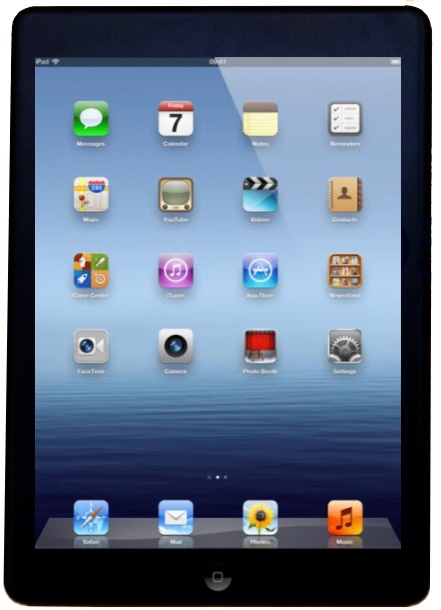
There is no doubt that technological advances have altered expeditions to the remote corners of the globe, giving us lightweight, yet powerful gadgets that we can take with us to the ends of the Earth. This is especially true in mountaineering, where satellite Internet, lightweight laptops, and tablets have become more prevalent in recent years. The iPad in particular seems to be a popular device for those kinds of adventures, something that even Apple has taken notice of.

Recently, Apple launched a fantastic ad campaign with the theme of "What will your verse be?" The crux of the campaign is that we all add a "verse" to the poem that is life, as we share the things that we are passionate about. The iPad can be a tool to help facilitate how we write our own verse, whether its in filmmaking, photography, music, or even mountaineering.

Yesterday, Apple updated their website with a new page dedicated to showing how their tablet can be used on a mountaineering expedition. The story is entitled "Elevating the Expedition" and it shares how climbers Adrian Ballinger and Emily Harrington use their iPads on the mountain. It discusses how the device helps them prepare for a climb, how it aids during the acclimatization process, and how it plays into the summit push. Other interesting segments include a look at their essential gear – iPad included of course – and profiles of some of their favorite mountains, such as Kilimanjaro, Ama Dablam, and Everest.

While this may be a marketing piece for Apple, it is also an interesting case study for the rest of us. It offers interesting insights into how the iPad can be put to good use on a climb. Definitely worth a read for anyone interested in expedition technology.

Tuesday, February 4, 2014

Adventure Tech: Iridium Announces New Voice And Data Device - the Iridium Go

Earlier today, satellite communication company Iridium announced a great new product that has the potential to revolutionize the way we communicate while in the remote places of the planet. The new device is called the Iridium Go, and the tiny gadget will give you the ability to make voice calls, send text messages, share social media updates, and more, all from the smartphone that you already own.

The Go somewhat resembles a mobile WiFi hotspot that are commonly used to connect laptops and other gadgets to cellular data networks. In this case however, the device actually connects to Iridium's satellite network instead. It then appears as a WiFi base station to your smartphone, allowing it to connect and use the Go's satellite signal to send and receive messages, connect to the web, post updates to Facebook and Twitter, share photos and of course make phone calls.

The Go will allow up to five devices, such as tablets, laptops, and smartphones, to connect at any given time. It also enables GPS location services for those devices, and has a built in SOS service to call for aid should the need arise. It puts all of those features into a small, compact package that won't take up a lot of room in a pack or add much in the way of weight either.


Iridium's approach of creating a device that allows us to use our own smartphones has a number of great advantages. For instance, you can use what ever phone you currently own at any given time, which means you'll be able to upgrade to new technology, while still being able to use the Go. It also means that your favorite apps can operate over the device too. And since it has a range of more than 100 feet, the Go can be set outside, in a location with a clear view of the sky, while you sit comfortably inside your tent, fully connected from your device.

The ruggedized Go is built to withstand the elements. It is water and dust proof, and is designed to withstand the shock of being dropped or jostled about. The device is designed to be taken to the remote corners of the world, and Iridium has built it to withstand the harshest environments, including the Himalaya and Antarctica.

At the moment, Iridium is planning on releasing Go apps for iOS and Android devices. That app will handle most of the communication between your smartphone and the satellite communications device. Those apps will be fully optimized to take advantage of the satellite data connection, compressing photos and messages down for more efficient sharing. The app will also be used to make phone calls, although it will have full access to the contacts you have stored on your device.

I'm told that using the Iridium Go will be simple to use. All you need to do is flip up its built in antenna and power the it on. After it establishes a connection to the satellites overhead, your smartphone will begin using it as its data source. The Go is also built to take advantage of Iridium Next, which is the company's second generation satellite network. Next is still a few years away from going into service, but it will provide much faster data options moving forward.

Iridium has also been working hard to develop an API for the GO, giving app developers the tools they need to make their programs compatible with the device. Those tools are said to have been well received so far, which means we could see some very cool integration with the Go and other apps in the future.

The Iridium Go is scheduled for a second quarter release this year, although no firm date has been set yet. The price is still in fluctuation as the engineers work on the final design and focus on getting battery life fine tuned. I'm told to expect it to be roughly around $800, although that could change before release. Service plans are also being tested at the moment, but Iridium promise that they will be more cost effective than past plans, especially considering the device can be shared with numerous people.

Look for more information on this product in the near future. I personally think that it has a ton of great potential, and I can't wait to hear how it works in the field.

Tuesday, January 14, 2014

Reminder: Hangout With Nat Geo's Adventurers Of The Year Tomorrow!

I posted about this last week, but I wanted to remind everyone that National Geographic will be hosting a Google Hangout tomorrow with five of its 2014 Adventurers of the Year. That means, that through the use of modern technology, we'll all get the chance to attend a virtual meeting with some pretty impressive people.

Amongst those scheduled to be in attendance at the hangout are ultrarunner Kilian Jornet, surfer Greg Long, long-distance swimmer Diana Nyad, snowboarder Kevin Pearce and explorer Sarah Marquis. Climber, storyteller and adventure filmmaker Fitz Cahall, who did the individual pieces on the Adventurers for Nat Geo, will also be in attendance.

The Google Hangout will take place from 1-2 PM Eastern Standard Time tomorrow. Questions for the group can be submitted through all the usual social media outlets, including Twitter, Google+ and Facebook using the hashtag #AdvOfYearChat. If there is something you'd like to ask these folks, it is best to get your questions in ahead of time so they can be reviewed and asked during the online meeting.

And as always, don't forget to cast your vote for the People's Choice Adventurer of the Year. Voting will run through the end of January. I know who I'd like to see win, but we'll just have to wait until the winner is announced in February.

Thursday, January 9, 2014

Nat Geo Invites You To Hangout With The Adventurers Of The Year

National Geographic, and the wonders of modern technology, are giving all of us the opportunity to hangout with the 2014 Adventurers of the Year next week. On January 15, Nat Geo will host a Google Hangout with five of these amazing men and women, who will share their stories of courage and determination with us online.

The virtual meeting will take place from 1-2 PM Eastern Standard Time next Wednesday and will include the following adventurers: ultra-runner Kilian Jornet, surfer Greg Long, explorer Sarah Marquis, endurance swimmer Diana Nyad and snowboarder Kevin Pearce. The event will also be hosted by Fitz Cahall, who is the mountaineer and filmmaker who has been instrumental in telling the stories of this year's crop of winners.

Questions for the group can be submitted via Twitter, Google+, Facebook, and YouTube using the hashtag #AdvOfYearChat. Due to time constraints, those questions will be reviewed ahead of time and submitted to the adventurers during the Hangout.

And don't forget you can still cast your votes for the People's Choice Adventurer of the Year. Voting remains open until January 31, with the winner being announced in February.

This should be a fun way to use modern technology to learn more about these amazing athletes and explorers. I know that if I have that hour free, I am going to try to be there for the event.

Tuesday, December 3, 2013

Video: Eagle Steals Video Camera, Carries It 68 Miles Away

An eagle, that appears to be suffering from kleptomania, recently swiped a motion-sensing camera from a crocodile trap in Australia and carried it some 68 miles before deciding it wasn't something the bird could eat. The camera was later found by Aboriginal hunters, who returned it to the proper owners. Naturally, they were a bit surprised to find their camera so far away from its original location but when they looked at the footage, they understood how it got there. The thieving bird is even caught on film at the end of the clip in what could quite possibly be the first avian selfie.

Monday, December 2, 2013

Adventure Tech: Quechua Announces Ruggedized Cell Phone For Outdoor Enthusiasts

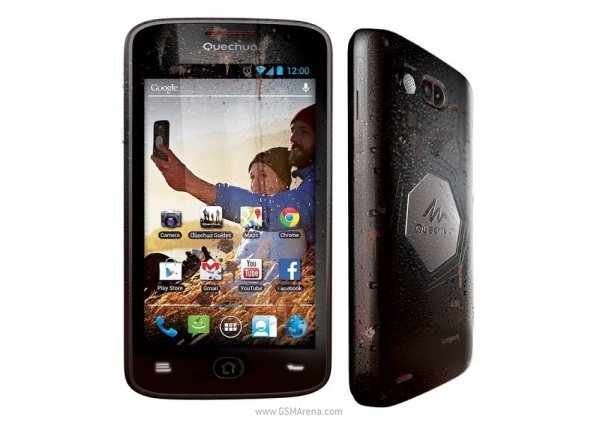
Outdoor gear company Quechua had partnered with budget tech firm Archos to produce a ruggedized Android cell phone that is designed for adventurers who can be a little rough on their gear. The phone, which begins shipping this week in some markets, if resistant to water, snow, cold, dust and other elements, while also being designed to survive a significant drop.

The new phone will retail for €230 (roughly $310) and comes equipped with Android 4.1 (Jellybean). It is powered by a Qualcomm 1.2 GHz, quad-core processor, has 1GB of RAM and 4GB of internal storage, which can be expanded through the use of SD cards. It also has a large 5" display and 3500 mAh battery that is said to be capable of 22 hours of talk time between charges.

But what sets the phone apart from most others is that it meets IP 54 certification. That means it has been built to survive the demands of the outdoors, including submersion in water, being used in sandy or dusty environments and withstanding the shock from being dropped. It is also resistant to both hot and cold temperatures, which could make it a great travel phone for those who visit extreme environments.

The phone does have a few knocks against it before it ever hits the streets. For starters, it doesn't have 4G data capabilities. The built-in 4GB of storage is a bit anemic as well, even though you do have the ability to add to that with memory cards. Android 4.1 is no longer the latest version of that operating system either, although it is a solid, modern OS in terms of features and stability. Still, for the price, I would expect a bit more out of the phone. You might be better served with buying a more capable device at a lower price and investing in a good cast to protect it. Just my two cents.

Monday, November 25, 2013

Video: Remote Controlled Buggy Captures Great Photos Of Lions In Africa

We've all seen how arial drones are being put to good use in capturing some amazing photography and video in remote areas of the world, but the video below puts the same concept to work on the ground. Photographer Chris McLennan, working with engineer Carl Hansen, developed a remote control camera housing that could be driven close to the subjects to get some very cool photos. In this case, that means driving up to a pride of lions to snap a few shots. The results are fantastic, although the images may give you a sense of what it is like for the prey just as the lion's pounce. This is really cool technology put to use in the field in an innovative way.

Wednesday, November 20, 2013

Google Brings Street View To U.S. And Canadian National Parks

I've always been a big fan of Google's Street View technology. It's the amalgamation of the excellent Google Maps and photos that are taken and geo-tagged at various locations around the planet. The results are that we can explore a map from above then with a simple click, zoom down to street level to see exactly where it is we'll be traveling. It can be tremendously useful when visiting a place for the first time and it is often fun to explore an area right from your computer.

For some time now Google has been using the Street View tech to map some really cool locations. For instance, you can visit the Galapagos Islands, the Great Barrier Reef and even Everest Base Camp directly from your browser. But today, the Internet search giant has announced that by working with the U.S. National Park Service and Parks Canada, 44 national parks have been added to Street View as well, allowing us to take a virtual escape to those destinations even when we don't have time to actually go ourselves.

Some of the locations that been added include Sequoia National Park, Joshua Tree and Mt. Rushmore. You can also pay a visit to such historical landmarks as the Alamo, the Lincoln Memorial and the National Mall in Washington DC. If you're looking to head north of the border, check out Moraine Lake and Lake Louise in Canada's Banff National Park as well.

Of course, I'd never even begin to suggest that Street View is a viable option for going to visit these places for yourself. It is however, fun technology that allows you to scout ahead before you actually go in person. It is also a nice way to escape the office, even if for just a few minutes, during a particularly long and boring day. It is also a nice reminder of how far we have come in terms of mapping technology. I hope Google continues to expand on these initiatives in the years ahead.

Thursday, November 14, 2013

Flight Network Contributions

I've added another outlet to the sites that I am contributing for and for the past few weeks, I've been posting to the Let's Roll Blog over at FlightNetwork.com. My postings to the site are more travel related with a slant towards adventure travel and a mix of a few gear reviews as well. The site is still relatively new but it is ramping up quickly and the editors have big plans for where they would like to go.

Here is a sampling of some of the posts that I, and others, have written to the blog recently:


Just a few articles to give readers an idea of what the blog is all about. If you're a traveler, you'll probably find a lot to like over there. Add it to your list of favorites and give it a go every once in awhile. 

Friday, November 1, 2013

Adventure Tech: New Tools For Would-Be Adventure Filmmakers

With the advent of tiny POV cameras over the past few years, adventure filmmaking has gone from an expensive, time consuming proposition to something that anyone with a laptop and a good camera can do. This week, aspiring filmmakers got a couple of new options to help in this process in the form of a new camera and an improved drone for capturing arial footage like never before.

First up, ION released their new Air Pro 3 WiFi camera, which brings an assortment of upgrades and improvements to the device. The new device has an improved 12 megapixel sensor that increases performance in lowlight conditions while continuing to shoot in full 1080p resolutions at 60 fps. Its ruggedized body is waterproof down to 49 feet (15 meters) and includes built-in image stabilization to help minimize shaking when worn on a helmet or mounted on the handlebars of a bike. It has a battery life of about 2.5 hours, which is a solid amount of time for a camera this small and an array of new mounting options are available to make this camera as versatile as possible. 

Additionally, the Air Pro 3's WiFi functionality makes it easier than ever to share videos online. The system even comes with 8GB of free cloud storage and can be paired with an app on an iOS or Android device for remote operation. 

The camera carries a price tag of $349.99 and begins shipping November 15. Preorders are available online.

Adventure filmmakers who want to add a new dimension to their next project will love the new offering from DJI, makers of the Phantom remote controlled drone systems. They've introduced the Phantom 2 Vision, which is unique in that it comes equipped with a camera right out of the box. Unlike previous models from DJI, the Vision has a built-in 14 megapixel camera that comes mounted on a tilting gimbal that can rotate 60º and has a wide 140º viewing area. A shock-aborbing bracket, built specifically for this camera, helps to reduce shaking and jitters that were an issue when  mountain your own camera on previous Phantom drones. The camera can also be paired with an iOS or Android device, allowing it to become a remote screen for the device, which the pilot can then use on the ground to see exactly what footage is being captured. 

DJI also improved the drone itself, giving it a greater battery life. It can now stay aloft for 25 minutes at a time. The drone also has improved stabilization for easier flight, even for beginners, although it all comes at a hefty cost. The Phantom 2 Vision will set you back $1199 when it goes on sale in a few weeks. The original Phantom, sans camera, is still available for just $479. 

Check out the Vision in action in the video below. Is it wrong that I kind of want one of these things?


Wednesday, October 23, 2013

Adventure Tech: Garmin Delivers Yet Another GPS Watch To Consumers

GPS technology company Garmin has released yet another GPS watch for consumers to ponder over. This time it seems less fitness/sports oriented and more aimed at a law enforcement/military crowd, although it brings a host of options that I'm sure many outdoor enthusiasts will find appealing. It also happens to deliver them in quite an attractive package.

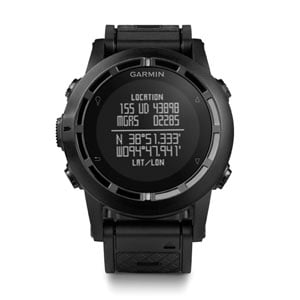
The new watch is called the tactix and it retails for $450. It sports a high-sensitivey GPS sensor with automatically calibrating altimeter and a 3-axis compass. It's built in memory allows the device to store up to 1000 waypoints and 10,000 track points, and allows the wearer to quickly and easily retrace their steps back to previous positions. In a nod to its military roots, the U.S. version of the watch is preloaded with tidal data and all versions include Jumpmaster software for airborne personnel. It also features sun/moon data and a calendar for hunting and fishing. A stopwatch, countdown timer, world clock, and alarm functionality are all built in as well of course, and as with most GPS enabled watches, this one will tell you distance traveled, speed, calories burned, etc. The tactix will also pair with Garmin's heart rate monitor and bike pod to measure performance and will even control the company's VIRB and VIRB Elite action cameras.

The tactix is designed to be rugged and survive in the outdoors. Its case is tough and durable, making it water resistant down to 50 meters. It's all black styling is designed to be non-reflective and subtle in nature, while the built in battery can reportedly go 50 hours between charges with GPS enabled and 5 weeks when being used as a standard watch. That performance is actually quite good for a watch of this kind.

The new watch is available now.

Thursday, October 17, 2013

Adventure Tech: Adidas Enters GPS Fitness Watch Market

Add Adidas to the growing list of sports apparel companies that are entering the GPS fitness watch market. Yesterday the new device was unveiled at a technology conference in San Francisco where the watch's specs showed that it will be packing some serious technology when it hits store shelves on November 1.

As you would probably expect, the watch will have integrated GPS for tracking speed, movement, change in altitude, etc. It also has a built-in heart rate monitor and can create a custom workout program based on performance, displaying prompts on its large, bright and colorful touch screen to indicate what is expected of the person wearing it. It also sports onboard storage for carrying a workout playlist of music and Bluetooth connectivity allows you to pair it with wireless headphones to listen to your tunes while on a run. The device will also be able to provide audio cues to the wearer over those same headphones, serving up information on their performance as they go. The Bluetooth functionality will not allow the watch to connect with a smartphone however and all fitness apps will be baked into the device itself.

The new sports watch, which apparently doesn't have a name yet, also has on board WiFi, allowing it to share your workout data with Adidas' miCoach fitness cloud. As you would expect, it is also water resistant and built to withstand plenty of punishment that comes along with regular exercise.

Battery life is said to vary by activity and features that are turned on. With GPS activated and streaming music it'll last approximately 8 hours, but in "watch mode" it'll last about a week. That's about standard for a watch like this one however and not all that surprising.

As mentioned, the watch is due out November 1 and will carry a price tag of $399. I'm looking forward to hearing more about this entry into the fitness watch line-up. It seems we're going to see a lot of these devices over the next few years and it'll be interesting to watch them evolve.

Wednesday, October 16, 2013

Gear Closet: Goal Zero Rock Out 2 Portable Speaker

Goal Zero is a company that is well known for offering affordable and efficient solar chargers for use on everything from a day hike to a full blown expeditions to the Himalaya. GZ is dedicated to creating products that are tough, useful and good for the environment, and over the past few years their gear has accompanied many explorers on their adventures. But it turns out they also make a line of other products that are fun and a bit unexpected. Take for example the new Rock Out 2, a ruggedized portable speaker that is designed for listening to your favorite tunes and keeping your smartphone charged while in the backcountry.

The Rock Out 2 is a refined update to the original Rock Out portable speaker system that Goal Zero has offered for several years now. The multifunctional device serves as a protective case for your smartphone or mp3 player while also allowing you to listen to music, podcasts or other audio sources while on the go. In a sense, it is an entertainment system for backpackers, campers and hikers who just can't leave home with out their personal soundtracks.

Goal Zero brought some nice upgrades to the sound quality of the new Rock Out 2. The bass is louder, deeper and more full than the previous model, delivering a surprisingly nice thump for such a small speaker. I found sound quality to be quite good across the entire audio spectrum with the mid- and high-ranges coming through distinctly at all times. The speakers also don't distort as the volume increases, belting out tunes clearly at all times.
A portable speaker is only as good as its battery and GZ was sure to give the Rock Out 2 solid performance in this area. It includes a lithium-ion power source that is rated for up to 20 hours of playback. In my testing, I'd ay that was fairly accurate. Higher volumes seemed to drain the battery a bit more quickly but it was always a considerable amount of time between charges. A built-in energy saver system automatically shuts the speaker off after five minutes of inactivity, which helps to preserve power as well.

As you might expect, the device is also designed to easily pair with a Goal Zero Nomad 7 solar panel to stay charged in the field. The company says it takes about three hours to recharge the device using their system, although that time will vary depending on the amount of available sunlight. You can also charge the Rock Out by plugging it into a USB power source. Recharge times will vary there as well depending on the quality of the USB port. My MacBook Air was able to refill the battery in roughly two hours.

The outer case of the speaker system is well built and feels very solid. It has been designed to protect any device that is slipped inside its padded interior and it does an excellent job at doing just that. Not only is it water resistant, but it would take a seriously vicious impact to the Rock Out for any damage to actually pass through to the interior of the case, which has been expanded in order to accommodate larger smartphones. If you're someone who likes to take your iPhone or Android device with you into the backcountry, you'll find that the RO2 provides plenty of protection, although it is bulkier than a standard case thanks to the built-in speaker system.

Goal Zero listened to customer demands and added exterior controls to the Rock Out 2 allowing the user to  adjust volume, pause, play and skip tracks. This is a nice touch over the older model which required you to open the case to access the audio device to make those kinds of adjustments. Doing so can expose the smartphone to the elements, which is counterproductive considering the amount of protection the case provides otherwise.

While the Rock Out 2 is a fun, well built product there is one thing that it doesn't do that i would have liked to have seen included. It doesn't allow the user to tap into it's battery and use it to recharge your smartphone directly. I know the idea is that everything will be charged through a solar panel, but it would be nice to able to take the Rock Out and your smartphone with you and have the battery life extended by charging off the speaker itself. It's a minor quibble but it would have been nice to have the option.

The new Rock Out 2 carries a price tag of $59.99, which is a reasonable price for speaker/case of this kind. GZ kept the original Rock Out in their line-up for $29.99 as well, giving customers a choice. Personally, I think the performance gains from the new model are worth the upgrade price, but if you're looking for audio output while on a budget, you'll find the older model to be quite a bargain too.