Showing posts with label Running. Show all posts

Thursday, May 8, 2014

Gear Closet: FlipBelt and Kenu Highline iPhone Safety Leash

As you can probably imagine, I see a great deal of unique and interesting pieces of gear come across my desk, some of it good, some of it disappointing. I'm fortunate that a lot of those items are often from high profile companies, who create excellent products for use in our outdoor pursuits. But sometimes you seem interesting items from smaller companies who are making innovative and interesting pieces of gear that fill a niche, but just haven't been seen by a larger audience just yet. I have two such products today, that I think could come in handy for the outdoor athlete, particularly as we move on into the warmer months of the year.

The FlipBelt
We'll start with a product called the FlipBelt, which is one of those items that is so simple in design, you'll wonder why you didn't come up with it first. Boiled down to it's most basic element, the FlipBelt is an elastic tube that fits around the waist of runners, cyclists, and other athletes, providing them with storage for all of the small items they like to carry with them on a workout, which comes in pretty handy considering most of my workout gear has gone fairly minimal in design, and doesn't leave a lot of room for carry extra items.

Made from moisture wicking, breathing materials, the FlipBelt is comfortable to wear, stays securely in place while you run, and actually looks like it belongs on a runner's body. It is available in eight different colors, so you can choose one that best fits your wardrobe, or makes you more visible to traffic. I went with basic black, which fits in nicely with my running gear.

The FlipBelt is actually tubular in design, with a snug fit that is designed to keep all of your small items, such as keys, an ID, cash, a smartphone, etc.,  securely in place. Four strategically placed slits in the fabric grant access to the interior of the tube, so you can place your items inside. One of the pockets even has a key clip, to add an extra sense of security.


While I didn't really see the need to wear the FlipBelt while riding my bikes, after all my cycling jerseys have ample pockets, I did find it was a nice piece of gear to have while running. After wearing the belt for a short time, it actually felt very natural, and I soon forgot I even had it on. Meanwhile, the three-inch cloth tube was easily holding my 5th generation iPod Touch, a set of keys, my drivers license, and a few dollars in cash.

The FlipBelt actually performed exactly as advertised. Not only did it safely carry my small items while running, it didn't add much in the way of bulk, nor did it generate much excess heat. It has been quite warm already where I live, so I've already been running without a shirt. Thankfully, the FlipBelt's ability to breathe and wick moisture, proved to be up to the task as well.

With a price tag of $28.99, the FlipBelt isn't a very expensive accessory for yourself, or the runner in your life. It is comfortable, useful, and versatile, three things that come in handy while out on a long run. This is a handy product that you'll be glad you have in your gear closet for when you really need it.

Kenu Highline iPhone Safety Leash

For most of us, a smartphone is an indispensable piece of gear that we rarely leave home without these days. But sometimes it can be dangerous to try to use our phones while also taking part in our favorite outdoor activities, such as mountain biking, skiing, or trail running. The combination of moving over uneven ground, while operating our sleek, impossibly thin, devices – often with sweaty hands – can be a recipe for disaster. More than a few of us have probably dropped our iPhones under just those circumstances, probably while trying to take a photo of something amazing.

But iPhone accessory company Kenu has come up with a simple, but elegant solution, for protecting our expensive smartphones while still being active in the outdoors. They've created a the Highline Safety Leash to prevent untimely drops that could render our phones severely damaged, or even non-functional. Built specifically with Apple's smartphone in mind, the Highline features a specially designed clip that fits into the Lightning connector port on the iPhone 5 and 5S, or the 30-pin connector port on older iPhones. Once locked into place, the other end of the Highline can than be quickly and easily attached to the zipper on your jacket, a clasp on your backpack, or just about any other secure spot. That way, when you take your phone out to use it, you always have the safety leash to make sure it doesn't fall to its death.

In between the two ends is a tough bungee cord reinforced with kevlar wire and stainless steel clips. This helps to ensure that once the Safety Leash is locked into place, your device isn't going anywhere, thus allowing us to use our devices without worry that they will be dropped, lost, or stolen.

The iPhone Safety Leash is another product that works exactly as advertised. It is easy to set-up, very convenient, and provides a nice piece of mind that your gadget is well protected while traveling. The 30-pin version that I tested is available for just $19.95, while the version that is available for newer iPhones with the lightning connector is $34.95, and includes a thin protective case as well. Both prices are a fair amount for a system that will take the worry out of using your smartphone while on the go, whether that is hiking in the Appalachian Mountains, trail running in Colorado, or simply driving to the local market. You'll feel more secure knowing you have a safety leash on your favorite electronic device.

Monday, May 5, 2014

Gear Closest: Skora Fit Running Shoes

Like most runners, I got pulled into the minimalist craze that was all the rage a few years back. I liked the idea of running with lighter footwear, and the approach that proponents of the minimalist approach espoused, and while I found it worked well for me on short runs (3 miles (5km) or less), when I ran further than that, I often found that the approach didn't hold up for me personally. I needed a shoe with a bit more support for those longer distances, and most the minimalist shoes just weren't meeting my needs.

Back then, one of the shoes that I reviewed was the Skora Form, which I liked very much, although I found them on the pricier side of the minimalist market. But like most of the other footwear that I tested in that category, they were ver comfortable to wear and gave you a sense that you were well connected to the ground, but I also didn't find that they were good for longer distances. Over the past couple of year though, Skora has continued to perfect their designs and offer new options for runners. Recently, I decided to give one of their new designs a second look, and I'm glad I did. The new Fit training shoe is a good example of how the minimalist movement has matured in recent months, blending new designs and materials to still create lightweight shoes, but also providing more overall support and comfort than ever before.

I have to admit, when I first pulled on my pair of Fit shoes, I was afraid I'd have the same relationship with them as I had in with similar designs from the past. They instantly felt good on my feet, but I worried that might not hold up on longer runs, especially since I had recently increased my weekly mileage by a fair amount, and added a lot more hills to the workout. I first put them to the test on 6.5 mile (10.4 km) route with a new running group that I joined, and they performed well. I was able to maintain a steady seven-and-a-half minute mile for the workout, and when I was done, my legs and feet felt great. Subsequent runs confirmed those findings, and if anything, they actually got more comfortable once I put a few miles on them.


Skora says that the Fit is "the ultimate all-purpose running and training shoe," and as such, they've built it for comfort, speed, and agility. It is made from breathable fabrics that help keep your feet cool and dry, and an innovative new support pattern is actually created using a 3D printer. The results are pretty impressive. While this isn't a "barefoot" shoe by any means, it does manage to be super lightweight, without compromising on the protection for your feet and legs.

As with the previous Skora shoes that I tested, the Fit also seems quite durable for a minimalist shoe. I've put a fair amount of milage on them already, and they still look practically brand new. Then again, I am one of those runners whose shoes tend to look good, long after the support and cushioning has blown out. They end up being horrible for running, but still look practically brand new.

Skora also managed to make some serious headway in offering an affordable option for those who are looking for a very lightweight shoe. The price tag on a fair of Fits is just $94.95, which makes them very competitively priced with just about an other decent running shoe on the market. That is to say, you can obviously by running shoes that cost less than this, but you really do get what you pay for.

Throughout this review, I've used the word "minimalist" and "lightweight" a lot. So just how light are the Fits? They tip the scale at 8.2 ounces (232 grams), which definitely puts them in the minimalist category, even if they are a slight step up from "barefoot."

Personally, I think Skora has a winner on their hands with these shoes. They are comfortable, but surprisingly supportive, which in turn keeps your feet very happy. If you're in the market for a new pair of running shoes, and you want to go minimalist, the Skora Fits will fit your needs quite nicely. And they won't make your wallet cry out in pain either.

Wednesday, April 9, 2014

Gear Closet: Skins RY400 Recovery Compression Tights

Over the past year or so, I've become quite a convert for using compression apparel to aid in recovery following a long run. It is not uncommon for me to wear a pair of compression socks post workout to help my legs to bounce back a bit more quickly. The idea is that compression gear helps stimulate the circulation of blood in the areas that they are worn, which in turn helps to shorten recovery time and reduce injury. The use of the compression socks has certainly helped me, as my legs have been more refreshed, even as I increased my speed and distance.

Considering how well my legs have responded to the use of the socks alone, I have been eager to try a full pair of compression tights to see if they would help my entire leg, and not just the feet and calves. Over the past few weeks, I've been putting the RY400 Long Tight from Skins through their paces, wearing them post run to aid in recovery. These tights have been designed specifically for extended wear following a workout, when comfort is of primary concern.

As you would expect, these tights are very form fitting, and if you haven't worn compression gear before, it can be a bit off-putting at first. Be assured, this is normal, as the only way for this type of apparel to do their job properly is for it to be snug. That said, once you get use to the fit, you'll find that they are not at all uncomfortable. Skins has designed these tights to move nicely with your body, and to fit under your other clothes like a -well- second skin.


It is important to point out that the RY400 tights are meant to be worn after a workout, and not during. While they are certainly durable enough to use while you're taking part in your favorite athletic activity, they have been designed to apply the proper level of compression to your muscles while they are resting, rather than while they are exerting effort. Skins recommends wearing them for a minimum of three hours post workout or competition for the best results. Better yet, they are comfortable enough that you can even sleep in them, which will help you wake up the next morning with fresh legs, ready for your next run or ride.

I have to say, I have been extremely happy with these tights. Not only are they very comfortable to wear, they accomplish their goal of protecting your muscles and speeding recovery. They even look attractive, like something you'd expect the X-Men to wear. Durability has been excellent so far, although I have read a few reports online from people who say they start to lose elasticity over time. That is someone natural in compression clothing, although I have not witnessed anything noticeable in that department just yet.

Skins has priced the RY400 recovery tight at $139.99, which is a good price for a piece of gear that performs this well. Considering they are built to last a long time, that seems a small price to pay for what they deliver.

And what exactly do they deliver? In my personal experience with these tights, my legs have felt better, and rebounded faster than when I wasn't using them. For someone who runs almost every day, that is a priceless commodity.

Thursday, March 27, 2014

Video: Trail Running In Patagonia

Ever wonder what it is like to go trail running in Patagonia? Than have a look at this video from ultra-runner Philippe Gatta that was shot while he was running 300 km (186 miles) in and around Torres del Paine and Ftiz Roy. What a spectacular place to go for a run!

Wednesday, March 26, 2014

Gear Closet: Osprey Rev 6 Trail Running Pack

One of the best parts about my job is attending the Outdoor Retailer convention each year and checking out the latest and greatest products from my favorite gear companies months before they are available to purchase. As much fun as that sounds however, it can also be painful to have to wait for some really great product to actually go on sale. Such was the case with the Rev 6 pack from Osprey, which I first saw last August but had to wait weeks to get my hand on. The wait was worth it however, as it is hands down the best trail running pack that I've used.

The new Rev line comes in a variety of sizes, ranging from the diminutive 6 (as in 6 liter), all the way up to the 24. In between there is also a 12- and 18-liter version too. (Those who like to go ultralight will want to check out the Rev 1.5 and the Rev Solo water bottle holster as well.) All are lightweight, have a variety of great features, and are built to move with trail runners, no matter how demanding conditions get. Obviously you'll want the pack that most fits your needs in terms of capacity. If you're carrying a lot of gear, you'll want to go bigger, but for my needs, the Rev 6 was actually perfect.

The pack's main compartment, which shares double duty with the included 1.5 liter hydration bladder, is just large enough to stuff an extra jacket, and perhaps lunch for the trail. It is surprisingly roomy for such a small pack, but no one would ever use the word "cavernous" to describe it. A second, smaller, pocket is built into the top of the Rev 6, which provides room for a few small items, such as a headlamp and a wallet. A key clip is conveniently placed in that pocket as well, keeping all of your essentials in one place.


Additional storage can be found on the two straps, where stretch pockets allow access to an additional water bottle, a camera, or energy bars. The left strap even has a cleverly designed "DigiFlip" media pocket that is built for smartphones or touch enabled mp3 players. The pocket is securely fastened in place with its own clip, but it can be flipped open to grant access to the device inside. That device is encased in a plastic covering that keeps dirt and sweat away from the precious technology, but still allows the wearer to have full access to the screen. This is one of my favorite features of the Rev line, as I always run with an audio player of some type, but I have a tendency to sweat all over it. Additionally, wearing it on an armband isn't alway the easiest way to access music or apps while on the go. This solves both of those problems very nicely.

In terms of fit, the Rev 6 is fantastic. It uses lightweight materials and the belts and straps aren't particularly large, but they still do a great job of holding the pack in place when you run. Sizing is as simple as pulling the pack on, and adjusting a couple of bands to make it all fit. It took me just seconds to dial in exactly where I want the pack to ride, and it stayed in place throughout my runs.

Other nice touches include a bungee on the front of the pack to provide extra external storage, and a  soft, breathable back panel to aid in keeping runners cool. The Rev is small and light, so it doesn't have a frame that can provide true airflow across the back, but this specially designed panel does a good job none the less.

I'd be remiss if I didn't mention Osprey's excellent hydration bladder. It has a large mouth that makes it easy to fill, and includes built in markings to let you know just how much water is in the reservoir at all times. It's low-profile design keeps it from becoming too cumbersome, even when filled with liquid, and it's tough materials are very resistant to wear and tear. The bite valve even includes a magnetic backing to help keep it securely in place while running, and a quick release allows the entire hose to come off, which makes for easier filling and better access for cleaning.

All in all, it is difficult not to be impressed with the Rev 6. As I mentioned above, it is the best trail running pack that I've used, and it is clear that Osprey put a lot of thought into the design before releasing this product. It is compact, lightweight, and packed with features that trail runners will love. For me, the 6 is the perfect size for most runs, as its allows you to carry everything you need, and nothing you don't. I know there will be some runners who will want to take some extra gear with them when they hit the trail, and Osprey has options for those folks. But for me, the little Rev 6 is just about perfect for my needs.  Considering all that it delivers, its price tag of $100, also comes across as a real bargain.

If you're a trail runner, you owe it to yourself to check out this pack. I think you'll be very happy that you did.

Check out the video below to see what ultrarunner Ben Clark carries in his Rev 6.


Thursday, February 20, 2014

Adventure Tech: Garmin Fenix 2 GPS Watch

The battle for your wrist is about to get a lot more interesting.

In March, Garmin will be shipping the much anticipated Fenix 2 GPS fitness and adventure watch. This latest entry into what is becoming quite a crowded market, takes all of the great features from the original Fenix and amps them up a notch, giving outdoor enthusiasts everything they could hope for in a training timepiece – and then some.

Like is predecessor, the Fenix 2 is ruggedized for the outdoors, including being waterproof down to 50 meters. As you would expect, it comes with an altimeter, barometer, a 3-axis compass and built in GPS tracking for navigation. That includes 10,000 track points and 1000 way points. It has sun and moon charts built in, a hunting and fishing calendar, dual timezones, and a host of of time keeping options. It also features ANT+ integration to connect with heart rate monitors and other devices as well.

But, the Fenix 2 brings some interesting new features to the table as well. For starters, it has onboard Bluetooth functionality that allows it to be paired with a smartphone for tracking data. A new Ski-Board mode is designed to specifically track movements both horizontally and vertically, while an improved battery will offer up to 50 hours of use in GPS mode, and five weeks while being used as a standard watch. Improved swim and bike modes make it a better option for triathletes as well, while still managing to bring more options to the table for runners too. If that wasn't enough, the Fenix 2 will even serve as a remote control for Garmin's VIRB action camera.


Perhaps most importantly of all, Garmin has made the watch's interface far more intuitive to use. The original Fenix could be a bit confusing at times, but this time the OS has been tweaked to make everything more accessible. This really helps when all you want to do is get moving, rather than standing around waiting to get your watch in the right mode.

When it ships next month, the Fenix 2 will carry a price tag of $399 for the standard model and $449 with a heart rate monitor. Those are the same price points that the original Fenix launched at as well. At the moment, it looks like a very promising new entry into the GPS watch category, and I'm looking forward to hearing more about how well it performs.

This news comes at the height of my frustration with my Suunto Ambit, one of the main competitors to the Fenix. Last week, after charging my Ambit I put it on and set off for a trail run. When I went to start my GPS tracking, the face was completely blank, although touching the buttons emitted a beep as it would when it was functioning normally. After returning from the run, I plugged it into my computer, where it was immediately recognized, but still there was nothing appearing on the screen.

I dropped Suunto a tech support know to inquire as to how I should proceed, and I was informed that I'd have to drain the battery, then let it charge for five hours straight to correct the problem. I'll have to take their word for it, because now that the battery if fully charged, I'll need to wait a month before it is drained again. In GPS mode, I could drain it very quickly but I can't access that without being able to see the screen. So, my $500 GPS watch is essentially useless for the next month until the battery drains on its own, and then I have to hope that recharging it will get the screen working again. To say that I am not pleased to be able to use my watch for the next several weeks is an understatement. Perhaps the Fenix 2 will be a viable option for a replacement.


Friday, January 31, 2014

Second Annual Trail Running Conference Coming to Estes Park, Colorado

The very lovely Estes Park, Colorado will play host to the second annual Estes Trail Ascent Conference later this year, bringing trail runners from across the country together for three days of activities. The event is scheduled to take place October 9-11, with October 12 dedicated to racing on local trails.

The conference as a very successful launch last year, and in 2014 organizers are looking to expand on that momentum. The first day of the event, Thursday, October 9, will be specifically geared towards race directors who want to share ideas for running more successful events. The following two days, October 10-11, will be open to the athletes themselves, with plenty of seminars and panel discussions on how to improve performance and get more enjoyment out of the sport. And while the conference officially wraps up on that Saturday, there are already plans for a number of trail runs to take place on Sunday, October 12.

The Estes Trail Ascent is looking to position itself as strategic planning event for promoting trail running across the entire U.S. The sport is growing in popularity and event organizers hope to capitalize on that growth in order to continue to push it to new heights. With that in mind, this year they have partnered with Trail Runner Magazine to not only promote the conference but also the activity.

Even though the event is still months off, you can still find plenty of details about what will happen in Estes Park this October. Check out a preliminary schedule of events, a list of the  types of speakers that will be there, and more. Those details will fill in further as the date draws near, but this will give you an idea if this is the kind of even you'll want to attend.

I'm glad to see that last year's Trail Ascent was a success and organizers are bring it back for another go. Hopefully it will continue to grow and become a premiere trail running event in the U.S.

Wednesday, January 8, 2014

Gear Review: Yaktrax Walk

Yesterday I posted a review of a new pair of running shoes designed specifically for running on snow and ice. Those shoes were waterproof, comfortable and had integrated spikes to help keep your footing on snow and ice. They also come with a price tag of $155. But for those looking for something a bit more affordable to help keep their footing on slick surfaces in the winter, the tried and true Yaktrax are tough to beat. These versatile, yet effective, tools are one of the best things to have in your gear closet when winter weather hits.

If you're not familiar with Yaktrax, they are a simple – yet ingenious – product. Designed to fit snugly over the bottom of your shoes, they instantly give better traction to just about any footwear by literally adding chains to the tread. When stretched over the sole of a boot, running shoe, or just about any other shoe, the chains add the ability to grip ice and snow, making it much easier to move safely and securely. Best of all, they can be added or removed very quickly, making it easy to transform your footwear from off road ready to formal wear in seconds.

I tested the Yaktrax Walk, which is the company's classic model. Lightweight and easy to apply, the Walk are great for just about anyone heading outside during the winter months. Whether you're walking down the street or on a snowy trail, they can make any hike much easier. They're perfect for use around town, around camp, or just about anywhere else you want to use them, and at just $20, they are an affordable solution for anyone.

The Yaktrax Walk are very good for all kinds winter walking challenges, but for those who demand a bit more performance will find other options as well. For instance, runners will want to try the Run, while hikers heading into more difficult conditions should use the Yaktrax Pro. Finally, those traveling in extreme environments, the XTR is the best choice.

Affordable, versatile and effective. Yaktrax are a great option for anyone looking to improve their traction in the winter. For the level of performance they provide, it certainly is tough to beat the price!

Tuesday, January 7, 2014

Gear Closet: Icebug Anima2 BUGrip Winter Running Shoes

Considering the nasty weather that is sweeping across much of the U.S. and parts of Europe this week, it seems appropriate that I share my thoughts on the Anima2 BUGrip winter running shoes from Icebug. If you're a runner who refuses to move inside for the winter, but routinely has to deal with snow, ice and cold temperatures, then these are definitely the shoes for you.

Icebug is a Swedish company that designs excellent athletic shoes for dedicated outdoor enthusiasts. The company is relatively new to North America, but they are making a big move into the market now. You may not have heard much about the company in the past, but I'm willing to bet you'll be hearing a lot more about them in the future.

At first glance, the Anima2 running shoes look a lot like many other running shoes you'd find on the market. They are a bit on the flashy side, but regular runners are use to unique color combinations on shoes that really make them stick out in a crowd. These shoes have an aggressive sole that makes them well suited for trail running in all kinds of conditions, and the waterproof uppers keep your feet warm and dry, whether you're running on snow, slush, ice, mud or even dry trails. In short, they're an excellent trail shoe that is comparable to just about anything else you'll find on the market.


But what really sets the Anima2 shoes apart from the competition is the patented BUGrip system, which integrates a series of steel studs into the rubber sole to provide unprecedented grip in slick conditions. In the case of these shoes, there are 19 such studs, each working independently of one another to provide traction as needed. It is an impressive and sophisticated approach for giving runners the absolute best grip possible in some of the worst conditions imaginable.

Over the holiday break, I had the opportunity to put these shoes to their paces in a variety of unique conditions, including snow, ice and slush. Icebug's BUGrip system performed extremely well in each of those circumstances, providing a sure grip no matter where I went. When paired with the waterproof uppers, my feet stayed warm and dry, even in ankle deep snow, and I ran more surefooted than I had previously thought possible. For runners who often take on poor winter conditions, this is certainly a shoe you'll want to have in your closet.

On top of the excellent performance the Anima2 shoes bring to the table, they also happen to be quite comfortable. The shoes have thick padding that cradles the food nicely, providing yet more support for runners on the road. It's a rare combination of shoes that provide this kind of performance and are also comfortable on the foot.

As much as I really like these shoes, I have to say that I mostly preferred them in the bad conditions. When I ran on a dry trail with these shoes, there was something about the way the spikes felt that just didn't quite jive for me. On a regular trail, I'd still prefer a pair of regular trail shoes. But in the slop of the mud, ice and snow, there is no question I'd much rather have the Anima2's on my feet.

Also, I'd recommend getting a pair of gaiters to wear over these shoes, as they don't keep the snow and slush out of the top all that well. Aside from that, they are just about perfect for foul weather running.

MSRP: $155

Thursday, October 17, 2013

Adventure Tech: Adidas Enters GPS Fitness Watch Market

Add Adidas to the growing list of sports apparel companies that are entering the GPS fitness watch market. Yesterday the new device was unveiled at a technology conference in San Francisco where the watch's specs showed that it will be packing some serious technology when it hits store shelves on November 1.

As you would probably expect, the watch will have integrated GPS for tracking speed, movement, change in altitude, etc. It also has a built-in heart rate monitor and can create a custom workout program based on performance, displaying prompts on its large, bright and colorful touch screen to indicate what is expected of the person wearing it. It also sports onboard storage for carrying a workout playlist of music and Bluetooth connectivity allows you to pair it with wireless headphones to listen to your tunes while on a run. The device will also be able to provide audio cues to the wearer over those same headphones, serving up information on their performance as they go. The Bluetooth functionality will not allow the watch to connect with a smartphone however and all fitness apps will be baked into the device itself.

The new sports watch, which apparently doesn't have a name yet, also has on board WiFi, allowing it to share your workout data with Adidas' miCoach fitness cloud. As you would expect, it is also water resistant and built to withstand plenty of punishment that comes along with regular exercise.

Battery life is said to vary by activity and features that are turned on. With GPS activated and streaming music it'll last approximately 8 hours, but in "watch mode" it'll last about a week. That's about standard for a watch like this one however and not all that surprising.

As mentioned, the watch is due out November 1 and will carry a price tag of $399. I'm looking forward to hearing more about this entry into the fitness watch line-up. It seems we're going to see a lot of these devices over the next few years and it'll be interesting to watch them evolve.

Friday, October 11, 2013

Adventure Kitchen: Honey Stinger Energy Bars, Chews, Waffels, Gels and Protein Bars

A little more than a year ago I introduced you to a line of excellent nutritional bars and energy chews from a company called Honey Stinger. At the time I was quite impressed with the quality of the entire line of products, which stood out from the sea of similar bars from competitors thanks to their use of honey for their natural sweetener. The company also uses all organic ingredients with everything also being completely GMO free. The result is a product that tastes great, doesn't weigh me down and always gives me a boost of energy to help me get through a workout. Recently I received some fresh supplies from Honey Stinger that reminded me why I liked their foods so much and some new flavors gave me even more reason to enjoy them.

One of my favorite items in the Honey Stinger line-up is their wonderful energy chews. Offered in a variety of flavors including pink lemonade, fruit smoothie and cherry blossom, these chews are smaller and softer than similar products on the market, which makes them very easy to eat, even while on the go. Their flavors are fresh and tasty without being over powering and the natural ingredients are easy on the stomach while on a long run or bike ride. New to the line-up this year are the caffeinated cherry cola flavor, which I happen to like a lot.

I'm not the only one who is a big fan of the energy chews. When I met with Honey Stinger representatives at Outdoor Retailer back in August, they told me that the chews are such a hit with kids that they've heard from customers that they often catch their children swiping their chews before they can use them on a workout. With that in mind, the company will soon offer child sized portions of the chews, which are better for kids than other types of sweet products that they might be eating.


The other product in the Honey Stinger line-up that I love are their organic waffles. They come in flavors such as chocolate, honey, vanilla and strawberry and much like the chews, they are tasty for a snack even when you're not working out. The waffles are lightweight, very tasty and completely organic. I appreciate that each type of waffle has its own unique flavor that doesn't seem artificial in any way. They're also great for getting me through a long run before I settle down to a proper dinner.

Honey Stinger also offers energy and protein bars that have their own unique flavors as well. I'm partial to the Berry Banana Buzz in the former and the Dark Chocolate Mocha Cherry in the latter. Like their other products they are filled with natural ingredients and are gluten free with no trans fats. New this year, Honey Stinger is offering the protein bars in both a 20g and 10g version. The 10g version is a result of customers saying they didn't always need such a larger bar and appreciated a smaller option. It is a classic case of a company listening to what their customer want and then giving it to them.

A year ago when I was testing the Honey Stinger line-up I was very impressed. All of the options tasted great and didn't weigh me down when working out. This year that line-up has been improved nicely, with new options and flavors to appeal to more people. If you haven't tried Honey Stinger's products yet, I'd highly recommend that you do. I think you'll like them quite a bit and you may even leave your traditional cardboard-tasting energy bars behind once and for all.

Thursday, September 26, 2013

Gear Closet: Balega Running Socks For Breast Cancer Awareness Month

As many of you know, October is Breast Cancer Awareness Month and to show their support for for the event sock maker Balega is launching a line of socks to help in those efforts. Those socks come in the traditional pink color that is so closely associated with the Breast Cancer Awareness movement and feature inspirational slogans such as "Don't Tell Me I Can't" and "Never Give Up." Sales from these limited edition socks will benefit the Breast Cancer Fund with $1 from each purchase going directly to the organization.

If you're not familiar with Balega socks, they are specifically designed for runners and other athletes who are looking for comfort and performance from every piece of their running gear. The socks feature a blend of soft, natural fibers and synthetic fabrics that help your feet breathe while also keeping them comfortable dry, even in warm, demanding conditions.

I have to admit, I'm one of those runners who doesn't think much about the socks that he puts on his feet. Sure, I wear socks that are suppose to have been designed with the athlete in mind, but I've always felt that my shoes were far more important to the comfort of my feet. That may still be true, but it turns out a good sock can have some benefits too. I took a pair of the Balega socks out for some test runs recently and found that my feet were more comfortable in the same pair of running shoes that I wore with my more generic running socks. The thicker Balega socks provided more comfort on my daily workouts but actually kept my feet cooler and drier. That is certainly something I can appreciate in the Texas heat. Even in the fall we're still approaching triple digit temperatures.

Of course, like all good athletic gear the Balega socks don't come cheap. They'll set you back anywhere from $10 - $18 per pair, which obviously makes them an investment if you're an everyday runner like myself. But, much like most other gear that we buy, you get what you pay for and the investment in a good pair of socks is no different. Not only do they perform better than what you're probably wearing now, they're also more durable and will last longer too. Considering how much I spend on running shoes every three months, buying a few pairs of really good socks doesn't seem like much of an issue.

It is tough to write a review about socks. There is nothing fancy about them and they don't exactly have a lot of features. But if you're looking for something comfortable that also happens to perform well, it is tough to beat what Balega has to offer. And if you want to help the fight against cancer while picking yourself up some quality footwear, than be sure to look for Balega's Cancer Awareness line. You'll get all the performance that I spoke about above and you'll benefit a good cause at the same time. What more could you ask for?

Monday, September 16, 2013

Adventure Tech: Garmin Introduces The Forerunner 220 and 620 GPS Watches

The competition in the GPS fitness watch market continues to heat up as Garmin introduces two new models to tempt runners. The company, which has a long history in both GPS devices and sports watches, has expanded its Forerunner line by creating the new Forerunner 220 and 620 models, both of which bring some nice new innovations to the product space.

The most notable addition to these new watches are the color screens which are vibrant, easy to read and make use of colors to provide information to runners. For instance, there are indicators on the screen that will turn green to let the user know that they are safe to workout while red indicators will tell them it may be time to take a rest day.

That's just the start of what these watches can do however. When paired with a heart rate monitor they can also estimate an athletes VO2 max to help train them more efficiently and track progress. That same estimate can be used to predict performance in a race as well and suggest options for recovery too. The watches can be paired with a smartphone via Bluetooth to help keep track of a variety or workout statistics, such as cadence, vertical oscillations and so on. It can even record the runner's position and relay live tracking to friends and family back home.

Both watches will begin shipping this fall with the 220 carrying a price tag of $249.99 for the watch only and $299.99 when bundled with a heart rate monitor. The 620, which features a touchscreen display that can be used through running gloves, will set you back $399.99 for the watch and $449.99 with the heart rate monitor. Those prices put them in the medium to high end of the market but competitive with similar products from competitors.

Gear Closet: Jabra Sport Wireless+ Earbuds

If you're like me, you enjoy listening to music, audio books or podcasts while working out. Nearly every time I hit the road for a long run I have my iPod strapped to my arm and a pair of earbuds in my ears to help keep me entertained and distracted as I pile up the miles. Over the years, I've learned that the right music can really set the tempo on faster runs and that interesting audio programs can help grind out the distances on a the longer ones. A good pair of earphones can make all the difference as well, which is why I have recently been testing the new Sport Wireless+ headset from Jabra, a device that connects via Bluetooth to your smartphone or iPod and allows you to listen to your favorite tunes completely wirelessly.

Paring the Sport Wireless+ earbuds with your device is incredibly easy. You simply switch the headphones on and then select the Bluetooth set-up options from your gadget. After selecting the earbuds from the listed options, the two devices will communicate with one another and within a matter of seconds you'll be able to send music or any other audio source to the earbuds wirelessly from up to 30 feet away. Onboard controls will also let you quickly adjust volume, pause and start your music, pick-up phone calls, interact with Siri and so on. All of those controls are located on the right earbud, which makes theme easy to reach and adjust without having to look at them.

Getting a good fit is always important when using earbuds and thankfully Jabra has provided plenty of options for finding a comfortable configuration. The Sport Wireless+ ships with seven sets of soft, silicon tips in various shapes and sizes, allowing the user to find exactly the right combination for their needs. It took me a couple of runs to figure out which were the mot comfortable for me but once I did, the earbuds felt great and stayed locked in no matter how far I was running.


In terms of sound quality, these earbuds are solid and sound good, but you can definitely tell that the audio source is being provided wirelessly. When using traditional wired earbuds my music and podcasts definitely come through more cleanly and crisply, although once I'm running I didn't really notice it all that much. The Sport Wireless+ are plenty loud and can provide solid isolation from outside noise, but on occasion they'll break up and momentarily loose their connection, something that doesn't happen with a pair of regular earbuds unless there is a short in the wiring somewhere.

Personally, I found the Sport Wireless+ earbuds quite comfortable to wear and after just a run or two, I found myself really liking the fact that I didn't have an annoying cable running to my iPod. It was refreshing to move without restrictions and while that thin cable that comes with traditional earbuds may not seem like much, when it isn't their you'll discover how substantial it actually is.

For the most part, these headphones work great, are comfortable to wear and provide solid, if somewhat unremarkable sound. But if I have one knock against them, it is their battery life. Jabra rates them for about 4 hours of use and during my testing I'd say that is fairly accurate, if a bit on the high end. That means that after just a longer run or two it is time to recharge the headset or you'll end up like me and have them run out of juice mid-workout. The battery life is so low in fact that most of us wouldn't get through a marathon on a single charge, let alone an ultra-run of any sort. And if you forget to recharge them every couple of days, you're stuck going back to the wired earbuds. I would have liked to have seen far better battery life but I know that compromises needed to be made in order to squeeze all of the technology into such a small package. The Sport Wireless+ also use the Bluetooth 3.0 feature set, which is mature and robust, but doesn't sip power the way newer Bluetooth 4.0 devices do.

The recharge time on these earbuds is only about 2.5 hours, which isn't all that long in the grand scheme of things. But I now have to make sure my iPod is charged, my GPS watch has enough battery life and my earbuds as well. That's an awful lot of gadget to keep energized for my workouts.

Jabra did build the Sport Wireless+ earbuds with outdoor athletes in mind. They feel solid and durable for day to day use and they are designed to resist rain, dust and being dropped. They certainly don't feel flimsy in your hand and I think you'll appreciate just how durable they are.

If you're looking for a solid pair of wireless headphones and you can deal with the short battery life, than I think you'll find that these are an excellent option. They are comfortable to wear, even on extended runs, and the fact that you can ditch the audio cable is very liberating. Jabra prices the Sport Wireless+ headphones at $99, which is not far out of the price range of some of the top end traditional wired models. Better yet, these earbuds can be found online at a substantially reduced price, which makes them a great bargain and easy to recommend.

Wednesday, July 24, 2013

Latest Issue Of Trail Run Magazine Now Available

While we're on the topic of trail running today, I wanted to point out that the latest issue of Trail Run magazine is now available online in .pdf format, as well as in the Kindle Fire and Apple app stores for your favorite tablet device. If you haven't had a chance to look at this excellent e-zine in the past, now is the perfect time to check it out. It has the same level of quality that you would expect from a traditional print magazine delivered in an environmentally friendly electronic format.

In this issue, you'll find gear reviews for new shoes and winter gear (the magazine is focused on trail running in Australia and New Zealand), as well as some thoughts on PocketFuel for keeping your energy up while on a long run. There are also a couple of athlete profiles, trail guides for Oz and NZ, rundowns of some upcoming events and plenty of other articles that will be of interest to avid trail runners, whether they run "Down Under" or not.

The .pdf version of Trail Run is absolutely free while issues on the Kindle or iPad will set you back a few dollars for each back issue, although a discount given for a year (4 issues) subscription. I happen to be a big fan of electronic magazines (that's how I get several of my favorite mags now!), particularly when they are this high in quality. The only thing that separates this from something you would pick up  on a newsstand is the method of delivery. Give it a go. It think you'll like it too.

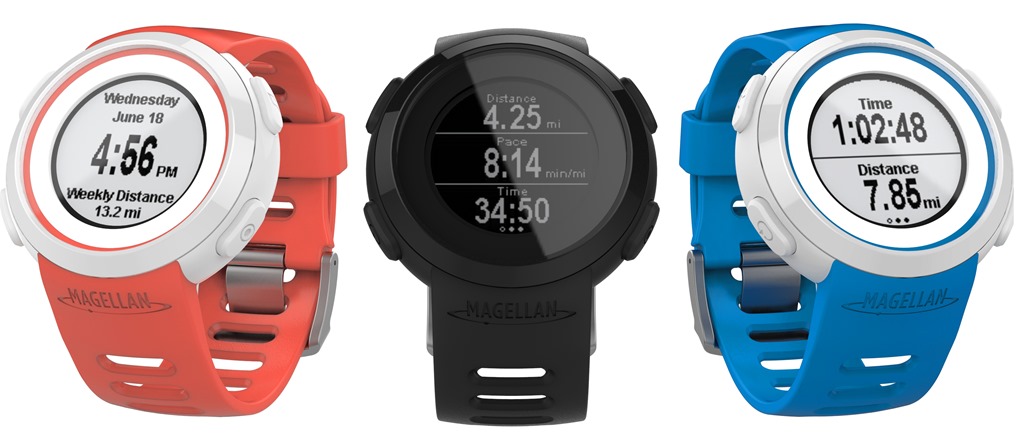
Adventure Tech: Magellan Introduces Smart Running Watch

Over the past couple of years there have been some significant advances in terms of sophisticated watches for use while running, cycling or doing just about any other outdoor exercise. Suunto and Garmin in particular have gone head-to-head in an effort to expand this market. Consciously absent from that competition was Magellan, a company that is known for building excellent GPS navigation devices but hadn't jumped into watches just yet. That all changed yesterday with the announcement of their latest product the Echo. A watch that pairs with your smartphone and gives you full control of fitness apps directly from your wrist.

The Echo uses Bluetooth technology to connect the watch with your iPhone or Android device to unlock all kinds of potential. The link lets your smartphone handle most of the heavy lifting and while streaming data about your pace, heart rate, distance and so on directly to the screen of the watch. You can also control the apps from the Echo, including full control over your music as well. If your favorite fitness app provides notifications they will appear on the watch as well, keeping you full informed at all times about the state of your workout. Your performance can then been analyzed and shared over social media too, if you're into bragging about your killer times to your friends.

Echo uses an open API designed by Wahoo Fitness for use with apps. That means that it should be easy for many of the top running or cycling apps to integrate support for the watch, but before they can be used with one another, those apps will need to be updated. Magellan says it is working closely with some of the top apps for iPhone and Android to get them ready for the launch of the Echo, which is expected to come in the 4th quarter of this year. The new watch will be officially unveiled next week at Outdoor Retailer and I hope to get a better look at it when I'm there.

Magellan is taking an interesting approach with the Echo. While the other companies creating similar products have tried to cram as much technology into the watch as possible, Magellan has instead decided to pair the watch with a smartphone and let that device do all of the heavy lifting. Since mobile phones already have integrated GPS and a host of other technology, there is no need for it to be on the watch itself. That should make this a much more lightweight and energy efficient product. In fact, while Suunto and Garmin's watches feature built-in rechargeable batteries, the Echo uses an easily replaceable watch battery that you can buy in any drug store. Using Bluetooth 4.0 technology, this watch should sip power slowly and last quite a long time on a single battery.

We'll have to wait to see how well Echo performs. If it receives good app support, it should be quite an interesting product. I don't personally run with my smartphone, but this might give me an incentive to change that. Looking forward to learning more at OR.

Wednesday, June 19, 2013

Gear Closet: Yurbuds Ironman Focus Sport Earphones

I'm not exactly sure how it happened, but slowly over th years I've become a runner. Sure, I ride both my road and mountain bike regularly, but more often than not I'm lacing up a pair of running shoes and hitting the road or trail. Multiple times a week I'm running anywhere from 8 to 10 miles and occasionally even more. Some days the only way I can get through those miles is to don my iPod, put in the headphones and just grind it out. Thankfully I have a solid library of great music and numerous podcasts to keep me entertained for hours on end.

While I generally put a lot of thought into which shoes I put on my feet, what kind of clothes I wear and even the socks that are best for long distance runs, one of the things that I have seldom thought about is the headphones I use while running. Generally I look for something inexpensive, comfortable for extended use and resistant to the sweat that inevitably comes along with a long run in Texas. Recently, after burning through yet another pair of cheap earbuds, I thought I'd try something different, so I splurged a little – not a lot – to try a pair of Yurbuds, which have reportedly been designed by athletes, for athletes.

Because I go through a set of earbuds about every 6 - 12 months, I've often been reluctant to spend much money on a more expensive pair. Fortunately, Yurbuds produces the Focus Ironman series and sells them for just $29.95, which is not a lot more than I was paying for the previous models I was using from a competitor. With that in mind, I set my expectations accordingly and went home to give them a try.

To say that the Yurbuds are a revelation would be a massive understatement. Not only was I immediately blown away by how much louder and clearer they were than the other earbuds I had been using, but they also produce far better sound across the entire spectrum. I was amazed at how much better my iPod sounded and I didn't even have to crank up the volume to hear my music or podcasts over passing traffic.

Despite that much higher volume and clearer sound, the Focus earbuds still keep me safe while out on a run thanks to their ability to pass ambient, outside sound through. This makes it easy to not only hear things around you but also hear voices. I appreciated that they perform so well yet don't dangerously isolate me from the outside world when working out.

On top of providing great audio performance, the Focus earbuds are also quite comfortable. They utilize Yurbud's Twistlock technology that allows you to slide them into your ear and give them a slight twist to hold them in place. Once they are there, they don't move at all and you can pretty much don't have to worry about them for the length of your run. The moldable and padded earloops are soft enough that you can actually forget you have them in, which hasn't always been the case with other models that I've used. While using some lesser models from competitors I sometimes couldn't wait to get them off my ears when I finished my run. The Yurbuds are so good however, that they are the first "sports" earbuds that I've used that I would actually consider wearing when I'm not working out.

I've only been using the Focus earbuds for a couple of weeks now, so it is too early for me to weigh in on their longterm durability. My hope is that they will last much longer than the six months or so that I got out of the previous earphones I used while running. I can say that the certainly feel light years better than the models I've used in the past. They feel like they can hold-up to a lot of punishment and they are certainly well shielded against sweat and rain.

Yurbuds seems to have thought of everything with these headphones and considering how well the $30 pair performs, it makes me wonder just how good their higher end models are. They must be exceptional indeed, because the Focus models offer exceptional performance in a small, lightweight and comfortable package. They even come with an high quality cloth carrying case that comes in handy when you want to toss them into a gym bag or gear case for race day.

If you're like me and enjoy listening to your tunes while running, you owe it to yourself to try a pair of Yurbuds the next time you need to replace your earphones. I think you'll be pleasantly surprised at just how great they really are and how much they can make your workouts an even more pleasant experience.

Monday, June 17, 2013

Gear Closet: Suunto Ambit GPS Watch

I'm the first one to admit that my gear closet is packed full of far more stuff than the average outdoor enthusiast could ever need. Writing this blog has afforded me the opportunity to test a lot of great equipment and use it on my own personal adventures. But one item that I had been hoping to add to my collection for some time was an Ambit GPS watch from Suunto, a high tech piece of kit that is versatile enough to be used in everyday workouts, weekend treks or excursions to far flung destinations across the globe.

Before I say anything about this watch, it is important to point out that this review is based on the original Ambit, which I was able to grab at REI recently when they gave it a 25% discount following the release of the Ambit2. By most accounts, the Ambit2 takes the winning formula of its processor and refines it nicely, providing more functionality in a slightly slimmed down form factor. Since I haven't tested that model yet, I can only share my thoughts on the Ambit, which I must say lives up to its reputation as an excellent multi-functional watch for all of your outdoor adventures.

In its basic form, the Ambit is a sports watch and as such it has all of the functionality you would expect out of such a device. Obviously it tells time (in two locations no less), and includes day, date and alarm functionality, as you would expect. It also has a stopwatch, interval timers, a countdown timer and more. It is rugged enough to be used at altitudes extending beyond the summit of Everest and as much as 100 meters (328 feet). In short, it is everything you would expect out of an outdoor watch and more.

At the heart of the Ambit is a powerful GPS chip that interfaces with the other functions of the watch, providing all kinds of real time data to the wearer. For instance, when running or cycling, the GPS feed information about your current speed, distance, pace – all of which is helpful when training for an event. While hiking, the watch can mark waypoints and help you navigate back to them using its onboard mapping capabilities. These capabilities put a powerful outdoor computer on your wrist that can help you in a variety of ways, particularly if you're an avid outdoor athlete or your adventures take you regularly into the backcountry.

Of course, GPS watches are nothing new and there have been a number of excellent products from other companies for years. What sets the Ambit apart in my book is that its user interface is super easy to understand, making it a breeze to navigate through the dizzying array of options and put them to use. I was impressed with the UI on this watch and commend Suunto for doing such a great job in making it so simple to operate. The operating system that makes this possible is also easily updatable, which means the watch continues to be refined and improved long after its release. In fact, a new firmware update is due before the end of the month, showing Suunto's commitment to continuing to support this watch even though the Ambit2 is out.

One of the major improvements the new Ambit has over its predecessor is that it has more onboard memory to support more functions. But that said, the original Ambit has free space as well and the user can add functionality to the watch themselves by downloading "apps" of a sort from the App Zone at Movescount.com. That website it he only home for Ambit users, allowing them to upload data from their watch to track performance and improvements over time. It's a nice site and easy to use, but it would be nice if the Ambit data was able to be shared on other fitness sites that are used by more people and allow uploads from a variety of devices from different manufacturers.

Performance of the Ambit has been excellent overall, although it can be slow to connect to the GPS satellites at times. I've found it is best for that initial connection if you have an unobstructed view of the sky and don't move at all until after the watch achieves GPS lock. Once it does find the satellites however, the Ambit seems to hold that connection well and begins to quickly track your movements. It can "ping" the GPS satellites on a 1 second or 1 minute basis. The faster rate provides more accurate readings of course, but it also puts a bigger hit on the battery. There are times when both levels of accuracy are nice to have. For instance, when running you want very accurate readings of your distance but when hiking the 1 minute intervals are probably fine since you're moving a much slower rate.

Speaking of the battery, the Ambit features an internal rechargeable cell that can be powered up by connecting the watch to a USB port on your computer or some other charger. When used strictly as a watch, Suunto says it can go up to 30 days between charges, but since I haven't been using it just as watch, i can't confirm or deny that number. I have been using on almost daily runs with GPS on the entire time. My runs are between 5-10 miles in length and the Ambit was able to survive two weeks without need a recharge. I found that to be pretty solid performance all things considering. We know that GPS always strains a battery, but considering  how small the Ambit is and how much functionality it has packed in, it really is impressive that it can last that long.

This is just scratching the surface of what the Ambit is capable of. It also has built-in automatic GPS time checks, temperature and barometric pressure readings, current altitude and change in altitude recordings and a lot more. In fact, I could go on forever about all of the features of this watch, but the most important things to know is that it is tough, rugged and performs incredibly well. It is also very easy to use, which isn't always the case for a device with this many features in such a small form factor. Suunto has delivered a versatile piece of technology that outdoor athletes will love, and whether your "settle" for the original Ambit (now available for as little as $350) or the more powerful and slightly trimmer Ambit2 ($550), you not only get a great piece of gear to accompany you on all your adventures, you're getting a watch that will last for years as well.

For me, the wait for getting my hands on the Ambit was worth with it. It is a great gadget and performs beyond my expectations. After just a few runs I felt completely comfortable using it without thinking twice and as a result, I can't imagine heading out without it on my wrist.

Tuesday, June 4, 2013

Adventure Kitchen: Sharkies Energy Sports Chews and A New Flavor From Clif Bar

I'm the kind of person who can't exercise on an empty stomach but also can't have anything too heavy before a workout either. As a result, I regularly find myself walking a fine line on when and what to eat in the lead-up to a run, bike ride or other intense aerobic workout. That's why I like to have some quick and easy pre-workout snacks that can provide the energy I need without filling me up. Recently I've had a chance to try two new, and very different, options in this department and I came away pleased with both of them.

Sharkies Energy Sports Chews
The first new option in my pantry are the tasty energy sports chews from Sharkies. These all-organic chews are designed to provide energy for our bodies for use in our favorite endurance sports. They provide a natural source of electrolytes, contain no trans fats or high fructose corn syrup. They also happen to be free of wheat, gluten and nuts, which means they are perfectly safe for those who have intolerances to any of those items.

The one thing these chews aren't lacking in is flavor. In fact, if I didn't know any better I'd swear these were gummy candies that you'd pick up from your local convenience store. That means they're sweet, tasty and good for you. They also happen to provide fuel for a workout without weighing you down in any way.

I've tested three different flavors of these chews – Watermelon Scream, Barry Blast and Fruit Splash – and it is a toss-up on which one I like best. I'm not even a big fan of watermelon flavored snacks, but these were a nice mix of sweet and tangy that I found I enjoyed quite a bit. The shark-shaped chews also have a nice consistency to them that makes them easy to enjoy as well. Other similar energy chews that I've tried in the past actually turned out to be a more challenging to eat than the actual workout itself.

Sharkies sells the chews in a box of 12 for $17.80, which works out to just $1.48 per pack. That's actually a very competitive price when compared to similar products on the market, many of which aren't nearly as tasty.

I've been munching on Sharkies prior to some longer runs recently and have been very happy with the results. Not only do they provide emergency fuel when I'm hungry before a workout but they do so without slowing me down in the least. The fact that manage to taste good while doing so is yet another added benefit.

Clif Bar Sierra Trail Mix Bar
By now, we're all familiar with the popular and ubiquitous Clif Bars. The company has been around forever and continues to refine their iconic energy bars. This spring they've introduced an interesting new flavor that is perfect for everything from a pre-run fuel-up or a mid-hike snack.

The new flavor is called Sierra Trail Mix and just like the iconic snack that it is named after, it contains plenty of peanuts, chocolate and raisins all in handy bar that you can carry with you anywhere. Like the other bars in Clif's line-up, this new addition is an excellent source of protein and fiber, contains 23 vitamins and minerals, but zero trans fats. That means it is a great source of quick energy when your batteries start to run a little low.

I have a confession to make. I haven't always been a fan of Clif Bar products. There were times in the past that I found them to be dry, hard to swallow and mostly tasteless. Those days are long gone however and now I find that I enjoy pretty much every flavor in the line-up. I can now add Sierra Trail Mix to that list too. This new flavor is everything you like about traditional trail mix, but in an easy to carry and eat package.

This new addition to the line-up is well worth taste. Pick some up where ever Clif Bars are sold, which is just about everywhere if your neighborhood is anything like mine.

Thursday, May 30, 2013

Video: Breaking Up With Your Slow Running Partner

We've all been there. We love the person we're with, but they simply can't keep up with us when we're running. What to do? Cut the dead weight of course! Something that is painfully (read: hilariously) depicted in the video below, which is actually a promo for a new line of running shoes that are coming our way courtesy of Pearl Izumi. The new shoes are allegedly incredibly light weight, yet still super-comfortable, allowing you to run faster and more efficiently then ever before.

You'll have to run pretty fast if you treat your significant other like some runners in the video.