Showing posts with label Environmental. Show all posts

Thursday, May 15, 2014

Melting Ice in Antarctica "Unstoppable" According to New Climate Report

A new climate report, released earlier this week, paints a dire picture for the ice sheets in west Antarctica. According to climate data collected by NASA, the region located along the Amundsen Sea is warming quicker than expected, as temperatures of ocean currents rise, pushing the effects of global climate change there "past the point of no return."

The new study stitched together data collected by satellite and flyovers by aircraft, to get a comprehensive look at how the Antarctic ice sheets are changing. After analyzing the findings, glaciologist Eric Rignot, co-author of the report, described the melting as "unstoppable" at this point.

While the paper says it will still take several centuries for the melt-off to occur, the ice located in the glaciers in question contain enough water to raise sea levels by as much as 4 feet (1.2 meters). That is enough to have a substantial impact on coastlines across the globe, and the cities that sit along the waters edge. That impact will most likely be felt in this century however, as estimates see a 1-3 foot rise in water levels by the year 2100. That is enough to displace tens of millions of people across the globe.

This particular area of Antarctica is hit harder by climate change than other regions due to the fact that the ice sheets sit on a shelf that actually rests below sea level. As the ocean currents have warmed, the increased temperatures are brought directly to the ice itself, causing them to melt at a substantially higher rate. That rate has increased by as much as 77% since 1973, when the data used in the study was first conducted.

Obviously, I write a lot about Antarctica, and the adventurous endeavors that take place there. It is one of the last great wildernesses on our planet, with vast regions that are still unexplored. These kinds of reports make it clear that the frozen continent is undergoing drastic changes at the moment, just like those that we've seen taking place at the top of the world in the Arctic. The fact that some people still question climate change is baffling to me. The consequences of what are happening to our planet have now moved past the point of whether or not it is man-made, and to the point where it doesn't really matter what is causing it, we need to figure out how to adapt to the changes, and have as little impact on the environment as possible.

I geography professor I had in college routinely use to say, "we're not destroying the planet, we're destroying ourselves." This seems to be the case here. In the greater scheme of things, the Earth will heal itself over time. It may take millions of years, but it will correct any impact that man has had on it. Those millions of years are just a blink of an eye in terms of geologic history, but that is plenty of time to completely wipe out all semblance of man. The Earth will go on without us, especially if we don't start thinking about ways to treat it better, and accept the changes that it is going through. It isn't too late for the planet, I just hope it isn't too late for us.

Wednesday, May 7, 2014

Video: Escaping the Light Dome - Getting a Better View of the Night Sky

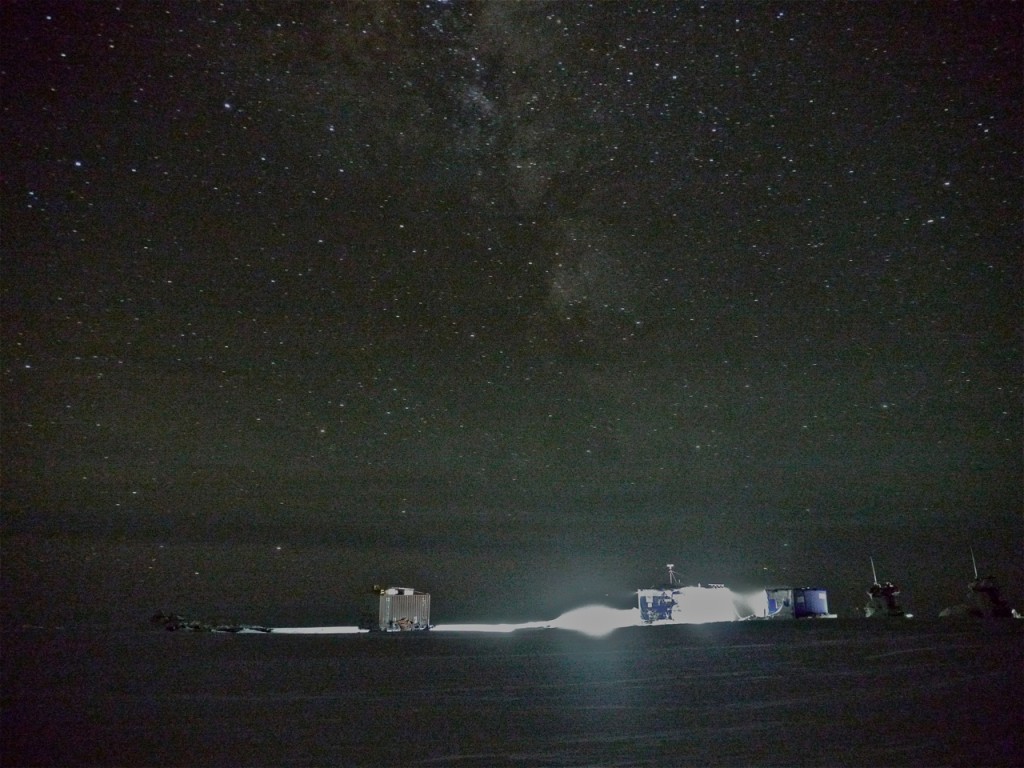
Light pollution has become a major deterrent for us to fully see the night sky overhead. In large metropolitan areas, the sky is so saturated by light, that sometimes only the brightest stars can be seen. But move out into the wilderness and glance up, and you'll see the Universe completely displayed in front of you. It can be an awe-inspiring, and incredibly humbling sight for sure. The video below gives us a glimpse of that, while also taking a look at how our vision of the heavens can become obscured by the "light dome." While I'm not necessarily a big fan of the delivery of the narration, the images contained on this clip are absolutely stunning.

Escaping the Light Dome from donald jensen on Vimeo.

North Pole 2014: Mission Accomplished! Eric and Ryan at the Pole!

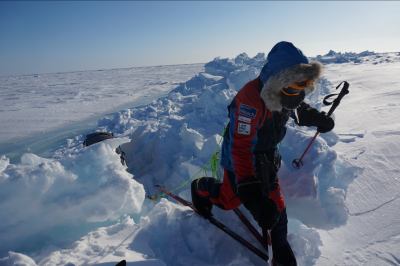
After 53 days out on the ice, Eric Larsen and Ryan Waters accomplished their goal at long last. The American duo reached the geographic North Pole last night, ending a four-year drought for anyone completing that journey on foot. The final push came in early evening, with the men arriving at 90ºN at about 7:50 PM Pacific Time. And while the final section to the actual Pole was smooth going, the last day of the expedition was anything but.

According to the audio dispatches that were released yesterday and today, the final push to the top of the world was incredibly grueling, with the explorers facing everything from rough ice, to large open leads, with whiteout conditions thrown in for good measure. In one of the dispatches, Eric says that it took them more than 8 hours just to cover a 3.5 mile stretch of ground. During that phase, they were skiing when they could, but had to resort to crawling, and swimming at times.

Eventually, they came across a section of flat, relatively smooth ice, that stretched before them unbroken. They knew that they were close to the Pole, with Eric remarking that for the first time since the start of the journey, there were no major obstacles in their way. It took a bit of navigating to locate 90ºN, but once they did, they celebrated briefly, took some pictures, and then crawled into their tent for a rest. In his dispatch, Eric said that they are utterly spent. The amount of effort it took, particularly in the final days when they were racing the clock, has left them completely exhausted.


The expedition was originally scheduled to last 45 days, but knowing that traveling in the Arctic is a difficult, unpredictable affair, they packed food and fuel for 55 days. That meant that they were able to complete the journey completely self supported, and didn't have to call in a resupply. With two days food left to spare, they can now rest for a bit before a flight can be arranged to pick them up. Extraction will come as the weather permits. A few days ago, the forecasts indicated that storms were possible in the area, so while they boys have reached their goal, they are not on their way home just yet.

Both Eric and Ryan are veterans of travel in the colder regions of our planet. In his last dispatch, Eric mentioned that things are changing dramatically in the Arctic, and the ice there is now unlike anything he has ever seen before. Climate change is having a dramatic effect on the Poles, and soon it may be impossible for anyone to complete this journey to the top of the world. In my opinion, it is already the toughest undertaking in the world of outdoor adventure, and considering the fact that no one has done it since 2010, I think it is only getting more difficult. It may not be too many more years before it is simply impossible to travel on foot the full distance to the North Pole.

Congratulations to Ryan and Eric on the successful completion of their expedition. Their efforts in the Arctic are an inspiration to many of us who have been following their progress for weeks. Hopefully they'll be on their way back home soon. I think they've earned themselves some much deserved rest, and perhaps a little time on a warm beach somewhere.

Monday, May 5, 2014

Video: The Dramatic Effects of Wind and Water on the American Southwest

We all know that wind and water can have a dramatic impact on the environment, particularly after millions of years of being able to relentlessly attack the stone over which they flow. There are few places where that is more evident than in the American southwest, where canyons and gorges are common. The video below gives us a glimpse of those places, showing us just how beautifully they have been carved by these forces of nature.

 
EROSION from Brett Lyon on Vimeo.

Tuesday, April 8, 2014

Video: The Oldest Living Things In The World

Ever wondered what the oldest living things in the world are? So did the photographers in this video, who have spent the better part of a decade locating, and taking photos, of those things. These plants have usually been around for thousands of years, and are located in remote places. The video gives us a glimpse of those places, and these organisms. This is fascinating stuff.

Oldest Living Things In the World from Deepspeed media on Vimeo.

Friday, March 14, 2014

Video: Antarctica: No Ordinary Place, No Ordinary Assignment

Awhile back, Air New Zealand launched a new campaign entitled Antarctica: No Ordinary Place, No Ordinary Assignment. The plan was to find a couple of lucky folks who were interested in traveling to the Antarctic to document that not only the beauty of that place, but also the threats to the natural environment there. After running an online contest, the airlines selected student filmmaker Marli Lopez-Hope and outdoor enthusiast Michael Armstrong to be their representatives. The results can be seen in the excellent video below, which gives us a look at their adventure on the frozen continent. It also makes me insanely jealous, but that is an entirely different matter. Enjoy the video!

Wednesday, March 5, 2014

Everest 2014: Nepal Promises To Crack Down On Littering Climbers

As the 2014 spring climbing season on Everest inches ever closer, we're getting more news out of Nepal about how the season will unfold, at least in terms of rules and regulations. First we heard that the tiny Himalayan nation was changing the structure of its climbing fees on the world's tallest mountain, and later there was word of a new military presence in Base Camp. Now comes the news of a major crack down on climbers that leave litter on the mountain, as the government looks to enforce a rule that has been on the books for some time, but has rarely been acted upon.

Government officials have told mountaineering teams that will be heading to Everest in a few weeks that they will now be responsible for returning from Base Camp with at least 18 pounds (8 kg) of garbage, not including their oxygen bottles and human waste. That is the average amount of trash that a climber creates while on the mountain each year. The hope is that as much as 8 tons of garbage will be removed this year, as teams look to pad their weight with garbage that has been left there over the past 60 years. Those failing to comply with this rule will be subject to the loss of their $4000 trash deposit that is part of their climbing fees.

The deposit was instituted a few years back in an effort to encourage the climbing teams to bring their trash downy he mountain with them when they leave. Those climbers were always threatened with the loss of the money if they didn't pack out their trash, but in reality the rule was rarely enforced. Now, it will be strictly monitored in an effort to help clean up Everest.


This announcement shouldn't come as much of a surprise to most mountaineers. The Nepalese government has been focused on improving the environment on Everest for some time now. Likewise, environmentalists will applaud the more strict enforcement of trash rules as well. For more than 60 years, there has been a lot of refuse left behind, and has the number of climbers on the mountain continues to increase, it is likely that it will only get worse unless something is done about it now.

While some of the advance work for the spring climbing season is already underway, the climbers themselves won't start to arrive in any numbers for another couple of weeks. Things will start to pick up in late March as the streets of Kathmandu become crowded with visitors. Of course, we'll be following the season closely once again this year, as it promise to be another busy one.

Wednesday, January 22, 2014

Activists To Launch 15,000 Mile, 5-Month Road Trip To Promote Clean Drinking Water In Americas

Two adventurers are preparing to launch what promises to be an epic road trip adventure across the Americas in an effort to promote clean drinking water initiatives in that part of the world. Later his week, American Paul Cebul and German Steffen Mueller will embark on a five-month long journey that will cross 15 countries and culminate in Rio de Janeiro in time for the World Cup in July.

Cebul and Mueller will set out from Boston on Saturday and begin heading south. Their trip will take them across the U.S., into Mexico and then on into Central America. Eventually, they'll cross over the Panama Canal and move into South America, before eventually reaching Rio around July 13. Along the way, they'll pass through 70 different cities and visit an estimated 65 colleges and universities as they spread their message about the importance of clean drinking water, particularly in developing countries.

The two men are calling their expedition Water for the Americas, and while they have a website set up to support their initiatives, the site doesn't offer a lot of information at this time. Hopefully they'll update it before they hit the road, allowing us to follow their progress and adventures as they go.

Clean drinking water is one of the hot button topics across the globe right now. While most developed nations don't struggle with having water to drink, poorer nations have a difficult time, especially as climate change begins to take its toll on the environment. Cebul and Mueller hope to educate people about this issue, particularly in nations that are being most hard hit.

While I applaud their efforts, this sounds like just an excuse to make a months long road trip to the World Cup. I kid! I kid!

Wednesday, December 18, 2013

Video: Julia Roberts On The Importance Of Clean Cookstoves

If you're a regular reader of this blog, you know that I have a strong respect and admiration for the work that is being done by my friends at the Himalayan Stove Project. For the past few years, they have been delivering and installing clean cookstoves to the people of Nepal, where they have already changed the lives of thousands of people. A clean cookstove translates into better, healthier living, and the HSP is having a direct and immediate effect where ever they install their new stoves. Don't believe me? Take a look at the video below, which features Academy Award winning actress Julia Roberts, who is part of the Global Alliance for Clean Cookstoves. In the two-minute clip, she outlines exactly why this is an important cause.

In this season of giving, if you're looking for a great cause to contribute to, consider the Himalayan Stove Project. Your money will go directly to saving lives in the Himalaya, a part of the world that is practically the epicenter for adventure.

Thursday, December 12, 2013

Video: The Glaciers Of North Cascades National Park

Located in the state of Washington, a few hours drive from Seattle, the North Cascades National Park offers some of the most remote and spectacular wilderness in the lower 48 states. It also happens to be home to more than 700 glaciers, which as we all know are the harbingers of climate change on our planet. The video below was released by the National Park Service and it gives us an idea of how researchers monitor the health of the park's glaciers to determine the impact of climate change on the region. It is actually a fascinating short film with some great scenery to enjoy along the way.

Friday, October 18, 2013

TitiKayak Debrief: Circumnavigating The Highest Navigable Lake In The World By Kayak

Back in August and September I posted a couple of time about the TitiKayak expedition. For those who don't recall, that was the attempt by Belgian adventurer Louis-Philippe Loncke and Peruvian explorer Gadiel "Cho" Sanchez Rivera to become the first people to circumnavigate Lake Titicaca by kayak. The lake, which is located at 3812 meters (12,507 ft) in altitude and falls along the border of Peru and Bolivia, covers an area of 8372 sq. km (3232 sq. miles) and is widely considered to be the highest navigable lake in the world. Lonke and Rivera set out to paddle 1100 km (683 miles) around Titicaca's parameter while taking photographs if its shoreline and GPS coordinates of its current position. The hope is that the data will allow researchers to study the impact of climate change on the lake in the years to come by having baseline numbers to compare their readings to.

The expedition actually wrapped up in late September but due to busy schedules and other commitments, it has taken a bit of time to upload the photos from their journey and share details of what it was like out on the water. All told, it took Lou-Phi and Cho 38 days to paddle around the lake, staying close to the shore for most of the way. Stopping frequently to take photos and gather GPS data, the two men were meticulous in their approach and stuck closely to their plan as much as they could. They did run into some issues when attempting to cross the border into Bolivia, as law enforcement at the checkpoint between the countries were reluctant to let them pass, in part because they had never seen a kayak before. It took two days to sort out the paperwork, but eventually it came together and the adventurers were allowed to continue on their way.


Dealing with immigration officers were the least of their worries however and there were plenty of other challenges to keep them on their toes. For starters, August and September are winter months in the Southern Hemisphere and this was one of the coldest winters in recent memories. The boys faced freezing temps for much of the way and the Puno region through which they traveled received its highest amount of snowfall in the past 30 years. Cold temperatures, snow and a big lake don't always make for the best of conditions.

The primary focus of the expedition was to not just paddle around its shores but to also survey the health of the body of water. What Loncke and Sanchez Rivera discovered is that Titicaca is facing some serious challenges. The water was littered with garbage and is contaminated by chemicals and sewage dumped into into it from the surrounding communities. In short, the lake faces some major issues in the future and with no regulation or proper water treatment in place, it is going to get much worse before it ever starts to get better.

You can read more about the expedition and the team's experiences on the TitiKayak blog. You can also review the photos they took along the way in their Photo Inventory. All of the images have been uploaded and organized, but GPS coordinates have not been matched to them just yet. That is a big job that will be completed sometime early next year, completing the full data set of the inventory.

Congrats to Lou-Phi and Cho on completing this amazing adventure. Great effort on both the exploration and environmental front.

Friday, October 11, 2013

Video: STEPS - A Climate Friendly Snowboard and Ski Film

As I mentioned earlier in the week, it is nearly time to start thinking about playing in the snow once again. That means we'll be seeing more ski and snowboarding films showing up just as we get in the mood to shred some fresh powder. You'll find one such film below, which like most of these types of movies features some amazing shots in remote backcountry. What sets this one apart however, is that it was made in a very sustainable fashion. The filmmakers wanted to go easy on the environment, so they shunned the use of helicopters and snowmobiles in favor of traveling on foot. Something that is far better for the planet. The results are spectacular.

New Trailer: STEPS - A journey to the edge of climate change from Ride Greener on Vimeo.

Thursday, October 10, 2013

U.S. Government Shutdown Halts Antarctic Research

As the shutdown of the U.S. government continues to drag on the consequences for the inability for Congress and the President to come to an agreement on budget issues continues to ripple into more and more programs. Of course, we already knew that the closure of the national park service would impact some of our favorite outdoor places, but now it seems that research stations in the Antarctic are feeling the fiscal crunch as well.

As fall continues on here in the Northern Hemisphere, spring is moving into full effect down south. That includes Antarctica, where the late-October and early-November are the traditional kick off the research season at the bottom of the world. In just a few weeks time I'll begin coverage of teams heading to the South Pole for what promises to be another busy and interesting season. But for American research teams, it could potentially be a very frustrating one.

The National Science Foundation has announced that unless a budget agreement is reached by October 14, the organization will run out of funds to cover its various projects, including the staffing and maintenance of Antarctic research stations. The NSF has already instructed its support contractors to prepare to move into "caretaker status." What does that mean exactly? Here's what the memo says:
"Under caretaker status, the USAP (U.S. Antarctic Program) will be staffed at a minimal level to ensure human safety and preserve government property, including the three primary research stations, ships and associated research facilities. All field and research activities not essential to human safety and preservation of property will be suspended."
This is obviously bad news for the scientists and researchers who have been planning on going to the Antarctic for months, if not longer. Most will be put on hold come Monday and if the situation isn't resolved, their research could be delayed for years. As Outside magazine says in their article on the subject, scheduling for these projects is done far in advance and any shift in that schedule could be incredibly disruptive to the work being done.

There are a few more days to get things sorted out, although at this point discussions are not looking promising. There is a major deadline looming at the end of next week however and it is my opinion that some compromise will be reached by then. Both sides seem to be playing chicken at the moment and neither wants to be the one to swerve first. Hopefully they'll come to their senses soon and things can begin to return to normal. There is still time, even if things look pretty grim right now.

Friday, September 13, 2013

NPCA Implores President Obama To Improve Air In National Parks

The National Parks Conservation Association (NPCA) has petitioned President Obama urging him to take immediate action to clean up the air in America's national parks. This move comes after the Environmental Protection Agency (EPA) took air samples in ten of the nation's most iconic parks and found that while air quality is improving it is doing so at an incredibly slow rate. So slow in fact, that the NPCA predicts it could take up to 300 years before the parks return to their natural states.

The complete list of the ten parks the EPA surveyed, along with the estimated year that each will return to its level of natural air quality are listed below.
• North Cascades National Park (Washington) – 2276
• Badlands National Park (South Dakota) – 2265
• Voyageurs National Park (Minnesota) – 2177
• Yellowstone National Park (Wyoming/Montana/Idaho) – 2163
• Theodore Roosevelt National Park (North Dakota) – 2158
• Big Bend National Park (Texas) – 2155
• Grand Canyon National Park (Arizona) – 2127
• Black Canyon of the Gunnison National Park (Colorado) – 2119
• Joshua Tree National Park (California) – 2106
• Sequoia National Park (California) – 2096
The 1977 Clean Air Act and the 1998 Regional Haze Rule were created to help improve air quality in the national parks. But thanks to loop holes in those pieces of legislation, clean-up is going much slower than expected. The NPCA's petition to the President encourages him to close those loop holes and hold polluters responsible for their actions. By taking these actions it is hoped that the air quality can being to improve much sooner. To add your name to the petition, click here. 

As someone who happens to love America's national parks I have to whole heartedly get behind this petition. The parks are some oft he best outdoor playgrounds in the world and they really should be protected for future generations to enjoy too. I'm encouraged to hear that air quality is improving but it is sad to hear that it could take up to ten generations to get them back to their natural state. If that is as unacceptable to you as it is to me, then click on the link above and add your name to the petition.

300 Years for Clean Air? Our National Parks Can’t Wait! from NPCA on Vimeo.

Tuesday, September 10, 2013

Harnessing The Elements For Energy And Adventure

The Sierra Club has posted an interesting article in its Sierra magazine that profiles four outdoor personalities who have managed to harness the natural power of the elements not only for clean energy but for use in the activities that they also happen to love. These four individuals have seen the potential for benefits both in renewable energy and in the extreme activities that have driven them into the outdoors.

The article is entitled "Electrifying The Elements" and it is written by David Ferris, a journalist who routinely covers environmental issues, renewable energy and outdoor adventure. In the article, Ferris writes about Andrew Scott, a surfer who is also an ocean engineer who studies ways to harness energy from waves. He also introduces readers to John Woolard is a kayaker who owns a company that harnesses solar power to create electricity and Gayle Zydlewski, who studies the tides for untapped power while also being an avid fisherwoman. Finally, kiteboarder Johnny Heineken is also profiled for his use of the wind not only to generate power both as a clean energy source and to pursue his favorite outdoor activity.

Most true outdoor enthusiasts that I've met also happen to be environmentalist even if they don't necessarily label themselves that way. Those of us who love the outdoors naturally want to see our favorite places protected. Renewable energy sources are one way of doing that, creating ways of keeping us powered while having no negative impact on the environment. I would also argue that outdoor athletes are also more in tune with the world around them since they tend to be hyper-aware of their surroundings. That seems to be the case with these four individuals who not only learned to recognize the forces of nature around them but also opportunities to harness those elements for the greater good.

This is a fascinating story and one that I think you'll appreciate. These are four people who obviously love nature and have a healthy respect for the forces that it can bring to bear. Inspiring stuff.

Thursday, August 15, 2013

The Coldest Journey Update: Still Stranded As Sun Returns At Last

Remember the Coldest Journey expedition? It was the much vaunted attempt to cross Antarctica on skies in the winter, when the continent becomes one of the most inhospitable environments on the planet. When the expedition got underway this past March, it was with the anticipation that the team of explorers made up of Brits Brian Newham, Ian Prickett, Richmond Dykes, Rob Lambert and Spencer Smirl would traverse the Antarctic by way of the South Pole, covering some 4000 km (2485 miles) along the way. By June, that goal had become a distant memory however, as bad weather, incredibly difficult surface conditions and dangerous crevasses prevented the men from making the steady progress they had hoped. As a result, they put a halt to their journey and elected to set up camp and wait for a plane to come pick them up once spring had arrived. Two months later, they're still waiting for that plane, although they have had their first glimpse of things starting to turn in their favor.

For the past two months the team has essentially been camped in the same spot while they've waited for the winter to pass. During that time they have continued to focus on the scientific aspects of the expedition which consist of taking various weather readings to measure the impact of climate change on the environment in the Antarctic. While they haven't been able to make any progress forward or back, they are still going about the business of collecting data for ongoing research.

There was a glimmer of hope on the horizon this past week however as the sun has shown itself for the first time in weeks. During the Antarctic winter the days get increasingly shorter until the sun dips below the horizon altogether and the continent is shrouded in darkness. But that long night has come to an end at last and the sun has begun appearing above the horizon for the first time in quite awhile. The days may not be all that long just yet, but it is a start. And for this embattled crew, it is also the first sign that spring is approaching. That could mean that there is a light at the end of the tunnel for these five men who have been in Antarctica for a really long time.

We're still probably a couple of months away from any kind of evacuation taking place but the return of the sun is a good sign for these men. After weeks in nearly complete darkness, they'll now have some daylight to help bolster their spirits and mood. I'm sure at the moment they feel a bit like the expedition that the world has forgotten about, but optimism comes with the sun.

Hand in there boys! Spring will be here before you know it.

Wednesday, June 26, 2013

Video: Rios Libres Episode 4 - The Movement

Today we have the fourth – and final – episode of the Rios Libres web series, which over the past few weeks has introduced us to the threats that the rivers in Chilean Patagonia currently face. Corrupt officials in that country sold the water rights to those rivers to multi-national companies based in Europe. Those companies now intend to build hydro-electric generating dams along those rivers, which will have a lasting, and possibly irreversible, impact on the environment.

In this episode we get a chance to see exactly what is at stake here. Patagonia is one of the most dramatic and breathtaking landscapes on the planet and its future is now in jeopardy. We are at the crossroads as to where this issue will go next, but we can all sign an online petition asking Chile's president to reconsider construction of the dams. If those projects move forward, we could lose one of the last truly great wildernesses in existence.


Episode 4- The Movement from Rios Libres on Vimeo.

Tuesday, June 18, 2013

Video: Rios Libres Episode 3 - The Alternatives

Episode three of the four part Rio Libres web series has been released, continuing the exploration of the issues that the wild rivers of Chilean Patagonia face now that multinational corporations are threatening to build dams throughout the region. In this episode we explore some alternatives to the hydroelectric plants that will irrevocably change the landscape in the south in order to power the mining operations in the north – a region where solar power is more viable than just about any other place on the planet.

This has been an excellent series so far, but it's painful to think about what they are potentially doing to Patagonia.


Episode 3- The Alternatives from Rios Libres on Vimeo.

Monday, June 10, 2013

Video: Rios Libres Episode 2 - The History

Last week I introduced you to a new series of videos focused on the plight of the rivers in Chile's wild Patagonia region. This week we have the second video in the Rios Libres: Environmental Dispatches series, which will eventually be four parts in length. This time out we get a bit of a history lesson of the challenges that the rivers in Patagonia face as multi-national companies race to place dams on the river there in order to create hydroelectric power. But the impact of those dams could have a dramatic and irreversible effect on one of the last great wild spaces on our planet. We've seen it happen elsewhere and it would be a shame to see it happen in Patagonia as well.

Episode 2- The History from Rios Libres on Vimeo.

Wednesday, June 5, 2013

Video: Saving Patagonia's Wild Rivers

A new web video series has just launched entitled "Rios Libres: Environmental Dispatches." The four-part series explores the threats to Chile's rivers and the unique challenges that the people of that country are facing in order to save their wild spaces, including Patagonia, one of the most spectacular wildernesses on the planet.

The issue is that large conglomerates are planning to place five dams along two major rivers in Patagonia. Those dams will have a massive effect on the rivers and the ecosystems that surround them. In the video below, which is Episode 1 of this new series, we meet some of the people that live in Patagonia and get their thoughts on what the Baker and Pascua rivers mean to them.

Episode 1- The People from Rios Libres on Vimeo.