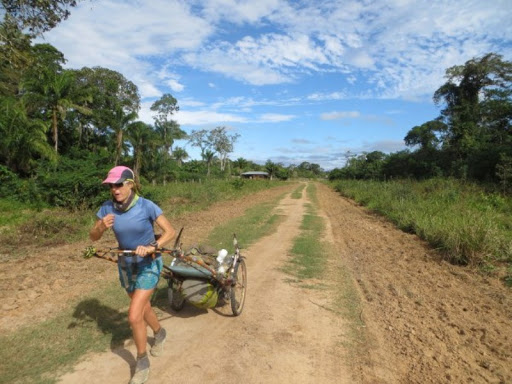
The team at impossible2Possible are getting ready to do it again. Their latest youth expedition is preparing to get underway in the Atacama Desert of Northern Chile. This time, a team of five i2P Youth Ambassadors will attempt to run a marathon a day, for six days, across the driest desert on the planet. As is usually the case with this organization, there will also be a strong educational aspect, as the young men and women making the run, look to inspire others through adventure.
The team is already in the Atacama, and en route to their starting point. They should start running in the next day or two, working their way through one of the most arid environments imaginable. But it isn't just the dry conditions that they'll have to endure. The Atacama also happens to sit at altitude, which means they'll need to acclimatize some along the way as well. The thin air can make running a challenge, even for the very fit.
The Atacama Youth Ambassadors have come from all over the globe to take part in this adventure. They include Jesus Perez from the U.S.; Alessandro Aime from Italy; Valerie Gagne and Stephen Lambert, both from Canada; and Florence Reyonolds of New Zealand.
The team will be following a route that i2P founder Ray Zahab ran back in 2011, when he covered 1200 km (745 miles) of the Atacama. They'll have a support team assisting them along the way, carrying some the gear for their camps and providing them with food and water while they are out on the trail.
One of the key goals for i2P is to inspire and educate young people through the use of adventure. When ever the organization sends an expedition into the field, it always coordinates with students and teachers in classrooms to provide interesting lesson plans that connect to the expedition that is underway. This time out, the focus of those lesson plans are astronomy and the origins of the Universe. The Atacama has some of the clearest skies on the planet, which is why there are several high tech observatories there. Over the next few days, the i2P Youth Ambassadors will provide lessons on a host of topics, including basic Newtonian physics, the planets, stars, galaxies and black holes, and a host of other subjects. Having witnessed the night skies in the Atacama first hand, I can tell you that they are awe inspiring, and very humbling.
I'll post updates of the Atacama Expedition as it unfolds, but if you want to follow along with the team, you'll find daily updates by clicking here.
Good luck to the i2P squad as they set out on this latest adventure.
Showing posts with label Chile. Show all posts
Tuesday, May 13, 2014
Thursday, May 8, 2014
Video: Kayaking a Lost World in Patagonia
We all know that Patagonia is one of the most remote and beautiful places on the planet, but even it still holds wonders to be revealed. That's what the kayakers in this video discovered when they made a descent of the amazing looking Pucón River there. The waterway is marked with impressive waterfalls, deep canyons, and wild whitewater. Everything you want to see in a good paddling movie.
Wednesday, April 23, 2014
Expedition 1000 Update: Atacama Whike Crossing Complete!
The latest leg of Dave Cornthwaite's Expedition 1000 project is complete. You may recall, Dave, and his two traveling companions, Ned Aufenhast, and Jamie Fulbrook, set out from Santiago, Chile a few weeks back with the intention of crossing the Atacama Desert using a Whike – a specially designed bicycle that uses both the wind and pedals to propel itself along.
As with all previous legs of Expedition 1000, the crossing of the Atacama was completed using only non-motorized transportation, and covered a minimum of 1000 miles. It took Dave and company 19 days to wrap up the expedition, climbing more than 18,000 meters (59,055 feet) in the process.
According to Dave's Facebook page, they averaged 6.2 mph over the course of their journey, which may not sound like a lot, but when you consider how mountainous Chile can be, that is a fairly steady pace over a 19 day period. Their top speed was 39.3 mph, no doubt on the downside of one of the aforementioned mountains. Their longest climb in a single day was from sea level up to 2087 meters (6847 feet), which is an awful lot for the body to compensate for if you're not prepared for altitude. Over the course of the journey, they averaged nearly 9 hours per day on their Whikes.
The Atacama Desert is well known for being the driest place on Earth. Trapped between the Chile's Pacific Mountain Range on the west, and the Andes on the east, it falls into a rain shadow that is very difficult for storms to pass over. As a result, there are actually places in the Atacama that have not seen rainfall in recorded history. But the place has a stark beauty to it that can be breathtaking. It is, without a doubt, one of my favorite places that I have ever visited.
The boys will now rest for a few days before they launch the next leg of Expedition 1000. That journey will get underway on April 28, but what exactly it will be remains a mystery. Stay tuned for more!
As with all previous legs of Expedition 1000, the crossing of the Atacama was completed using only non-motorized transportation, and covered a minimum of 1000 miles. It took Dave and company 19 days to wrap up the expedition, climbing more than 18,000 meters (59,055 feet) in the process.
According to Dave's Facebook page, they averaged 6.2 mph over the course of their journey, which may not sound like a lot, but when you consider how mountainous Chile can be, that is a fairly steady pace over a 19 day period. Their top speed was 39.3 mph, no doubt on the downside of one of the aforementioned mountains. Their longest climb in a single day was from sea level up to 2087 meters (6847 feet), which is an awful lot for the body to compensate for if you're not prepared for altitude. Over the course of the journey, they averaged nearly 9 hours per day on their Whikes.
The Atacama Desert is well known for being the driest place on Earth. Trapped between the Chile's Pacific Mountain Range on the west, and the Andes on the east, it falls into a rain shadow that is very difficult for storms to pass over. As a result, there are actually places in the Atacama that have not seen rainfall in recorded history. But the place has a stark beauty to it that can be breathtaking. It is, without a doubt, one of my favorite places that I have ever visited.
The boys will now rest for a few days before they launch the next leg of Expedition 1000. That journey will get underway on April 28, but what exactly it will be remains a mystery. Stay tuned for more!
Monday, April 7, 2014
Video: Discovering Patagonia
Patagonia is beyond a doubt, one of the most beautiful and wild places on the planet. I personally can't get enough of the place, and the video below is a good illustration of why. It was shot this past December, and gives us a great glimpse of what the place is really like. Truly amazing.
Discovering Patagonia from Tomas Likar on Vimeo.
Friday, April 4, 2014
Expedition 1000 Update: Crossing The Atacama Desert By Wind And Pedal Power
British adventurer Dave Cornthwaite has set off on the next stage of his Expedition 1000 project, which consists of 25 separate journeys of 1000 miles (1600 km) or more, without the use of motorized transportation. In the past, he has skateboarded across Australia, stand-up paddle boarded down the Mississippi River, and swam for over a thousand miles on the Missouri River. This time out, Dave, along with his traveling companions Ned Aufenhast, and Jamie Fulbrook, will be traveling across the Atacama Desert by Whike.
Is you'll see at the link above, a Whike is essentially a recumbent bike with a wind sail added to it. This allows the rider to both pedal and sail down the road. It looks like a fun ride, although I have never had any experience with one.
Dave, Ned and Jamie set out from Santiago, the capital of Chile, yesterday and have started traveling north to the Atacama. You'll be able to follow their progress on Dave's Facebook page and on Twitter. Since they have just gotten underway, and intend to cover at least 1000 miles, they should be out on the road for some time. The Atacama provides plenty of great photo opportunities as well, so I expect we should see some great images and video from their journey.
The video below will give you a look at the Whike and more info on what Dave and company are up to in South America.
Welcome to Whike Atacama from davecornthwaite on Vimeo.
Is you'll see at the link above, a Whike is essentially a recumbent bike with a wind sail added to it. This allows the rider to both pedal and sail down the road. It looks like a fun ride, although I have never had any experience with one.
Dave, Ned and Jamie set out from Santiago, the capital of Chile, yesterday and have started traveling north to the Atacama. You'll be able to follow their progress on Dave's Facebook page and on Twitter. Since they have just gotten underway, and intend to cover at least 1000 miles, they should be out on the road for some time. The Atacama provides plenty of great photo opportunities as well, so I expect we should see some great images and video from their journey.
The video below will give you a look at the Whike and more info on what Dave and company are up to in South America.
Wednesday, March 26, 2014
Video: Crazy Urban Mountain Biking In Valparaíso, Chile
I've mentioned the now infamous urban mountain biking race held in Valparaíso, Chile before, but it is also an amazing sight to behold. Especially when seen from the perspective of the rider. That's exactly what this video shows, as Marcel Gutiérrez flies down a course like nothing you've ever seen before. It has banks, jumps, drops, and even the occasion dog or pedestrian crossing the street. There is nothing else quite like it for sure.
Monday, March 10, 2014
Video: The Very Scary Valparaiso Urban Mountain Bike Race
Over the past few years, the urban mountain bike race held in Valparaiso, Chile has earned itself a reputation as one of the toughest – and scariest – competitions on the planet. If you haven't seen footage from this race before, then your'e in for a treat, as this video shows it off well. Hopefully we'll get a full version of a ride from the event, as they are always incredibly crazy to watch unfold.
Monday, February 17, 2014
Chad Kellogg Dies While Climbing In Patagonia
There was sad news out of Agentina this past weekend as the news broke that American climber Chad Kellogg has died while climbing in Patagonia. Kellogg was climbing Fitz Roy with and Jens Holsten. The two apparently successfully topped out and were beginning their descent when a rope dislodged a rock that struck Chad in the head. He reportedly died instantly.
The accident occurred late last Friday, but it took Holsten some time to descend safely and walk to the nearest village. The news has slowly filtered out since then and the climbing community is still reeling. Due to the remoteness of the accident, his body will not be recovered.
Kellogg was well known for his speed climbing on Rainier and Denali. Over the past couple of years, he even made a couple of attempt to break the speed record on Everest. Chad enjoyed climbing remote peaks and opening new routes with a variety of close climbing partners. His legacy will include new routes in the Himalaya, the Andes, and China.
My condolences go out Chad's friends and family.
The accident occurred late last Friday, but it took Holsten some time to descend safely and walk to the nearest village. The news has slowly filtered out since then and the climbing community is still reeling. Due to the remoteness of the accident, his body will not be recovered.
Kellogg was well known for his speed climbing on Rainier and Denali. Over the past couple of years, he even made a couple of attempt to break the speed record on Everest. Chad enjoyed climbing remote peaks and opening new routes with a variety of close climbing partners. His legacy will include new routes in the Himalaya, the Andes, and China.
My condolences go out Chad's friends and family.
Wednesday, January 8, 2014
Video: Sunrise to Sunset In The Atacama Desert
Here's a brief, but very lovely, video that was shot in the Atacama Desert of northern Chile. It is a timelapse that captures the movement of the skies from sunrise, to sunset, and back again in one of the most amazing environments on the planet. I can tell you from my visit to the Atacama, that the skies really do look like that. It was one of the most breathtaking night skies that I have ever seen, and definitely worth the trip for that view alone. Simply amazing.
Ancients from Nicholas Buer on Vimeo.
Friday, December 20, 2013
Pacific Ocean Row: Fedor Konyukhov Returning To Chile
It has been a rough week for some of the adventurers we've been following lately. Yesterday we learned that the Dark Ice Project has been cancelled, only to find out later that Pacific rower Fedor Konyukhov is returning to land as well. You may recall, a few days back he launched his attempt row solo across the Pacific, departing from Valparaise, Chile with the intention of crossing the ocean all the way to Brisbane, Australia. But four days in, he has suffered a set back is on his way back to shore.
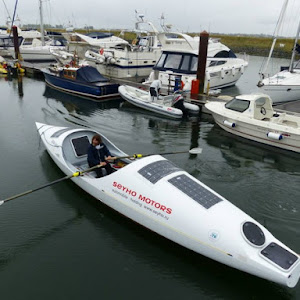
According to a post on his website, Fedor suffered a failure of his solar charging system on Tuesday, with both of his onboard batteries running out of juice. Those batteries power a number of systems on his custom built rowboat, and without the solar panel to recharge them, he would never have a chance of crossing the Pacific. His GPS devices, satellite phone and other electronics all require the batteries to function properly.
After he called for assistance, his support team back on land chartered a boat to go out to tow him in. He should be back in Chile today, as he had only made it about 40 miles from shore when he ran into trouble. According to his website, he has been using a manual satellite phone to stay in contact and has several handheld GPS devices to call in his coordinates. His team was en route on Wednesday, but so far there haven't been any updates on their progress. They do say the situation is under control and that Fedor is not in any danger.
Once back on shore, the entire electrical system will need to be examined and repaired before the Russian can attempt to set out again. How long that take remains to be seen. Considering the voyage was suppose to take more than six months, it's just a good thing he wasn't further out from shore when the malfunction occurred. Hopefully he'll be back rowing soon.
According to a post on his website, Fedor suffered a failure of his solar charging system on Tuesday, with both of his onboard batteries running out of juice. Those batteries power a number of systems on his custom built rowboat, and without the solar panel to recharge them, he would never have a chance of crossing the Pacific. His GPS devices, satellite phone and other electronics all require the batteries to function properly.
After he called for assistance, his support team back on land chartered a boat to go out to tow him in. He should be back in Chile today, as he had only made it about 40 miles from shore when he ran into trouble. According to his website, he has been using a manual satellite phone to stay in contact and has several handheld GPS devices to call in his coordinates. His team was en route on Wednesday, but so far there haven't been any updates on their progress. They do say the situation is under control and that Fedor is not in any danger.
Once back on shore, the entire electrical system will need to be examined and repaired before the Russian can attempt to set out again. How long that take remains to be seen. Considering the voyage was suppose to take more than six months, it's just a good thing he wasn't further out from shore when the malfunction occurred. Hopefully he'll be back rowing soon.
Monday, December 16, 2013
Russian Adventurer Begins Solo Row Across The Pacific
At the beginning of November I posted a story about Fedor Konyukhov, a Russian adventurer who was planning a solo, unsupported, non-stop row across the Pacific Ocean. At the time, he was still in the planning stages of the journey but had hoped to set off sometime in December. This past weekend he hit the water at last and now faces 8000 nautical miles (14,816 km) of open sea as he travels under his own power from Valparaise, Chile to Brisbane, Australia.
According to this update from ExWeb, the Pacific crossing should take Fedor roughly 200 days to complete. During the first stage of journey he'll have to navigate through a maze of lightly mapped islands and atolls, while on his arrival in Australia he'll have to negotiate the Great Barrier Reef. In between, he'll have thousands of miles of open sea that he'll have to row entirely on his own in what is set to be the longest ocean row ever.
Konyukhov's boat has been equipped with the latest in ocean rowing technology. Solar cells will power all of the onboard electronics such as GPS and satellite communications equipment. Desalinization pumps will turn salt water into drinking water for him, while an autopilot system will help ensure that he stays on course throughout the journey. The boat arrived in Chile several weeks back, and it has undergone extensive testing on the ocean prior to Fedor's departure on Saturday morning. It passed those tests with flying colors, so hopefully it'll now be up to the task ahead.
You'll be able to follow along with Fedor's progress on his website, which does offer an English version. He also has a blog and Facebook page, both of which are in Russian. If you don't read that language, you'll need to use Google Translate or something similar to understand what is being said.
Good luck to Fedor on this epic journey. Hopefully the sea is kind to him over the next 6+ months.
According to this update from ExWeb, the Pacific crossing should take Fedor roughly 200 days to complete. During the first stage of journey he'll have to navigate through a maze of lightly mapped islands and atolls, while on his arrival in Australia he'll have to negotiate the Great Barrier Reef. In between, he'll have thousands of miles of open sea that he'll have to row entirely on his own in what is set to be the longest ocean row ever.
Konyukhov's boat has been equipped with the latest in ocean rowing technology. Solar cells will power all of the onboard electronics such as GPS and satellite communications equipment. Desalinization pumps will turn salt water into drinking water for him, while an autopilot system will help ensure that he stays on course throughout the journey. The boat arrived in Chile several weeks back, and it has undergone extensive testing on the ocean prior to Fedor's departure on Saturday morning. It passed those tests with flying colors, so hopefully it'll now be up to the task ahead.
You'll be able to follow along with Fedor's progress on his website, which does offer an English version. He also has a blog and Facebook page, both of which are in Russian. If you don't read that language, you'll need to use Google Translate or something similar to understand what is being said.
Good luck to Fedor on this epic journey. Hopefully the sea is kind to him over the next 6+ months.
Friday, November 1, 2013
Russian Adventurer Announces Non-Stop, Solo Pacific Row
Rowing across an ocean is an incredibly challenging endeavor. After all, it requires the rower to spend hours each day working the oars, often for weeks at a time. Isolated and alone, it takes dedication and determination to make a solo journey across a body of water that at times seems endless. There is a reason that fewer people have rowed across one of the Earth's oceans than have been in space. Quite simply, it is really tough to actually complete such a voyage.
That isn't stopping Russian adventurer Fedor Konyukhov from trying. According to ExWeb, Konyukhov intends to make a solo row across the Pacific, non-stop from Chile to Australia. Fedor believes that it will take him roughly 200 days to complete the crossing, which will cover approximately 8000 nautical miles (14,816 km).
The Russian, who is a polar skier, mountaineer, and sailor, says he'll set out on his Pacific crossing in December. Leaving from Valparaise, Chile, he'll first have to navigate through islands and atolls off the coast of South America, before he makes his way out into the deep ocean. As he approaches Brisbane, Australia, he'll encounter more islands and the massive Great Barrier Reef. In between, Fedor believes he'll have to dodge potentially nasty storms that could potentially bring an end to his voyage at any time.
In order to successfully complete this ocean crossing in 200 days, Konyukhov will need to average 40 nautical miles (74 km) per day. That doesn't sound like a lot, but considering the challenges he'll face out on the water, particular as the grind of rowing begins to take its toll, covering those distance can get extremely difficult. High winds and turbulent seas will work against him, even in the spring of the Southern Hemisphere when things are better than other times of the year. Hopefully he is well prepared for those difficult conditions, as he will be hundreds of miles away from rescue should anything go wrong.
Expect to hear more in a few weeks as Fedor gets closer to his departure.
That isn't stopping Russian adventurer Fedor Konyukhov from trying. According to ExWeb, Konyukhov intends to make a solo row across the Pacific, non-stop from Chile to Australia. Fedor believes that it will take him roughly 200 days to complete the crossing, which will cover approximately 8000 nautical miles (14,816 km).
The Russian, who is a polar skier, mountaineer, and sailor, says he'll set out on his Pacific crossing in December. Leaving from Valparaise, Chile, he'll first have to navigate through islands and atolls off the coast of South America, before he makes his way out into the deep ocean. As he approaches Brisbane, Australia, he'll encounter more islands and the massive Great Barrier Reef. In between, Fedor believes he'll have to dodge potentially nasty storms that could potentially bring an end to his voyage at any time.
In order to successfully complete this ocean crossing in 200 days, Konyukhov will need to average 40 nautical miles (74 km) per day. That doesn't sound like a lot, but considering the challenges he'll face out on the water, particular as the grind of rowing begins to take its toll, covering those distance can get extremely difficult. High winds and turbulent seas will work against him, even in the spring of the Southern Hemisphere when things are better than other times of the year. Hopefully he is well prepared for those difficult conditions, as he will be hundreds of miles away from rescue should anything go wrong.
Expect to hear more in a few weeks as Fedor gets closer to his departure.
Friday, August 23, 2013
5000 Mile Project: Couple Running The Length Of South America
On July 28, David and Katharine Lowrie set out on a run like no other. The pair have hit the road to run the length of South America. Yes, you read that right. They are planning on running south to north across the entire continent and they're doing so to raise awareness and funds to protect the wildlife that lives in threatened areas there. Their expedition is aptly named the 5000 Mile Project, as that is the distance that they will cover before they are through. (That's roughly 8046 km for most of the world.)
The began their epic adventure last month by setting off from Punta Arenas, Chile, the southernmost settlement in South America. They'll now work their way north through Patagonia, crossing between Chile and Argentina as they go. Eventually they'll cross into Bolivia before continuing on to Brazil, where they'll face one of the biggest challenges to the expedition – a crossing of the Amazon Rainforest. If successful there, they'll emerge into Venezuela and finish the journey with a run to the Caribbean coast.
The Lowrie's hope to wrap up their journey approximately a year after they started. That seems rather ambitious considering the difficult miles that lie ahead. The couple aren't just out on the road running unencumbered. They're pulling specially designed carts behind them that carry all of their gear and supplies as well. David and Katharine are hoping to cover roughly the length of a marathon each day (26.2 miles/42.1 km), which is a challenge but highly feasible while on roads. But once they hit the Amazon, things will be completely different and much more difficult in general.
The husband and wife team have undertaken the 5000 Mile Project to raise funds for Asociacion Armonia, BirdLife International and Conservacion Patagonica. The hope is to collect enough money to help fund the purchase of threatened habitats in South America to protect the wildlife that lives there. As part of the project, they are also recording the various animals they see along their run including the many bird species that inhabit the continent.
Their efforts don't end there however. They've also launched the BigToe Classroom which contains lesson plans and projects for teachers to use with their students to get them engaged with conservation projects as well. There is even a way to contact David and Katharine and set up a video conference call with them directly from the road.
You can learn more about the 5000 Mile Project in an interview that the couple did with Explorers Web earlier in the week. You can also follow along with David and Katharine's blog or on Twitter and Facebook.
The began their epic adventure last month by setting off from Punta Arenas, Chile, the southernmost settlement in South America. They'll now work their way north through Patagonia, crossing between Chile and Argentina as they go. Eventually they'll cross into Bolivia before continuing on to Brazil, where they'll face one of the biggest challenges to the expedition – a crossing of the Amazon Rainforest. If successful there, they'll emerge into Venezuela and finish the journey with a run to the Caribbean coast.
The Lowrie's hope to wrap up their journey approximately a year after they started. That seems rather ambitious considering the difficult miles that lie ahead. The couple aren't just out on the road running unencumbered. They're pulling specially designed carts behind them that carry all of their gear and supplies as well. David and Katharine are hoping to cover roughly the length of a marathon each day (26.2 miles/42.1 km), which is a challenge but highly feasible while on roads. But once they hit the Amazon, things will be completely different and much more difficult in general.
The husband and wife team have undertaken the 5000 Mile Project to raise funds for Asociacion Armonia, BirdLife International and Conservacion Patagonica. The hope is to collect enough money to help fund the purchase of threatened habitats in South America to protect the wildlife that lives there. As part of the project, they are also recording the various animals they see along their run including the many bird species that inhabit the continent.
Their efforts don't end there however. They've also launched the BigToe Classroom which contains lesson plans and projects for teachers to use with their students to get them engaged with conservation projects as well. There is even a way to contact David and Katharine and set up a video conference call with them directly from the road.
You can learn more about the 5000 Mile Project in an interview that the couple did with Explorers Web earlier in the week. You can also follow along with David and Katharine's blog or on Twitter and Facebook.
Tuesday, August 6, 2013
Video: Experience Imagination In South America
To truly get a sense of South America, filmmakers Clemens Krüger, Vincent Urban & Stefan Templer traveled its length in a classic Land Rover, wandering through Argentina, Chile, Bolivia, Paraguay and Brazil. Along the way they captured some striking images from road and compiled them in the amazing video you'll find below. Those images are sometimes haunting, sometimes enchanting and always compelling. I hope you enjoy it as much as I did. Really beautiful footage.
Tuesday, July 2, 2013
The Patagonian Expedition Race On Hiatus Until 2015
A few weeks back I posted news that the Patagonian Expedition Race was in serious jeopardy and that if a sponsor didn't step up soon, the 2014 edition of the race was likely to not happen. Race manager Stjepan Pavicic felt that the event was not getting the support from the local community that it needed to stay solvent, despite the fact that his race brought a great deal of attention and money into the economy there. Yesterday Stjepan took to the PER Facebook page to announce that the race is indeed cancelled for 2014, while also giving us hope that it will return in 2015.
Stjepan's statement is quoted in full below. Here's what he had to say:
Dear racers, followers and friends of the PATAGONIAN EXPEDITION RACE,
A few weeks ago, we made a difficult decision that is very difficult for me to communicate, but I must. Finally though, after 10 years of consecutive editions, in February 2014 there will be no Patagonian Expedition Race. But this is not the end; this is just a brief pause.
In this time, exploring the wildest side of Patagonia, nature has taught us many hundreds of life lessons and also taught us to keep moving, even through complicated geographical scenarios and very hostile weather conditions. But she also taught us to understand when it’s necessary to pause in the midst of the storm. Today it’s time for that pause. It’s time to rehydrate ouselves and to feed our spirit. To review our roadmap and adjust our course to make directly for Patagonian Expedition Race 2015! So, we’ll be back with more energy and new challenges. We’ll maintain the authentic format and stay true to the wild expedition race spirit of the Patagonian Expedition Race, The Last Wild Race.
I want to thank all those who have shared our passion and helped build the Patagonian Expedition Race: athletes, photographers, videographers, journalists, volunteers and professionals from various fields, companies and institutions. Together we have made a large multinational and multidisciplinary team with personalities from from over 30 countries. The wilderness has been our inspiration.
Soon we will open registration for the 2015 edition. I invite you to dream that you will be part of the next Patagonia Patagonian Expedition Race, The Last Wild Race!
Stjepan Pavicic
So there you have it, straight from the race manager's mouth. There will be no Patagonian Expedition Race for 2014 but they hope to come back stronger than ever in 2015. It will be said to see a void on the schedule for early next year, but at least their is optimism that this great race will continue on after a brief hiatus. It is one of the best races in the world and it is held in one of the best settings on the planet. Hopefully it will be back before we know it.
Thanks to my friend Bill Snyder for sharing this news with me.
Wednesday, June 26, 2013
Video: Rios Libres Episode 4 - The Movement
Today we have the fourth – and final – episode of the Rios Libres web series, which over the past few weeks has introduced us to the threats that the rivers in Chilean Patagonia currently face. Corrupt officials in that country sold the water rights to those rivers to multi-national companies based in Europe. Those companies now intend to build hydro-electric generating dams along those rivers, which will have a lasting, and possibly irreversible, impact on the environment.
In this episode we get a chance to see exactly what is at stake here. Patagonia is one of the most dramatic and breathtaking landscapes on the planet and its future is now in jeopardy. We are at the crossroads as to where this issue will go next, but we can all sign an online petition asking Chile's president to reconsider construction of the dams. If those projects move forward, we could lose one of the last truly great wildernesses in existence.
Episode 4- The Movement from Rios Libres on Vimeo.
In this episode we get a chance to see exactly what is at stake here. Patagonia is one of the most dramatic and breathtaking landscapes on the planet and its future is now in jeopardy. We are at the crossroads as to where this issue will go next, but we can all sign an online petition asking Chile's president to reconsider construction of the dams. If those projects move forward, we could lose one of the last truly great wildernesses in existence.
Tuesday, June 18, 2013
Video: Rios Libres Episode 3 - The Alternatives
Episode three of the four part Rio Libres web series has been released, continuing the exploration of the issues that the wild rivers of Chilean Patagonia face now that multinational corporations are threatening to build dams throughout the region. In this episode we explore some alternatives to the hydroelectric plants that will irrevocably change the landscape in the south in order to power the mining operations in the north – a region where solar power is more viable than just about any other place on the planet.
This has been an excellent series so far, but it's painful to think about what they are potentially doing to Patagonia.
Episode 3- The Alternatives from Rios Libres on Vimeo.
This has been an excellent series so far, but it's painful to think about what they are potentially doing to Patagonia.
Monday, June 10, 2013
Video: Rios Libres Episode 2 - The History
Last week I introduced you to a new series of videos focused on the plight of the rivers in Chile's wild Patagonia region. This week we have the second video in the Rios Libres: Environmental Dispatches series, which will eventually be four parts in length. This time out we get a bit of a history lesson of the challenges that the rivers in Patagonia face as multi-national companies race to place dams on the river there in order to create hydroelectric power. But the impact of those dams could have a dramatic and irreversible effect on one of the last great wild spaces on our planet. We've seen it happen elsewhere and it would be a shame to see it happen in Patagonia as well.
Episode 2- The History from Rios Libres on Vimeo.
Wednesday, June 5, 2013
Video: Saving Patagonia's Wild Rivers
A new web video series has just launched entitled "Rios Libres: Environmental Dispatches." The four-part series explores the threats to Chile's rivers and the unique challenges that the people of that country are facing in order to save their wild spaces, including Patagonia, one of the most spectacular wildernesses on the planet.
The issue is that large conglomerates are planning to place five dams along two major rivers in Patagonia. Those dams will have a massive effect on the rivers and the ecosystems that surround them. In the video below, which is Episode 1 of this new series, we meet some of the people that live in Patagonia and get their thoughts on what the Baker and Pascua rivers mean to them.
Episode 1- The People from Rios Libres on Vimeo.
The issue is that large conglomerates are planning to place five dams along two major rivers in Patagonia. Those dams will have a massive effect on the rivers and the ecosystems that surround them. In the video below, which is Episode 1 of this new series, we meet some of the people that live in Patagonia and get their thoughts on what the Baker and Pascua rivers mean to them.
Tuesday, June 4, 2013
Future In Doubt For Patagonian Expedition Race
The Patagonian Expedition Race has been a fixture on the adventure racing calendar for ten years. Over that period, the race has earned itself a reputation for being one of the toughest around while also earning rave reviews from athletes for the stunning courses that were created year in and year out. Now, it seems the future of the race is in serious jeopardy and the adventure racing community runs the risk of losing yet another classic expedition length event.
The news broke earlier today in a local Chilean newspaper (translation required). Race managers Stjepan Pavicic is suspending the race for 2014 due to lack of local support from the authorities in the Patagonia region. As you can imagine, putting on a race of this caliber on an annual basis, particularly in a remote setting, can be very difficult. From the sound of things, it seems Pavicic doesn't feel like his race is getting the support it needs to thrive. This is particularly disheartening considering the amount of exposure it brings to the region and the revenue it generates for the local economy.
Pavicic has said that he will wait until June 10 to make a final announcement on the fate of the race. The hope is that perhaps one or two of the sponsors will step up to lend a hand, or perhaps a new sponsor might be interested in joining the team. Barring some kind of miracle however, it now appears that there will be no Patagonian Expedition Race next year. He does say he'll reassess the situation in 2015 to see if it is viable to bring back the event at that time.
So?? Any outdoor-oriented companies out there looking for a little exposure want to step in and save this great race? I'm sure the race directors would love to hear from you.
The news broke earlier today in a local Chilean newspaper (translation required). Race managers Stjepan Pavicic is suspending the race for 2014 due to lack of local support from the authorities in the Patagonia region. As you can imagine, putting on a race of this caliber on an annual basis, particularly in a remote setting, can be very difficult. From the sound of things, it seems Pavicic doesn't feel like his race is getting the support it needs to thrive. This is particularly disheartening considering the amount of exposure it brings to the region and the revenue it generates for the local economy.
Pavicic has said that he will wait until June 10 to make a final announcement on the fate of the race. The hope is that perhaps one or two of the sponsors will step up to lend a hand, or perhaps a new sponsor might be interested in joining the team. Barring some kind of miracle however, it now appears that there will be no Patagonian Expedition Race next year. He does say he'll reassess the situation in 2015 to see if it is viable to bring back the event at that time.
So?? Any outdoor-oriented companies out there looking for a little exposure want to step in and save this great race? I'm sure the race directors would love to hear from you.
Subscribe to:
Posts (Atom)