Showing posts with label Pacific Ocean. Show all posts

Wednesday, March 26, 2014

Duo Prepare To Race Across The Pacific To Raise Awareness Of Threats To The Ocean

In June of this year, the inaugural Great Pacific Race will get underway. That event will pit ocean rowers against one another in a competition to see who can cover the 2400 mile (3862 km) between Monterey, California, and Honolulu, Hawaii. That journey is expected to take anywhere from 30 to 90 days to complete, depending on the size of the team, weather conditions, boat design and so on. The GPR promises to be quite the event, and I look forward to following it this summer. 

One team that is taking part in the race has much bigger goals than simply just completing the journey to Hawaii however. The duo of Clément Heliot and Christophe Papillon, collectively known as CC4Pacific, are looking to raise awareness of the threats to the ocean, while also raising funds to help clean it up. 

At the ages 25 and 27 respectively, Clément and Christophe are the youngest team to enter the race. They also have no ocean rowing or sailing experience to speak of. But they are passionate adventurers who enjoy a challenge and exploring the world around them under their own power. In 2010, they rode their bikes across Europe, creating a documentary film as they went, and covering more than 4000 km (2485 miles) in just two months time. It was on that journey that a bond of friendship was formed, and the two cousins hatched the idea of rowing across an ocean.

Fast forward a few years, and they are now preparing to set off on the Great Pacific Race, which is scheduled to start on June 7. As part of their efforts to take part in the race, the CC4Pacific team is attempting to raise €50,000 (about $69,000), which they will donate to efforts to clean up the ocean. As most of you probably already know, the Pacific is filled with trash, much of it ending up in the Great Pacific Garbage Patch. With those efforts in mind, they have launched a crowdsourcing campaign to help reach their goals. 

With the race still more than two months off, there is lot of work to be done for all of the teams involved. But June will be here before we know it, and this new adventure will be underway. It should certainly be fun to follow CC4Pacific and the other teams in the weeks ahead. 

You can follow Clément and Christophe on their website, Facebook and Twitter.

Wednesday, February 5, 2014

Mexican Castaway's Story Supported By Officials Back Home

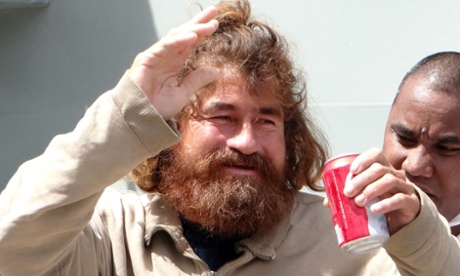
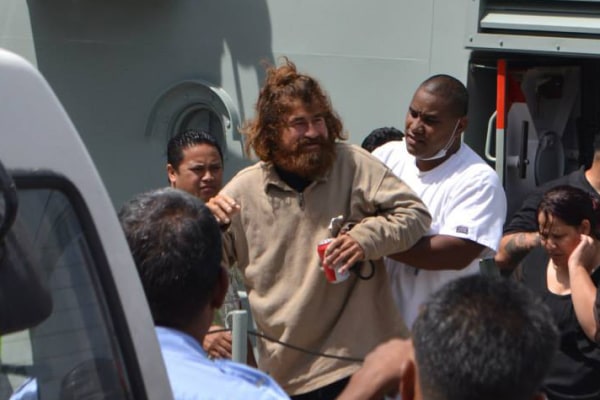
Yesterday I posted the compelling story of Jose Salvador Alvarenga, the El Salvadorian man who lived in Mexico and claims to have been adrift at sea for more than a year, living off fish, small birds, and turtles, while capturing rainwater to drink. That story was accompanied by a healthy dose of skepticism by many, who said that he looked far too fit and healthy to have spent more than 13 months at sea. Now, there is some evidence being presented from his home country that is helping to corroborate the castaway's story.

Some of the speculation against the story came about not just because of the relative health of Alvarenga, but also because his story continued to change as he told the tale. It was also noted that there wasn't any fishing gear aboard his boat when he washed ashore, calling into question his ability to actually catch fish to eat. But doctors have said after so long at sea, his mind wasn't as focused and sharp as it would normally be, which helped to create the inconsistencies in his story. It is also possible that he lost his fishing gear somewhere along the way due to storms or other circumstances.

Back home, there are now reports surfacing about a small boat that went missing in a storm back in November of 2012, which is about the time that Alvarenga says he set out on his ill-timed fishing trip. His name was mentioned in regards to the incident, although the boat belonged to his boss, who originally alerted authorities.

The storm forced the small 24-foot boat out to sea, where the Pacific currents carried it away from shore. With no navigation equipment onboard, there was no way for him, or his teenage companion, to know how to get back home. The boy that was with him reportedly died a month into the ordeal, leaving Alvarenga to drift more than 6000 miles on his own.

Adding more credence to the story, Alvarenga's family says that they were alerted to the fact that he had gone missing, and they had given him up for dead. They were relieved and overjoyed to see his photos from the Marshall Islands in the newspaper, and are looking forward to a long overdue reunion. Jose hasn't seen his parents in more than eight years.

The castaway is due to be released from the hospital today and will soon make his way back to Mexico, before eventually going home to El Salvador. He is said to be suffering from swollen ankles, but other than that, there is little indication of the long journey across the ocean that he endured. That is leaving some still questioning the story, although there hasn't been any other plausible way to explain him turning up on the far side of the Pacific months after he disappeared.

Tuesday, February 4, 2014

Man Survives 16-Months Adrift At Sea

I wrote about this story yesterday at the Wenger Blog, but it is such an interesting tale, that I thought it was worth sharing here as well. Additionally, more details have come to light, shedding some insights into what exactly happened.

Last week, a small boat washed up on the shore of a remote atoll in the South Pacific after spending more than 16 months adrift at sea. Aboard was a man named Jose Salvador Alvarenga, who along with a traveling companion, was fishing off the coast of Mexico in September of 2012. A large storm hit, pushing their 24-foot boat out from shore. Without power, they were at the mercy of the Pacific currents, which carried them further and further from the coast.

With little food onboard, the two castaways were forced to forage for food, eating fish, small birds, and sharks. They collected rainwater to drink but often went for long periods of time without anything eat or drink. In order to survive, they would even drink their own urine. Alvarenga says that his teenage companion was unable to stomach their unusual diet, and slowly starved to death a little more than a month into their voyage. The 37-year old Alvarenga said he pushed the body overboard not long after the young man passed.

The Pacific tides carried the small boat away from North America and into the South Pacific. The weeks turned into months, and still the boat continued to drift. Jose said that at times he contemplated suicide as a way to escape. But he hung on, clinging to life and hoping for a possible rescue.


Last Thursday, Alvarenga's battered little boat washed ashore on the Ebon Atoll, a small island that is part of the Marshall Islands. Over the course of his 16 months at sea, he had drifted more than 6000 miles, and he arrived in an exhausted, malnourished state.

Reportedly he is on the mend now and his family back in Mexico have identified him. But there are some holes in his story, and investigators are trying to verify what they can. The story seems remarkable and difficult to believe, but there doesn't seem to be any other way he would arrive in the Marshall Islands.

I'm sure we'll hear more about this in the days ahead. It is certainly an incredible tale of survival. Jose will probably have book deals and movie contracts waiting for him when he gets back home.

Thanks to Lou-Phi for sharing the original story.

Friday, December 20, 2013

Pacific Ocean Row: Fedor Konyukhov Returning To Chile

It has been a rough week for some of the adventurers we've been following lately. Yesterday we learned that the Dark Ice Project has been cancelled, only to find out later that Pacific rower Fedor Konyukhov is returning to land as well. You may recall, a few days back he launched his attempt row solo across the Pacific, departing from Valparaise, Chile with the intention of crossing the ocean all the way to Brisbane, Australia. But four days in, he has suffered a set back is on his way back to shore.

According to a post on his website, Fedor suffered a failure of his solar charging system on Tuesday, with both of his onboard batteries running out of juice. Those batteries power a number of systems on  his custom built rowboat, and without the solar panel to recharge them, he would never have a chance of crossing the Pacific. His GPS devices, satellite phone and other electronics all require the batteries to function properly.

After he called for assistance, his support team back on land chartered a boat to go out to tow him in. He should be back in Chile today, as he had only made it about 40 miles from shore when he ran into trouble. According to his website, he has been using a manual satellite phone to stay in contact and has several handheld GPS devices to call in his coordinates. His team was en route on Wednesday, but so far there haven't been any updates on their progress. They do say the situation is under control and that Fedor is not in any danger.

Once back on shore, the entire electrical system will need to be examined and repaired before the Russian can attempt to set out again. How long that take remains to be seen. Considering the voyage was suppose to take more than six months, it's just a good thing he wasn't further out from shore when the malfunction occurred. Hopefully he'll be back rowing soon.

Monday, December 16, 2013

Russian Adventurer Begins Solo Row Across The Pacific

At the beginning of November I posted a story about Fedor Konyukhov, a Russian adventurer who was planning a solo, unsupported, non-stop row across the Pacific Ocean. At the time, he was still in the planning stages of the journey but had hoped to set off sometime in December. This past weekend he hit the water at last and now faces 8000 nautical miles (14,816 km) of open sea as he travels under his own power from Valparaise, Chile to Brisbane, Australia.

According to this update from ExWeb, the Pacific crossing should take Fedor roughly 200 days to complete. During the first stage of journey he'll have to navigate through a maze of lightly mapped islands and atolls, while on his arrival in Australia he'll have to negotiate the Great Barrier Reef. In between, he'll have thousands of miles of open sea that he'll have to row entirely on his own in what is set to be the longest ocean row ever.

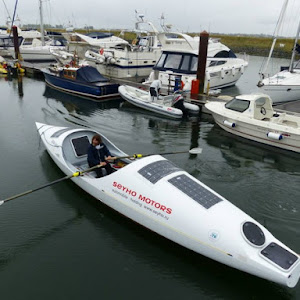
Konyukhov's boat has been equipped with the latest in ocean rowing technology. Solar cells will power all of the onboard electronics such as GPS and satellite communications equipment. Desalinization pumps will turn salt water into drinking water for him, while an autopilot system will help ensure that he stays on course throughout the journey. The boat arrived in Chile several weeks back, and it has undergone extensive testing on the ocean prior to Fedor's departure on Saturday morning. It passed those tests with flying colors, so hopefully it'll now be up to the task ahead.

You'll be able to follow along with Fedor's progress on his website, which does offer an English version. He also has a blog and Facebook page, both of which are in Russian. If you don't read that language, you'll need to use Google Translate or something similar to understand what is being said.

Good luck to Fedor on this epic journey. Hopefully the sea is kind to him over the next 6+ months.

Friday, November 1, 2013

Russian Adventurer Announces Non-Stop, Solo Pacific Row

Rowing across an ocean is an incredibly challenging endeavor. After all, it requires the rower to spend hours each day working the oars, often for weeks at a time. Isolated and alone, it takes dedication and determination to make a solo journey across a body of water that at times seems endless. There is a reason that fewer people have rowed across one of the Earth's oceans than have been in space. Quite simply, it is really tough to actually complete such a voyage.

That isn't stopping Russian adventurer Fedor Konyukhov from trying. According to ExWeb, Konyukhov intends to make a solo row across the Pacific, non-stop from Chile to Australia. Fedor believes that it will take him roughly 200 days to complete the crossing, which will cover approximately 8000 nautical miles (14,816 km).

The Russian, who is a polar skier, mountaineer, and sailor, says he'll set out on his Pacific crossing in December. Leaving from Valparaise, Chile, he'll first have to navigate through islands and atolls off the coast of South America, before he makes his way out into the deep ocean. As he approaches Brisbane, Australia, he'll encounter more islands and the massive Great Barrier Reef. In between, Fedor believes he'll have to dodge potentially nasty storms that could potentially bring an end to his voyage at any time.

In order to successfully complete this ocean crossing in 200 days, Konyukhov will need to average 40 nautical miles (74 km) per day. That doesn't sound like a lot, but considering the challenges he'll face out on the water, particular as the grind of rowing begins to take its toll, covering those distance can get extremely difficult. High winds and turbulent seas will work against him, even in the spring of the Southern Hemisphere when things are better than other times of the year. Hopefully he is well prepared for those difficult conditions, as he will be hundreds of miles away from rescue should anything go wrong.

Expect to hear more in a few weeks as Fedor gets closer to his departure.

Monday, October 28, 2013

4-Man Team Plans To Row From California To Hawaii Next Summer

A four-man team of rowers is gearing up for an ocean going adventure in the summer of 2014 when they hope to make a crossing of a portion of the Pacific Ocean, traveling from California to Hawaii over a five-week period and covering more than 2100 nautical miles (3889 km).

The team, which consists of Fraser Hart, Sam Collins, Colin Parker and James Wight, will be taking part in the first ever New Ocean Wave Great Pacific Race in which they hope to be the fastest team to row from Monterey, CA to Honolulu, HI. Calling themselves Team Pacific Rowers, they'll hit the water next June along with all the other entrants into the event, most of whom will row in shifts for 24-hours per day as they attempt to complete the ocean crossing.

The boys are currently looking for corporate sponsorship and are even holding a contest to name their boat as they gear up for the event next summer. With eight months to go until the race, I'm sure they're also busy training, getting their gear together and prepping for five weeks at sea.

I've written about the Great Pacific Race a time or two when it was first announced. Obviously it is still some time off, but I will certainly be covering it more fully next summer once the teams all gather in California and hit the water. There is a similar race held in the Atlantic each year (in fact, it begins in a little over a month) so it'll be interesting to see how this new event goes over.

Monday, September 23, 2013

London2London Via The World Update: Sarah To Make Landfall In Alaska Today

Sarah Outen's bid to complete an entirely human powered circumnavigation of the planet will reach another milestone today when she makes landfall in Alaska. For the past several days she has been rowing towards the Aleutian Islands where she will wrap up the current stage of her London2London expedition during which she has been paddling, rowing and cycling around the world.

As you may recall, Sarah has been rowing across the Northern Pacific for the past several months having set out from Japan this past spring. A few weeks back the decision was made to turn towards the Aleutians rather than to risk traveling all the way to Canada as originally planned. Bad weather, slower than expected progress and the onset of fall have all played a part in this decision and if all goes according to plan, she should reach remote Adak island sometime later today. A support team and a guide boat are already on hand to greet her and help her reach land safely.

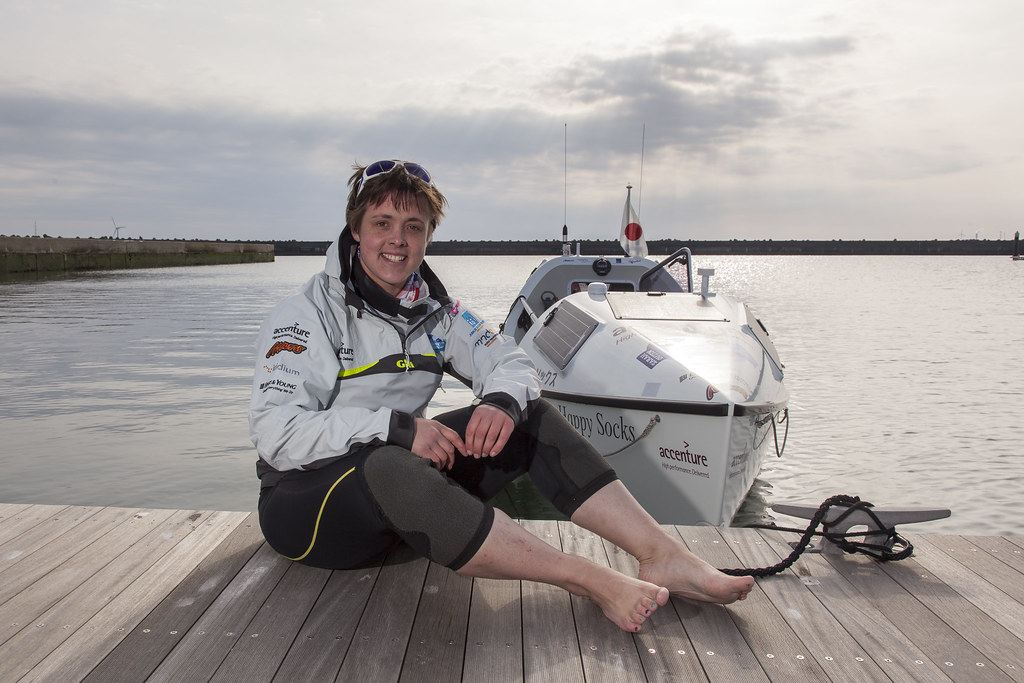
This row across the Pacific is just the latest stage of the London2London adventure. Sarah first set out from London back on April 1, 2011 by first paddling her kayak under the Tower Bridge on the Thames River. From there she crossed the English Channel, made landfall in France and began riding her bike across Europe and Asia. In the spring of last year she set out in a rowboat from Chosi, Japan with the hopes of eventually reaching Canada. A few weeks into that stage of the journey a tropical storm hit hard, forcing Outen to abandon that attempt. This spring she returned to Japan with a new rowboat and started the crossing once again.

Once she reaches the Aleutian Islands, Sarah will take another break from her travels and wait for the calmer weather of spring to arrive. She'll then island hop in a kayak all the way to the Alaskan mainland where she'll get back on her bike and begin ridding across the U.S. and Canada. Eventually she'll return to the water however and attempt to row across the Northern Atlantic as she eventually returns to where she started back in London.

As of this writing, Sarah is still a few hours from reaching land. Everything is going according to plan however and while the weather is less than ideal, there is no reason to believe that she won't soon be safe and sound with her support team. After 150 days at sea, I'm sure she's more than ready to get off the water for awhile.

More updates as needed.

Friday, August 30, 2013

London2London Via The World: Sarah Changes Course, Heading To Alaska

It has been a couple of months since we last checked in with Sarah Outen, the British adventurer who is attempting to complete a self-powered circumnavigation of the globe. In my last update, Sarah had just returned to the water and was embarking on a row across the North Pacific from Japan to Canada. That leg of the journey was expected to cover 7500 nautical miles (13,890 km) and take months to complete. But earlier this week she announced a change in plans that will see her now make landfall ahead of schedule.

If you've been following Sarah's Pacific crossing you know that bad weather has hampered progress and in recent day she's had a difficult time covering any significant ground. Her slower than expected pace left her with the real possibility of being stuck in the North Pacific as the seasons begin to shift. Autumn and winter will bring all kind of challenges including more frequent storms and much colder temperatures. With that in mind, Sarah and her team have made the decision for her to turn north and head toward the Aleutian Islands off the coast of Alaska. The plan now is to go ashore on one of those remote islands and than eventually island hop via kayak all the way to the mainland. Once there, she'll climb back aboard her trust bike and start cycling across North America before attempting to row the North Atlantic sometime down the line.

Sarah's circumnavigation attempt is called London2London via the World because she set out from that city on April 1, 2011 and it will eventually be her finish line as well. The journey began with a paddle down the Thames River and a crossing of the English Channel. After that it was onto the bike, with a ride covering some 11,000 miles (17,702 km) across Europe and Asia that eventually ended in Choshi, Japan. From there, Sarah returned to the ocean and began her row across the Pacific, but a tropical storm put a halt to the expedition, forcing her to temporarily abandon the attempt. That took place in the summer of 2012 and in the spring of this year she set off once again with the intention of finally reaching Canada. That doesn't seem likely now, which is why she has changed direction, but this slightly altered plan will still allow her to complete her goal of traveling around the globe completely under her own power.

As of today, Sarah still has 330 miles (611 km) to go before she reaches the Aleutian Islands. That means she could be out on the water for several weeks yet depending on the weather conditions. Once she actually arrives at the islands she'll need to find a safe place to land, which can be a bit tricky for any boat. After that, it seems likely she'll wait for spring to begin the kayaking portion of the Pacific crossing. By the time she wraps that up, I'm sure she'll be ready to get back on her bike.

Wednesday, May 1, 2013

Sarah Outen Re-Launches Pacific Crossing

Another milestone in the world of adventure that went relatively unnoticed on Sunday was Sarah Outen's return to the Pacific Ocean.  The British adventurer was finally able to relaunch her London2London Via the World expedition after having it halted due to storms last spring and delayed this year due to weather as well.

London2London is Sarah's attempt to circumnavigate the globe completely under her own power. The expedition began on April 1, 2011 when she set out down the River Thames in London, paddling a kayak into the English Channel and across that body of water to France. Once there, she hopped on her bike and started riding east, crossing Europe and Asia in the process. Last April she set out from Japan to row across the Northern Pacific, but a tropical storm rolled in, damaging her boat and forcing her to abandon the attempt. It has taken her a year to recover from that incident as she needed to find a new boat and launch her next Pacific crossing at the most opportune time.

Sarah returned to Japan in March but had to wait until weather conditions improved once again. She is now a few days into the journey and making solid progress thus far. The Pacific crossing is expected to take six months to complete.

Once she has reached Canada, Sarah will then return to her bike and cycle across parts of that country and the U.S. Once she completes that coast-to-coast journey, she'll return to her rowboat once again to cross the North Atlantic, returning to where she started back in London. That probably won't happen until sometime next year.

It's good to see that Sarah is back out on the ocean at last. We've always known that she is a tough and focused individual but her resiliency and dedication in the wake of the challenges that have come her way is certainly inspiring.

Monday, April 8, 2013

London2London Via The World: Sarah Outen Preparing To Resume Round-The-World Journey

Sarah Outen is preparing to resume her human powered attempt to circumnavigate the blog and is now simply waiting for a weather window to depart on the next leg of her journey. That leg will be a 7500-nautical mile (13,890 km) solo crossing of the Pacific Ocean that begins in Japan and ends in Canada.

As you may recall, Sarah began her journey on April 1 of 2011, embarking on an expedition that she called London2London via the World. After kayaking down the River Thames and paddling across the English Channel, she then proceeded to ride her bike across Europe and Asia, before making a short kayaking journey into Japan. She originally expected the L2L to take about 2.5 years to complete and upon arriving in Japan, it appeared that she was actually a bit ahead of schedule. That all changed when she started her Pacific Row last summer.

While out on the water, just a few days after departing, a tropical storm hit Sarah's position, damaging her boat and requiring the Japanese Coast Guard to come to her assistance. That incident was a setback that required Outen to regroup and find a new boat. It has taken until now for that to happen, and at long last she's ready to begin again.

Unfortunately the weather hasn't been all that cooperative thus far and it may be a few days before she can finally depart. Storms have been hitting the Japanese coast, making it impossible to launch right now. But Sarah is very patient and she'll wait for the right time to get underway. The forecasts indicate it could be the end of the week before she gets a few consecutively good days that will allow for the re-launch.

The Pacific crossing is expected to take about six months to complete and upon her arrival in Canada, Sarah will once again return to her bike for a scenic ride across North America. When she finishes that leg of the journey, she'll return to her boat once again and row across the Northern Atlantic, return home to London where the entire adventure began.

Good luck and godspeed Sarah. I hope you can get to pulling those rows again soon.

Friday, March 29, 2013

Video: U.S. Trailer For Kon-Tiki

One of the greatest adventure stories ever is, without a doubt, Kon-Tiki. The book tells the tale of Thor Heyerdahl and his epic attempt to cross the Pacific Ocean on a simple raft, covering more than 4300 nautical miles in the process. When I heard they were making a film of this story, I was anxious to see it, and while it was nominated for an Academy Award for Best Foreign Film earlier this year, it is just now making its way stateside. The film opens on April 26 but you can get a sneak peek in the trailer below. It looks absolutely spectacular and everything you'd expect from this grand adventure.

Wednesday, March 27, 2013

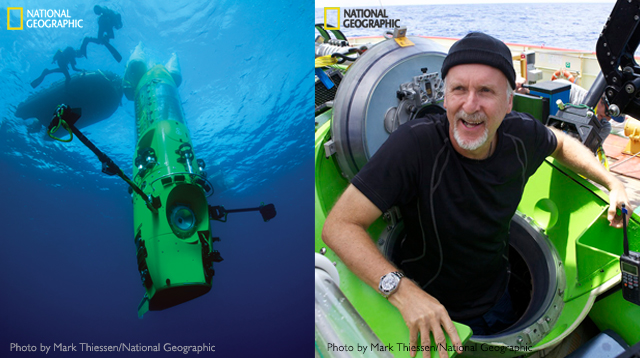
James Cameron Donates Sub To Oceanographic Institution

Filmmaker/Explorer/All-Around Great Guy James Cameron has donated his Deepsea Challenger submersible to the Woods Hole Oceanographic Institution in a bid to spur more underwater exploration and research. The Challenger is the same vehicle that Cameron used last year on his record setting dive to the bottom of the Mariana Trench.

Yesterday was the one year anniversary of that epic adventure to the lowest point on the planet, located some 11 km (7 miles) below the surface of the Pacific Ocean. Cameron, whose filmography includes the likes of Avatar and Titanic, became just the third person to visit the Challenger Deep and the first to do so solo. He spent seven years and $8 million on building the sub, which captured footage for an upcoming 3D film about the dive. Despite some rumors about making another voyage to the bottom of the sea however, the director has not gone back into the depths.

In donating the vehicle to the WHOI, Cameron also joined the organization's advisory board. Researchers at the institute will use vehicles advanced lighting and camera systems as part of their own programs as they continue exploring trenches in both the Atlantic and Pacific. Cameron will consult with engineers there on those systems as well as others that he helped develop for his dive.

It is hard not to have massive respect for Cameron. He is highly successful in his day job, to say the least, and yet he has a passion for science and exploration that is tough to deny. I get the impression he makes hundreds of millions of dollars making films for Hollywood so he can fund his other projects. And when he's done with his high tech toys that he personally helped develop, he passes them along to others who can benefit as well. We should all be so lucky to have that flexibility in our lives.


Tuesday, March 26, 2013

Underwater Camera Lost In Hawaii Found Six Years Later In Taiwan

Back in 2007, Lindsay Scallan travelled to Hawaii to enjoy that tropical paradise and take in a little scuba diving while she was there. She took with her a small Canon Powershot camera to capture the moments from her trip and she even had an underwater housing to use while she was on a dive. But while on an evening scuba excursion she accidentally dropped the camera and lost it in the sands at the bottom of the ocean. She searched for the device as long as she could but couldn't locate it in turbulent seas and sadly she returned home to Georgia without her photos, camera or expensive dive housing.

At the time she was sure that her camera was long gone and would never be seen again, after all what are the chances that someone would find it in the sea? And if they did, how would they ever know to return it to her. But someone did find it, just not where she expected. An employee of China Airlines came across the camera, still in the waterproof housing, last month when it washed up on a beach in Taiwan – thousands of miles and six years removed from where it was lost.

The person who found Lindsay's Canon Powershot then contacted Hawaii News Now and asked them to help find the person the camera belonged to. The website posted Lindsay's photos online and they were later spotted by a friend of hers who told her about the story. When she saw the images she says she was "floored." She couldn't believe that her missing camera was located so long after it was lost and so far away no less.

China Airlines has offered to fly her to Taiwan to claim the camera but Lindsay says she just started a new job, so she isn't sure she'll be able to get away. Instead, she may have to settle for having the camera shipped to her so she can review all of her long lost vacation photos at last.

Pretty amazing story. It also serves as a reminder of just how connected our planet is. Something lost in the ocean can travel a long way before its journey finally comes to an end. Oh the things that camera must have seen as it crossed the Pacific this past six years.

Thursday, February 21, 2013

Filmmaker Set To Sail The Pacific In Search Of Adventure And "Guapo"

I have to admit, I have a soft spot for expeditions that plan to set off in search of nebulous adventures. The kind that don't have a lot of concrete goals per se, but are just looking for adventure in what ever form it arrives. That happens to be exactly what three filmmakers have in mind when they launch their "Finding Guapo" voyage later this year. The team is setting off to shoot a documentary on what they say will be "about life, adventure, nature, sailing, diving, freedom, but mostly about madness."

The men will be joined on this voyage by a mysterious adventurer who is simply named "Guapo." I don't know a lot about Guapo, but from what I have heard, he sounds a bit like he Dos Equis Most Interesting Man In the World.  In addition to being both a scuba and sky diving instructor, he is also a mountaineer who has climbed the big mountains of the Americas. A few years ago he also sailed solo from New York to New Caledonia, a tiny island located in the South Pacific, which he ended up making his home. In short, he is a free-spirited adventurer who goes where his wanderings take him.

It turns out, Guapo was planning on being in Mexico for a short time later this year and our intrepid filmmakers at KRAKEN decided they wanted to make this documentary with him during which they would be sailing across the Pacific Ocean. The current plan is for them to set sail for Australia, but as you'll see in the video below, those plans are in flux. They four men are going to see where their whims, and the tides of the Pacific, take them as they go looking for the adventure of a lifetime in the hopes of making a film about their travels.

To help fund this endeavor the men have set up an Indegogo campaign. They hope to raise $15,000 towards creating the project, although they're off to a bit of a slow start at the moment. With nearly a month to go however, they'll hopefully reach their goals.

Good luck to Guapo and the rest of the crew!


Finding Guapo - Indiegogo from Kraken Productora Tentacular on Vimeo.

Monday, February 18, 2013

Crew Wanted For Pacific Ocean Row

Have you ever wanted to row across an ocean? If so, you'll definitely want to read this post. 

Earlier today, adventurer Alastair Humphreys, who rowed across the Atlantic last year,  posted a call for a crew to row across the Pacific next year. Alastair, who says rowing one ocean was enough for him, has shared a message from Philip Cavanagh who is looking to put together a team to compete in the Pacific Ocean Rowing Race that is scheduled to take place between California and Hawaii in 2014.

The note reads as follows:
Philip will be participating in the first Pacific Ocean row in June 2014, and is looking for crewmates. The race is a 2,100 nautical mile row from California to Hawaii, and the boat will be powered by human strength alone. Everything needed for the row will be onboard, and the crew will receive no assistance during the race. 
To join the crew, you do not need rowing experience! All we want is a sense of adventure, a desire to succeed and the will to do something extraordinary! 
The shift pattern will be a demanding 2 hours on 2 hours off for the duration of the race. (Which means you’ll be able to sleep 50% of the time… glass half full!)
If you’d like to express an interest, or would like more information, contact Philip at Philip.cavanagh3@gmail.com
 So there you go. If you're looking for a big adventure next year and rowing across a giant body of water sounds like something you'd like to try, then drop Phillip a note and find out more of the details. This could be a fantastic opportunity for the right person.

Monday, November 26, 2012

All-Female Rowing Team To Cross Pacific In 2013

A four-woman rowing team is gearing up to take on the Pacific Ocean next summer. The crew, which consists of Annabel Hancock, Laura Penhaul, Becky Scott and Wendy Hilton, intend to set out on their three-stage crossing next June, departing from San Francisco on what is expected to be a six month long, 8500+ mile (13,680 km) journey.

The Coxless Rowers will spend their first 50 days out on the water by rowing from their launching point to the Hawaiian Islands, covering more than 3000 miles (4828 km) in the process. Following the completion of that stage, they'll move on to the second, 2600+ mile (4185 km), 60 day row that begins in Hawaii and ends in Samoa. Finally, they'll wrap things up with a third leg that well cover some 2810 miles (4522 km) between Samoa and Cairns, Australia.

The ladies are hoping to become the first all female team of four to row across the Pacific. As we all know, Roz Savage did it solo a few years back, but in her case she rowed one stage per year over the course of three years. The Coxless Rowers are hoping to push straight on through, manning the oars in two-hour shifts, 24-hours per day while out on the ocean.

At the moment, the team is focused on their training and getting their new boat read for the sea. They hope to take possession of that boat sometime in December and begin testing it out on the water in January after it has been completely outfitted. That should give them plenty of time to be ready for their June 2013 launch.

Follow their progress on their website, Facebook page and Twitter feed.

Tuesday, July 3, 2012

Search For Amelia Earhart Begins Once Again

A team of researchers are en route to a chain of remote islands in the South Pacific with the hopes of solving one of the great mysteries of the 20th century. Armed with new data, the team hopes to find the remains of Amelia Earhart, the famous aviator who went missing in 1937 while attempting to fly around the world.

I first wrote about this expedition at the beginning of June when it was revealed that an analysis of radio transmissions that date back to the day Earhart, along with her navigator Fred Noonan, disappeared indicated that the pair could have survived a crash and were calling for assistance while stranded on a small atoll.

The search team has left Hawaii and are on their way to the island of Nikumaroro where they hope to find proof that Earhart and Noonan crashed and survived for a time while they waited for rescue. They'll employ a submersible robot to search the waters around the tiny island for the Lockheed Electra aircraft that was being flown around the world and they'll look for more clues on land as well. Recently an old jar of freckle cream was discovered on Nikumaroro that matches the age and brand that Earhart would have used back in her day. She was known to use the cosmetic cream to cover freckles on her own skin.

The expedition will last for approximately three weeks and cost about $2 million. The question is, if they do solve the mystery, will it make us feel better, or worse about Earhart and Noonan's ultimate fate?

Monday, July 2, 2012

2012 Seaward Pacific Expedition Underway

A few weeks back I posted a story about Wave Vidmar, the ocean kayaker who was preparing to paddle 3100 nautical miles (5741km) solo from California to Hawaii. At the time, Wave was putting the final touches on his preparation for the start of his journey, which included picking up his custom custom built Seaward Kayak in Vancouver.

Yesterday Vidmar officially launched the expedition, setting out from Horseshoe Cove in Sausalito, not far from the Golden Gate Bridge. He'll now spend the next 45-56 days out on the open ocean, completely solo, as he makes his way across the Pacific to Hawaii.

As far as I can tell there is no live tracking of Wave's progress. There is an official website for the expedition, which can be found here, but it has little in the way of information. Seaward Kayaks is posting updating on their Facebook Page however, so that may be the best place to follow along with the adventure.

It should also be noted, and this was pointed out in the comments section the last time I wrote about Wave and his journey, this isn't the first time someone has attempted this crossing. Back in 1987 Ed Gillet made a similar paddle, successfully completing his California to Hawaii crossing in 64 days. That was 25 years ago this year and Wave is celebrating that anniversary as part of his paddle as well.

Good luck to Wave and be sure to watch for updates.

Tuesday, June 19, 2012

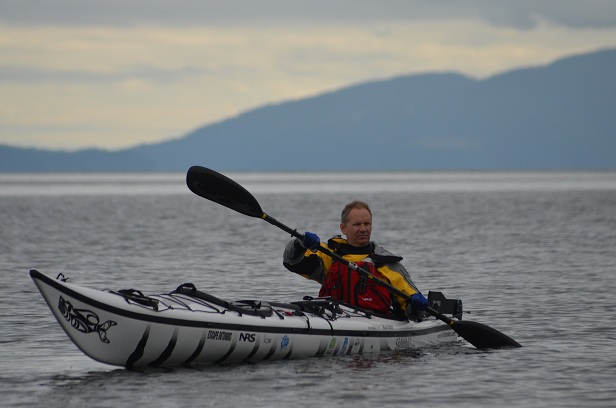
Kayaker Prepares For Solo Pacific Expedition

Explorer Wave Vidmar is preparing to embark on another epic adventure. The man who has years of sailing experience and has made a solo journey to the North Pole, will soon set off on a long distance paddling expedition that will see him journey from California to Hawaii in a kayak.

Dubbed the 2012 Seaward Pacific Ocean Expedition, Vidmar intends to paddle his specially designed and built Seaward Kayak 3000 nautical miles across open ocean. Along the way he intends to document the journey on video while conducting research on marine wildlife, the effects of a prolonged paddling expedition on his body, the use of technology in the field and more.

The plan is to set out from Monterey in California and work his way west to Maui in Hawaii. When he'll set off isn't exactly clear, but according to PR from Seaward it should be any day now. I also haven't been successful in finding an official website for the expedition, but updates are being posted at the Seaward Kayak Facebook page.

Wave, who seems aptly named for aquatic adventures, says that he thinks it should take him about 50 days to reach Hawaii. That's a lot of time in the cockpit of a kayak. Good luck!