Showing posts with label History. Show all posts

Tuesday, May 13, 2014

Explorers Museum Gains Patron In Sir Ranulph Fiennes

Last week, representatives from the Explorers Museum announced that it had gained a patron in the form of Sir Ranulph Fiennes, the British adventurer who has been called the "greatest living explorer" for his various exploits in the Arctic, Antarctic, and beyond. The museum, which was just announced this past January, will hold a gala event on September 6, at which Sir Ran will give the keynote address.

The Explorers Museum is a wonderful project being spearheaded by Lorie Karnath, the former President of the Explorers Club. Headquartered in Charleville Castle, located in Tullamore, Ireland, the museum looks to serve not only as a place to celebrate exploration throughout history, but also as a modern base of operations for explorers in the field today. There are plans afoot to create an explorers hall of fame, a world-class research library, and a base camp of sorts, outfitted with latest in modern technology. Exhibits are expected to open this summer.

If anyone deserves a spot in the Explorers Museum Hall of Fame, it is Sir Ranulph Fiennes. Over the years, his expeditions have taken him on unsupported journeys to both the North and South Pole, to the summit of Everest, and up the Nile by hovercraft. He was also instrumental in the discovery of the lost city of Ubar in Iran, and he once ran seven marathons, on seven continents, in seven days.

In speaking about the Explorers Museum, Fiennes said:
"The Explorers Museum is a commendable institution with the expressed aim of recognising our global – yet often overlooked – heritage of adventure and exploration, wherever these journeys may have taken place and by whatever means. It is great that at last there is a physical space by which the most-impressive undertakings of the exploring world can be showcased to the public and I am very privileged to become the museum's patron."
I'm happy to see this project coming to fruition. It sounds like it is going to be a wonderful place for those of us who are fans of adventure and exploration, while also offering some great resources to explorers across the globe. I hope to visit someday.

Thursday, January 16, 2014

Announcing The Explorers Museum

Earlier this week a new initiative dedicated to sharing the exploits of explorers and the importance of exploration was announced in the from of the Explorers Museum. The new project, which is spearheaded by former Explorers Club President Lorie Karnath and Tim Lavery, director of the World Explorers Bureau-The Global Adventure Speakers’ Agency, is a not-for-proft venture that seeks to celebrate exploration in all of its forms.


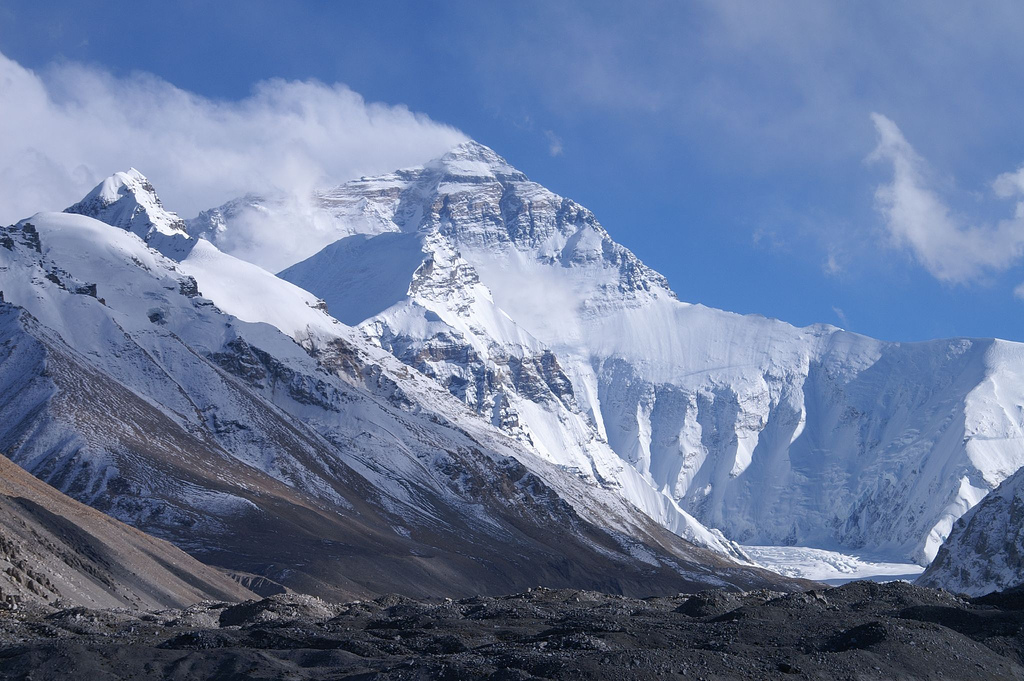
The museum will be housed in the famous Charleville Castle, located in Tullamore, Ireland. The castle once belonged to Charles Howard-Bury, an explorer and botanist who was instrumental in the first scouting expedition to Mt. Everest in 1921. The first exhibit of the new museum will highlight Howard-Bury's achievements, along with those of other famous explorers. That exhibit will open later this summer.

But that is just the tip of the iceberg for what the Explorers Museum has planned. The new organization hopes to hold its inaugural awards night later this year, during which it will provide recognition for groundbreaking expeditions and discoveries that are taking place around the world today. An exploration hall of fame will also be established, inducting prominent figures from exploration history. Future exhibits, lectures and events will also be held in the castle, which will also serve as a launching point for future expeditions too.

In the future, the museum, which came about due to a generous and anonymous donation, also hopes to establish a research library and an expedition base outfitted with the latest high tech equipment to support teams in the field.

To find out more about the museum, visit the official website. It look like I need to ay a visit to Tullamore, Ireland sometime in the future.

Monday, November 25, 2013

Was Mallory's Body Discovered On Everest In 1936?

I came across an intriguing story over the weekend that Everest fans will most certainly find it of interest. A new story in The Guardian indicates that George Mallory's body may have been found on Everest as far back as 1936, but it was not shared with the press in order to preserve some dignity for the deceased. The revelation is part of a new biography on mountaineer Frank Smyth, who was amongst those obsessed with climbing Everest back in the 1930's before World War II put an end to such endeavors for nearly a decade.

The book, which was written by Smyth's son Tony, reveals letters from the famous writer and mountaineer in which he talks about coming across a body high on the slopes of the mountain. But he is also quoted as saying "It's not to be written about, as the press would make an unpleasant sensation." That seems to indicate that Smyth wanted to keep the whereabouts of Mallory's remains a secret so at to not cause a stir. Considering how few people had climbed that high on Everest at the time, the body could have only belong to Mallory or his climbing partner Andrew "Sandy" Irvine.

We all know that the discovery of George Mallory's body back in 1999 was an event that went well beyond the typical climbing community. For years people have speculated as to whether or not Mallory and Irvine actually reached the summit of Everest nearly three decades before it was finally scaled by Edmund Hillary and Tenzing Norgay. The body didn't provide any new insights for that debate, but it certainly brought it to the forefront once again.

While the story of Smyth discovering Mallory's body will ultimately be a footnote in the history of mountaineering, it is interesting to think that its whereabouts could have been revealed decades before it was actually discovered. I think it was a sign of the times that Mallory and Smyth were climbing in that they would show such respect for the dignity of others, even the deceased. We don't seem to have that same respect these days, which is a shame.

The Guardian article has a lot more information about Frank Smyth and the new biography about the climber. It sounds like it is quite an interesting read.

Wednesday, November 6, 2013

Video: Mountain Men: The Ghosts of K2

YouTube is a treasure trove of classic BBC climbing films. Case in point, this fantastic video on the history of climbing K2. It is almost 50 minutes of footage on the second highest peak in the world and some would argue the hardest to climb. So put your feet up, kick back and enjoy this one. It'll give you even more respect for the Savage Mountain.

Friday, October 18, 2013

Video: Annapurna The Hard Way

Over the past week or so, we've all been astounded by the news and details of Ueli Steck's solo summit of Annapurna along the South Face. You've no doubt heard me and others use a host of superlatives in an attempt to convey just how impressive this climb is. But to truly get a sense of what Ueli accomplished you'll want to watch the video below. It is a 55-minute long documentary from 1970 that tells the tale of the first ascent of the mountain along this route. The team that accomplished this feat is filled with climbing legends from the U.K., including Sir Chris Bonington, Dougal Haston, Don Whilians and more. The film is a real slice of mountaineering history and well worth your time if you have an  hour to kill. It'll give you an appreciation of what this team accomplished and provide more insight into what Ueli faced as well.

Book Review: On The Trail Of Genghis Khan by Tim Cope

Is there a more interesting character from history than Genghis Khan? The Mongol leader managed to unite the legendary horse clans and build the the largest contiguous land empire that the world has ever seen. The Great Khan was a legendary leader, a fearsome warrior and an unrelenting enemy. More than 700 years after his death, he still casts a large shadow over the Mongolian people and his mark on history is undeniable, altering the destiny of two continents.

Of course, the Kahn and his Mongol Horde were able to accomplish great things because they were perhaps the greatest horseman to ever live. It is with that spirit in mind that Australian adventurer Tim Cope set out to accomplish something that hadn't been done since the time of Genghis Kahn himself. With little previous experience in the saddle prior to setting out, Cope launched a 10,000 km (6000 mile) journey starting in Mongolia and ending in Hungry. An expedition that he chronicles in his new book, On The Trail Of Genghis Khan.

Before he ever launched this epic excursion, Cope new he was in for a challenge. After all, he was an inexperienced rider with thousands of miles of open steppe to conquer on his own. The trip began in June of 2004 and would ultimately take him three years to complete. Traveling with a number of horses and his loyal dog Tigon, he faced harsh and difficult climates, wild wolves, horse thieves and a host of other challenges. He also met some incredible people and was continually surprised and humbled by the hospitality and kindness of the strangers he met along the way. Tim's journey was as much about finding himself on the trail while following in the footsteps of a legend.


Cope's new book takes readers along for the ride as he wanders across Mongolia, Kazakhstan, Russia, Crimea, the Ukraine and finally Hungary. The story is a compelling one for anyone who enjoys a good tale of adventure but Tim's writing style draws readers in even more. It is a wonderful mix of his personal experiences framed against a historical backdrop that gives us a glimpse of what the Kahn experienced when he made a similar ride centuries earlier.

Reading On The Trail, it is impossible to not get swept up in Tim's infectious sense of adventure. His story is an amazing one, but he also approaches it in such a way that you'll think that it might be possible for you to attempt an epic adventure of your own. That's the kind of inspiration that Tim creates through his writing, which is at times very sensitive and thoughtful in its approach. If the writing were less compelling, the 450+ page book could run the risk of feeling as long as Cope's journey across Asia and Europe, but fortunately that isn't the case. It is a real page turner that will leave you staying up later than you intended so you can read "just one more chapter."

On The Trail Of Genghis Kahn is available in bookstores now and is wonderful read for anyone looking for a grand adventure. With the holidays fast approaching, it would also make a great gift for your favorite adventurer or traveler. If you've ever dreamed of escaping to a far off, remote destination with hundreds of miles of open space all to yourself, you'll likely appreciate what Tim has accomplished. His tale is the very definition of the "epic" and by the time you finish reading it, you'll be ready to set out on  your own journey. That's what a great book is all about.


Thursday, September 19, 2013

Antarctic Explorers Ready To Follow In Scott's Footsteps

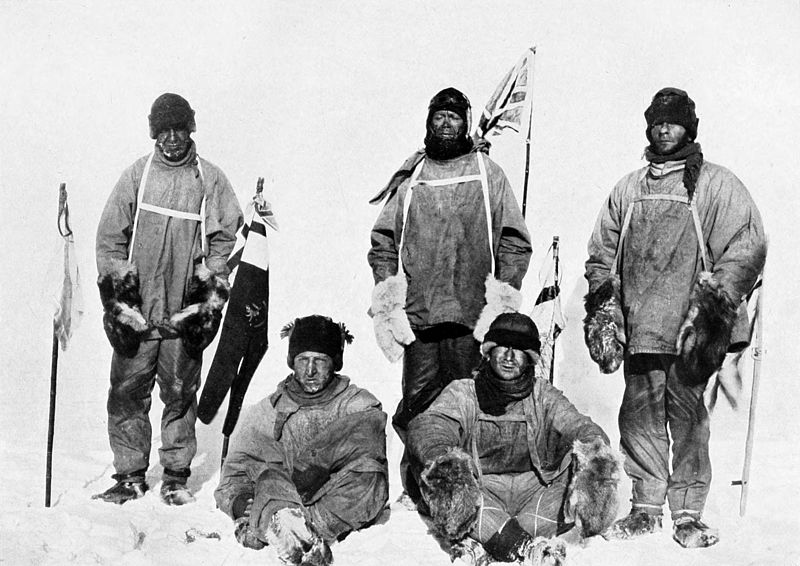
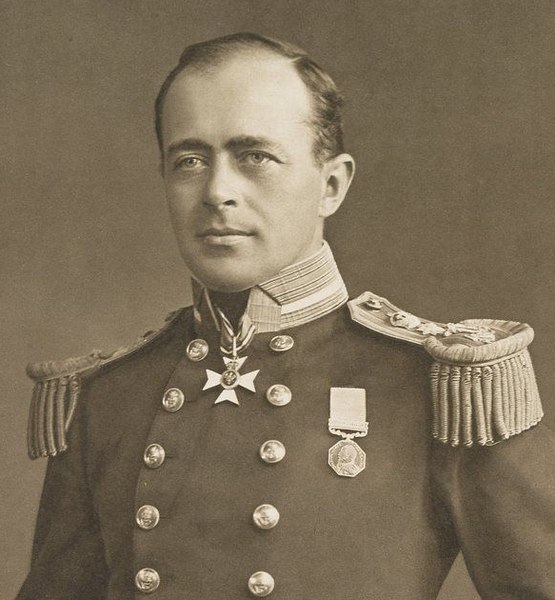
British explorers Ben Saunders and Tarka L'Herpiniere are in the final stages of preparation for what promises to be the expedition of a lifetime. The two veteran adventurers are now just a few short weeks away from launching the Scott Expedition which will mark their attempt to complete the fateful journey to the South Pole undertaken by Robert Falcon Scott back in 1911. Those that know their exploration history will recall that Scott arrived at the South Pole a few weeks after his Norwegian rival Roald Amundsen became the first man to reach that location. Dejected and defeated, Scott and his men turned for home but did not manage to survive the return trip. Scott died alone in a tent on the Antarctic ice and to this day his route has never been completed. Ben and Tarka are hoping to change that.

I first wrote about story back in June when the expedition was announced and at the time the 2013 Antarctic season seemed a long way off. Fast forward a few months however and it is looming large. Ben and Tarka are now in the final stages of planning and preparation and as of this writing they are just 25 days away from setting out on this adventure. That means that they will most likely set out for Punta Arenas, Chile – the launching point for most Antarctic expeditions. Once there, they'll play the waiting game, watching the weather closely to hop a flight to Union Glacier and eventually getting dropped off at their starting point on the Ross Ice Shelf. The two men will actually begin their journey at Scott's famous hut on Cape Evans as they begin traveling south through some of the most desolate and demanding terrain found anywhere on the planet.

In all the two men will travel roughly 1800 miles (2896 km) on their way to the South Pole and then back again to the coast. They will follow the same route that Scott had intended had he been succesful in his endeavor more than a century ago. Even now this will not be an easy journey as only a handful of people have actually managed to make an unsupported round trip journey form the Antarctic coast to the Pole and back. If Ben and Tarka hope to succeed they'll need to be focused, dedicated and even a little lucky. The weather will have to cooperate to some extent and they'll have to overcome all manner of challenges including fatigue, equipment failure and loneliness.


It seems that this expedition has all of the social media outlets well covered. They have launched a Twitter feed, Facebook page and an Instagram account. They even have a YouTube channel and a G+ account as well. Follow them on your social media of choice and stay well informed of their progress leading up to departure and throughout the entire adventure.

Good luck to Ben and Tarka. I'll certainly be following along and posting updates in the days ahead.


Thursday, July 18, 2013

Tales From Down Under

I've only been home from Australia for a couple of days and I'm still trying to shake the jet lag, but I've already started to share some of my experiences over at the travel blog Gadling.com. Yesterday two of my stories went live and if you're interested in what I was up to while I was in Oz, you can check them out now.

The first story is about a fun event I discovered in Darwin on my first full day in the country. It was called the Darwin Lion's Beer Can Regatta and as the name implies, it is a series of boat races with the boats being made primarily out of beer cans. The event is fun, wild and 100% Aussie with the teams competing having a blast while not taking themselves all too seriously. The boats showed a great deal of charm in their design, not to mention dedication from the designers who spent a lot of time emptying all of those cans. On shore, spectators cheer on their favorite crews, take part in tug of war and thong throwing competitions, while enjoying a few cold ones of their own. It is an all-day affair that culminates with an ultimate battle out on the water during which teams toss water balloons and flour bombs at one another, with some boats even employing water cannons. You can find out more about the Beer Can Regatta in my story found here.

The other story that went live yesterday was about my visit to the amazing Kakadu National Park. The park is a UNESCO World Heritage Site thanks to its natural and cultural wonders. The beautiful landscapes there speak for themselves and are a testament to how amazing the Outback can be, but what was truly awe inspiring was the Aboriginal artwork that adorns the rock faces at several sites there. I visited a place called Ubirr where the images on the rocks range from hundreds to thousands of years old and show a clear connection between the land and the people that have inhabited it for more than 40,000 years. It was a humbling and eye opening place that also happens to offer one of the best views you'll find anywhere. Really a fantastic place.

This is just the start of my stories on Australia's Northern Territory. I'll be posting a few things here eventually as well and I have some plans to share other stories elsewhere on the web and possibly print as well. As those get published, I'll be sure to post here too. I'm also in the process of organizing photos from the trip and when I get that gallery online, I'll share it too.

If you're looking for a destination that offers a bit of everything – culture, history, beauty, adventure, etc. – it's tough to beat the Northern Territory. Whether you like to relax on the beach, sail the oceans, hike in remote backcountry or soak up Aussie culture, you'll get the opportunity to do that and more. Just keep your eyes peeled for wild crocodiles and dingos.

Monday, July 1, 2013

"Lost" City Discovered In Mexican Jungles

Not long after archaeologists discovered a lost city hidden in a remote area of Cambodia a similar find has been unearthed in Mexico as well. The settlement is believed to date back as far as 600 AD and was once one of the largest cities in the Mayan Empire.

A team of researchers first spotted the ancient site in ariel photographs but had to actually get on site to confirm their speculation of a hidden Mayan city located in the Yucatan region. It took a group of explorers three weeks to hack their way through ten miles of jungle just to reach the place that they call "Chactun," but when they got there, their efforts were well rewarded.

The archaeologists have only just begun to clear the site but they have already found a stunning array of structures. So far the site spans some 54 acres with stone structures stretching out across the area. They have discovered 15 pyramids so far, the tallest of which is over 75 feet in height. They've even discovered a couple of ball courts used in a Mayan sport that is not unlike basketball. The inclusion of such buildings indicate that this was an important city that likely had a population of between 30,000 and 40,000 people at its height.

Researchers are hoping that the city can provide some clues as to what happened to the Mayans. Ranging from 600 AD to 900 AD they were the dominant civilization in the region. But after that they started to decline very rapidly and it didn't take long for the empire to collapse. Exactly why that happened remains a mystery.

The journey to find this lost city must have been like something out of an Indiana Jones movie. The team that made their way through the Yucatan jungles no doubt faced some serious challenges on their way to the site. Taking three weeks to cover ten miles must have tested their resolve at times but their persistence payed off and when they arrived in Chactun they were rewarded with an amazing find.

I continue to marvel at these stories and I love that we're still discovering things like the city in Mexico and the one in Cambodia. I would love to be a part of either of these teams as they explore these ancient sites. Who knows what wonders they'll uncover at either location and how they will impact our understanding of our ancient ancestors.

Friday, June 21, 2013

More Data Supports Theory That Amelia Earhart's Plane Has Been Found

I wrote about this a few days ago at Gadling.com, where it has garnered quite a bit of interest, so I thought I'd share it here as well.

A few weeks back I posted a story about how Amelia Earhart's plane may have been found at long last.  Last summer a of group of researchers with The International Group for Historic Aircraft Recovery (TIGHAR) went to the remote island of Nikumaroro in the South Pacific, where they believe Amelia Earhart and her co-pilot Fred Noonan crashed while attempting to cross the Pacific Ocean in 1937. A few years ago, a jar of anti-freckle cream dating back to that era, that was also consistent with a brand that Earhart used, was found on the uninhabited island, which led to the expedition to explore the waters off its shores for signs of Earhart's missing Lockheed Electra aircraft. The team found nothing however and they returned home early and dejected.

But once they had a chance to begin examining the sonar data their remote vehicles used to map the waters off Nikumaroro, they discovered an odd anomaly in one of the readings. Upon further examination, it became clear that whatever it was that they had detected, it wasn't a rock or other natural formation. They came to the conclusion that there was something large and manmade in those waters that looked an awful lot like the fuselage of an airplane. The team was cautiously optimistic that they may have discovered the Electra and possibly bringing to an end one of the great mysteries of the 20th century.

There were problems with the data however as the image was incomplete. The sonar reading had what are known as "ping drops" during which not all of the sound waves from the device are picked up upon their return. This can happen due to environmental issues or equipment malfunctions, but it results in an incomplete image of whatever is out in the water.

To fill in some of those gaps, the TIGHAR team turned over their data to a company called Oceanic Imaging Consultants, Inc., which is headquartered in Honolulu, Hawaii. OIC then ran the readings through their own computers in an attempt to get a more complete picture of whatever the object is that is resting on the ocean floor just off the coast of Nikumaroro. The company was able to restore some of the dropped pings and get a clearer image of the anomaly then was possible with the original data.
 And what did they find? You might expect that after further analysis, the object doesn't appear to be a plane at all. But in this case, you would be wrong. The enhanced data from OIC only further supports the theory that this could be Earhart's plane. Whatever the object is that the TIGHAR team discovered, it is the same size and shape of a Lockheed Electra aircraft.

Of course, the team would like to go back and examine the object first hand, but putting an expedition together to do just that is expensive and time consuming. Their last journey to Nikumaroro cost $3 million, which was partially financed by the Discovery Channel to create a documentary on the team's findings. There is no word yet if Discovery is game for another go, but there is certainly a lot of interest in the outcome of this story.

The disappearance of Amelia Earhart has been one of those stories that has fascinated me my entire life. To think that we might actually learn about her ultimate fate at long last is exciting. For those that wonder, if Earhart and Noonan did crash on Nikumaroro, their story probably didn't end well. The island doesn't have any kind of fresh water and there are few things to eat as well. Their existence on the island was probably rather brief and not especially comfortable.

Tuesday, June 18, 2013

Archaeologists Discover Lost City In Cambodia

Australian archaeologists using high tech equipment have discovered a lost city in Cambodia that had been swallowed up by the jungle and forgotten for more than 1200 years. The city was found using a sophisticated airborne surveillance systems called Lidar – which stands for light detection and ranging data. Mounted on a helicopter, the device uses lasers to penetrate the dense jungle canopy below, giving researchers an opportunity to discover things they wouldn't have been able to find on their own.

The city, which was built during the European Middle Ages, is named Mahendraparvata and is said to pre-date the famous Angkor Wat ruins by as many as 350 years. It is believed to have been built by the Hindu-Buddhist Khmer Empire between 800 and 1400 AD. Previously there had been a few scattered ruins and artifacts discovered, but through the use of Lidar, the team behind the discovery were able to see just how massive and sprawling the Mahendraparvata complex truly is.

It is believed that the city was once surrounded by a large, open space without vegetation. In fact, deforestation may have led to the decline and fall of the city more than 1000 years ago. But without anyone to keep the jungle at bay, it was able to reclaim its lost lands over time. The jungle was so efficient in fact that it completely covered the area and made it difficult for anyone to discover the site, let alone trek to the place.

After using their high tech arial mapping techniques to determine the scope of the city, an adventurous group of explorers actually went out to see it for themselves. They've only just started to uncover the vast amount of buildings that must make up the site, but so far they've found two temples that are nearly intact as well as a cave filled with strange inscriptions and carvings.

It will of course take years to uncover the entire place and begin to see what is underneath. But I thought that this story was cool for the mere fact that I would have loved to have been amongst the team that went and visited the city on foot. Talk about a true adventure, that is something right out of an Indiana Jones movie.

The video below captures some images and footage from Mahendraparvata. Interesting stuff.


Friday, June 7, 2013

Video: Why Climb? - In Celebration Of 100 Years On Denali

Today marks the 100th anniversary of the first summit of Denali, the tallest peak in North America at 6194 meters (20,320 ft). A century after that first ascent the mountain remains a challenging and difficult climb, but one that is sought after by mountaineers from across the globe. The video below, which comes are way from the National Park Service, not only celebrates this occasion but also serves as a great reminder of why we climb. As if we need to be reminded! Excellent video for an important anniversary. Enjoy!


Thursday, May 30, 2013

Has Amelia Earhart's Plane Finally Been Found?

A team of researchers say they believe that they have found the remains of Amelia Earhart's missing Lockheed Electra aircraft, which went down somewhere over the Pacific in 1937 as she attempted a round-the-world flight. The group says that a sonar reading that they took as part of a search operation conducted last summer indicates an unidentified object resting just off shore from the remote and uninhabited island of Nikumaroro. The object is said to be roughly the size of the missing plane, whose discovery would answer one of the most compelling mysteries of the 20th century. 

On July 2, 1937, Earhart, along with her co-pilot Fred Noonan, were en route to Howland Island where they had planned to take on fuel to continue their journey across the Pacific. Although their radio signals were heard by a nearby naval vessel, Earhart couldn't receive voice transmissions from the ship. As a result, she and Noonan were unable to locate the island and eventually ran of fuel, going down somewhere in the South Pacific.

Members of the The International Group for Historic Aircraft Recovery (TIGHAR) has long believed that Earhart was able to successfully land her plane on a coral reef near Nikumaroro and that she and Noonan survived as castaways for some time there. Artifacts discovered there led them to launch a search operation last summer that came away without any real solid evidence to support their theory however, but they did bring back a lot of data to sift through. The sonar readings were just a part of that data, which is now being examined throughly. 

According to TIGHAR researchers, of all the sonar readings they took, none returned any useful information save this one. It purportedly shows a small debris field located at a depth of approximately 200 feet. The debris could be consistent with the parts of an aircraft that may have sunk and has slowly slid further down the reef. The debris ends at a larger object that is roughly 22-feet in length, or about the size of the Electra.

Further analysis of the readings indicate that the object is not a rock or other natural mass. It also lines up consistently with where it is believed that Earhart would have set the plane down on the reef. There are indications of drag marks on the reef itself, which show evidence of the object's movement over time.

Of course, the only way to be sure is to send another research team out to the island to investigate. That isn't an inexpensive proposition however and TIGAR estimates it will cost about $3 million to mount yet another journey to Nikumaroro. The non-profit group is currently looking to raise funds to do just that and they're hoping that some wealthy benefactor will want to see the mystery of Amelia Earhart solved as well.

Perhaps they should take their case to Kickstarter. I'm sure there are a number of history buffs like me who would be willing to contribute to the cause.

Wednesday, May 29, 2013

Everest: 60 Years On The Mountain

Remember at the start of the day when I said there was a lot of Everest related news for the day? Well, I wasn't kidding, but I think this is the last story I'll post about the Big Hill for the day and possibly for awhile. After all, the climbing season is wrapped up, everyone is heading home and the Khumbu is once again becoming a very quiet place.

But I'd be remiss if I didn't at least write a brief post commemorating this important date. It was 60 years ago today that Edmund Hillary and Tenzing Norgay became the first men to successfully summit the mountain. They were part of a large British expedition that arrived in the spring of 1953 that was intent on conquering the mountain for Queen and Country.

The team arrived in Base Camp on the South Side of the mountain in March of that year. They came with more than 400 people, including 362 porters and 20 Sherpa mountain guides. They reportedly had over 10,000 pounds of baggage that included their high altitude climbing gear, food and other supplies that they would need for a prolonged stay on the mountain.

Hillary and Norgay were not the first team selected by expedition leader John Hunt, who named Tom Bourdillon and Charles Evans as the squad that would attempt the summit first. They climbed as high as the South Summit, which put them just 300 feet (91.5 meters) below the actual summit. But Evan's oxygen mask suffered a malfunction and the men were forced to turn back. That gave Hillary and Norgay the chance they had been waiting for.

Poor weather delayed their climb, keeping them at the South Col for a few days. But when the skies cleared they moved up, working together as a team. The last hurdle that they needed to overcome was a 40-foot (12 meter) rock wall that fell just below the summit. Hillary free climbed it and lowered a rope to Norgay. That wall would later become known as the Hillary Step.

With that final obstacle out of the way, the two men ascended to the top of Everest together. Neither of them would ever say who reached the top first. It was a group effort all the way and they shared in the glory of becoming the first men to summit the mountain. Hillary and Norgay would remain friends until the Sherpa passed away in 1986, sharing a bond that would forever link them in mountaineering history.

Upon returning from the summit, the triumphant climbers were met by George Lowe, who was moving up to lend assistance as needed. When Hillary saw his friend he greeted him by saying: "Well, George, we knocked the bastard off." Those words would live in Everest lore alongside George Mallory's famous "Because it's there" quote.

Hillary would go on to lead a life of high adventure. He continued climbing in the Himalaya of course and he also visited the South Pole as part of the Commonwealth Trans-Antarctic Expedition in 1958. He even led an expedition by jet boat up the Ganges River in 1977, going in search of its source.

Back home in New Zealand, he was a national hero, having been knighted by the Queen for his efforts. He even adorning the $5 bill there, an honor reserved for very few. But he also felt a strong kinship to the people of Nepal and he spent a lot of time in that country over the years. His generous charity work has left a lasting legacy with the people of that country, helping to build hospitals and schools with the help of his Himalayan Trust.

Sir Edmund Hillary passed away on January 11, 2008.

Norgay also continued climbing after finding success on Everest. He became the first Director of Field Training at the Himalayan Mountaineering Institute and continued to lead expeditions throughout the region. He was the Sirdar, or lead guide, of the first tourist expedition to Bhutan when that country first began opening to the public in 1975. He too remains a legendary mountain figure in his home country, where the airfield in Lukla, the starting point of the trek to Everest, has been renamed Tenzing-Hillary Airport in honor of the two men.

If you're an Everest fan, take a little time today to reflect on the achievements of Hillary and Norgay. The two men that showed the rest of us the way and did so with class and honor.

Wednesday, May 15, 2013

New Long Distance Trail To Open In South Sudan And Uganda

Backpackers and mountain bikers will be interested to learn that a new long distance trail is set to open in Africa in early 2014. The new trail will give adventure seekers the opportunity to follow in the footsteps of a legendary explorer while also visiting the newest country on the planet – South Sudan. Along the way they'll get the chance to experience parts of Africa that remain wild and undeveloped, passing through landscapes that have remained largely unchanged for centuries.

The Sir Samuel and Lady Florence Baker Historical Trail will stretch from Juba in South Sudan to Baker's View, which overlooks Lake Albert in western Uganda. The route will cover approximately 575 km (357 miles) along the same path that the Bakers followed on their two expeditions to Africa, which took place in the 1860's and 70's. The route will end at the point where Sir Samuel became the first European to ever set eyes on Lake Albert, which he himself named after Prince Albert.

The trail is being created through the efforts of anthropologist and explorer Julian Monroe Fisher who is working closely with the Uganda Ministry of Tourism, Wildlife & Antiquities, The Uganda Wildlife Authority and the Ministry of Wildlife, Conservation & Tourism for South Sudan. The descendants of Sir Samual and Lady Florence Baker are also taking part in the creation of this new route, which is being developed with the support of RailRiders Adventure Clothing and Costa Del Mar Sunglasses, both of which are sponsors of Fisher's Great African Expedition. It was during Phase Two of that expedition that he discovered the exact location of Baker's View and is credited by the Ugandan Government with correcting key locations on maps. Fisher will return to Uganda in June to begin placing historical markers along the trail which will designate places that the Bakers camped while they were exploring the region.
During the 1860's and 70's, Samuel Baker explored much of central Africa and later along the path of the Nile. His wife, Lady Florence, traveled with him on his expeditions as he wandered throughout much of what is now Uganda and South Sudan. One of his early adventures took him to the shores of  Lake Albert, which he discovered in 1864. In addition to their contributions towards filling in the blank spots on the map, the Bakers were also staunchly against slavery. The couple publicly called for the abolition of the slave trade, a fact that is not forgotten in the region even in the 21st century.

The new trail is set to officially open in January of 2014 in commemoration of the 150th anniversary of Baker's expedition. Unlike many trails of this kind, access will not only be granted to hikers, but also mountain bikers and eventually 4x4 vehicles as well. Future extensions to the trail will expand on its length, including a long loop in South Sudan that will lead to the summit of Mount Kinyeti, the tallest peak in the region at 3187 meters (10,456 ft).

The trail is also being seen as an economic boon for both Uganda and South Sudan. The hope is that the scenic route will lure trekkers to the area bring much needed in flux of tourism dollars.

Monday, May 13, 2013

Harrowing Tales Of The First Descent Of The Baro River In Ethiopia

Before he became the face of adventure travel on the television show Adventures with Purpose, Richard Bangs was a world-class paddler and river guide who made first descents on numerous rivers across the planet including the Indus, Zambezi, Yangtze, Euphrates and many more. One of his early expeditions took him to the Baro River in Ethiopia, which hadn't been fully navigated at the time either.

In a recent post to his website, Richard shares some harrowing tales of his adventures along the Baro, which runs for approximately 306 km (190 miles) before it feeds into the Sobat River and eventually the White Nile. His stories include encounters with man-eating crocodiles, incredible white water and unexpected tumbles over waterfalls. The title of the article is "What's Worse? Death by Drowning or Crocodile" which pretty much tells you everything you need to know about this expedition. The article is a reminder of just how wild and untamed parts of our planet remain and how dangerous these expeditions can be. Definitely an excellent read for a variety of reason, as it touches on why we pursue dangerous adventures in the first place.

The video below serves as a bit of teaser for the story, but be warned, the footage is not for the faint of heart. There are some graphic images shown that some could find disturbing. If you'd rather avoid those images as best you can, I'd suggesting simply reading the article instead, although it also has a photo or two that aren't for the squeamish.

Thursday, May 2, 2013

Video: Americans On Everest - 50 Years Later

Yesterday was the 50th anniversary of the first summit of Everest by an American, something I wrote about at length this morning on Gadling. To celebrate this event, National Geographic has released an amazing video that features some of the members of that expedition, as well as other prominent American climbers who followed them. The short film is a conversation about the mountain and features the likes of Jim Whittaker, Tom Hornbein, Conrad Anker and others. This one will definitely be popular with Everest purists and historians. Excellent stuff to for an important occasion.

Everest 50-NGA-VIMEO MASTER from National Geographic Magazine on Vimeo.

Wednesday, April 24, 2013

Video: Americans On Everest

As I mentioned yesterday, 2013 is an important year on Everest. Not only does it mark the 60th anniversary of the first ascent by Edmund Hillary and Tenzing Norgay, but it also is the 50th anniversary of the first ascent by an American and the first ascent along the difficult West Ridge.

While surfing through YouTube I came across this great classic climbing film that chronicled that 1963 American expedition. The footage is classic in every sense of the word and I'm sure this short film will bring back memories of watching these kinds of National Geographic movies in our classrooms while growing up. This is a real hidden gem and definitely one that fans of Everest will not want to miss.

Monday, April 1, 2013

Robert Falcon Scott's Final Letter Revealed

This past Friday marked the 101st anniversary of the death of Robert Falcon Scott, who was stranded in a tent in the Antarctic after his ill-fated attempt to lead the first expedition to reach the South Pole. As we all know, Scott was successful in reaching 90ºS but arrived only to discover that he was beaten to the prize by Norwegian Roald Amundsen, who had nipped him at the finish line three weeks earlier. On the return trip back to the coast, Scott and his men suffered mightily before he and his two remaining companions became stranded in their tent while a I blizzard rage outside for ten days straight. They ended up freezing to death, without food nor fuel, just 11 miles from a supply depot that would have saved their lives.

We know that Scott was the last of his men to die and before he perished he wrote a few letters to friends and family back home. One of those letters was to Sir Francis Bridgeman, one of his former commanding officers. Last week, the contents of that letter were revealed to the public for the first time. It read:
To Sir Francis Bridgeman 
My Dear Sir Francis 
I fear we have shipped up – a close shave. I am writing a few letters which I hope will be delivered some day. I want to thank you for the friendship you gave me of late years, and to tell you how extraordinarily pleasant I found it to serve under you. I want to tell you that I was not too old for this job. It was the younger men that went under first. Finally I want you to secure a competence for my widow and boy. I leave them very ill provided for, but feel that the country ought not to neglect them. After all we are setting a good example to our countrymen, if not by getting into a tight place, by facing it like men when we were there. We could have come through had we neglected the sick. 
Good-bye and good-bye to dear Lady Bridgeman 
Yours ever 
R. Scott 
Excuse writing – it is -40, and has been for nigh a month
One of the things that had continued to endear Scott to his countrymen is that he continued to maintain his famous British stiff upper lip, even to the bitter end. That is seen once again in this letter as he asks for forgiveness for his poor penmanship due to the harsh weather. You would think when you know that you are facing your own impending doom you wouldn't worry so much about that, but Scott still cared about the details even as he knew death was coming for him.

Would we all have the strength and courage to face our mortality if placed in the same circumstances? I'd like to think so, but I'm not sure that would be the case. These glimpses into Scott's personality help to keep his legend and spirit alive more than a century after his death.

Thursday, March 28, 2013

Video: Mt. Everest - The Quest

As we ramp up to the start of a new climbing season in the Himalaya, its fun to look back on a bygone era of mountaineering in Nepal. The video below is the first part of a documentary about the first expedition to climb the mountain and some of the old footage is great, including shots of Edmund Hillary and Tenzing Norgay. I also happen to love the over the top narration and bombastic music. It reminds me of the educational films we use to watch as a kid in school and I mean that in the best possible way. At 42 minutes in length, you'll once again have to make yourself comfortable, but if you enjoy this look back at climbing history, you may want to check out the second part of the documentary  which can be found here.