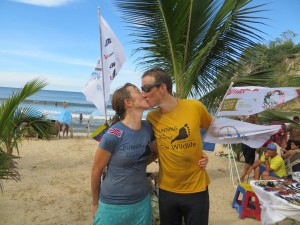
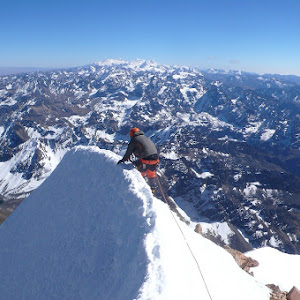
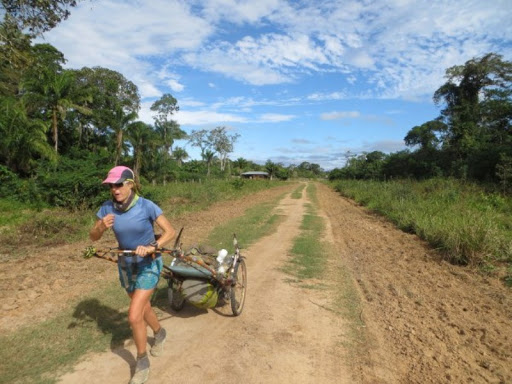
The team at impossible2Possible are getting ready to do it again. Their latest youth expedition is preparing to get underway in the Atacama Desert of Northern Chile. This time, a team of five i2P Youth Ambassadors will attempt to run a marathon a day, for six days, across the driest desert on the planet. As is usually the case with this organization, there will also be a strong educational aspect, as the young men and women making the run, look to inspire others through adventure.
The team is already in the Atacama, and en route to their starting point. They should start running in the next day or two, working their way through one of the most arid environments imaginable. But it isn't just the dry conditions that they'll have to endure. The Atacama also happens to sit at altitude, which means they'll need to acclimatize some along the way as well. The thin air can make running a challenge, even for the very fit.
The Atacama Youth Ambassadors have come from all over the globe to take part in this adventure. They include Jesus Perez from the U.S.; Alessandro Aime from Italy; Valerie Gagne and Stephen Lambert, both from Canada; and Florence Reyonolds of New Zealand.
The team will be following a route that i2P founder Ray Zahab ran back in 2011, when he covered 1200 km (745 miles) of the Atacama. They'll have a support team assisting them along the way, carrying some the gear for their camps and providing them with food and water while they are out on the trail.
One of the key goals for i2P is to inspire and educate young people through the use of adventure. When ever the organization sends an expedition into the field, it always coordinates with students and teachers in classrooms to provide interesting lesson plans that connect to the expedition that is underway. This time out, the focus of those lesson plans are astronomy and the origins of the Universe. The Atacama has some of the clearest skies on the planet, which is why there are several high tech observatories there. Over the next few days, the i2P Youth Ambassadors will provide lessons on a host of topics, including basic Newtonian physics, the planets, stars, galaxies and black holes, and a host of other subjects. Having witnessed the night skies in the Atacama first hand, I can tell you that they are awe inspiring, and very humbling.
I'll post updates of the Atacama Expedition as it unfolds, but if you want to follow along with the team, you'll find daily updates by clicking here.
Good luck to the i2P squad as they set out on this latest adventure.
Showing posts with label South America. Show all posts
Tuesday, May 13, 2014
Thursday, April 17, 2014
National Geographic Presents 50 Tours Of A Lifetime For 2014
Earlier this week, National Geographic Traveler has released their annual selection of their Tours of a Lifetime, giving us 50 more amazing trips that we can take in our never-ending quest to explore the world. As in years past, the 2014 edition of this list offers some amazing tours, offered by some of the best adventure travel companies in the world, that anyone of us can book today. Provided we have enough money that is.
As usual, Nat Geo has broken down their selections by geographic categories. That means you'll find options for travel in Africa, Asia, Central and South America, Europe, North America, and the South Pacific and Oceania. This makes it incredibly easy to find new options for travel in a favorite region, or look for options for some place you've never been before. Each of the regions have a plethora of unique trips to choose from, offering up a wide range of choices that any world traveler will appreciate.
The editors of the magazine look for unique offerings that also align nicely with the organization's mission of immersing us in diverse cultures and delivering experiences that can't necessarily be found anywhere else. For instance, for those wanting to visit Africa, one of the suggestions is a trip to Namibia, offered by a company called Adventures in Africa, that sends you off to the Namib Desert to track endangered black rhinos and elephants that have adapted to living in that incredibly dry place. In Asia, there is an excursion from Wild Frontier Travel that takes you along the Trans-Himalaya Highway in India and another from Explore! that take travelers into Iraq (don't ask me why the Middle East falls under the Asia category). Have dreams of South America instead? How about going on a Jaguar safari in Brazil with Wild Planet Adventures?
There truly is something here for everyone, no matter what your style of travel or how you define "adventure." It is certainly fun to read this list and dream about all the possibilities. Of course, not all of them fall into the affordable category, at least not for most of us. Make no mistake, there are certainly some inexpensive trips to be had on this list, but others are quite expensive, putting them well out of there reach of the average traveler. Still, these suggestions are also a good launching point for hatching ideas for our own travels. While Nat Geo's specific suggestions may not always be friendly to our bank accounts, they do allow us to seek other options that are.
As usual, Nat Geo has broken down their selections by geographic categories. That means you'll find options for travel in Africa, Asia, Central and South America, Europe, North America, and the South Pacific and Oceania. This makes it incredibly easy to find new options for travel in a favorite region, or look for options for some place you've never been before. Each of the regions have a plethora of unique trips to choose from, offering up a wide range of choices that any world traveler will appreciate.
The editors of the magazine look for unique offerings that also align nicely with the organization's mission of immersing us in diverse cultures and delivering experiences that can't necessarily be found anywhere else. For instance, for those wanting to visit Africa, one of the suggestions is a trip to Namibia, offered by a company called Adventures in Africa, that sends you off to the Namib Desert to track endangered black rhinos and elephants that have adapted to living in that incredibly dry place. In Asia, there is an excursion from Wild Frontier Travel that takes you along the Trans-Himalaya Highway in India and another from Explore! that take travelers into Iraq (don't ask me why the Middle East falls under the Asia category). Have dreams of South America instead? How about going on a Jaguar safari in Brazil with Wild Planet Adventures?
There truly is something here for everyone, no matter what your style of travel or how you define "adventure." It is certainly fun to read this list and dream about all the possibilities. Of course, not all of them fall into the affordable category, at least not for most of us. Make no mistake, there are certainly some inexpensive trips to be had on this list, but others are quite expensive, putting them well out of there reach of the average traveler. Still, these suggestions are also a good launching point for hatching ideas for our own travels. While Nat Geo's specific suggestions may not always be friendly to our bank accounts, they do allow us to seek other options that are.
Friday, April 11, 2014
Video: Climbers Discover Massive Cave System In Colombia
Here's an interesting video that I came across over at the Adventure Journal. It tells the tale of Gabriel Rubiano Groot and a team of climbers and slackliners, who have discovered an massive new cave system hidden in the Colombian mountains. The problem is, the cave is located near the town of Florián, which has long been part of the drug trade. It's a fascinating story that makes you wonder what other hidden gems are out there, just waiting to be found.
Justification for Wanderlust: Gabo's Story from Where?Next on Vimeo.
Monday, March 31, 2014
Video: Mountain Biking Peru, GoPro Style
If you need further proof that the mountain biking in Peru is spectacular, than look no further than this video. It features Ali Goulet, Chris Van Dine and Aaron Chase on an adventure in the South American country that was captured on GoPro of course. The 4-minute clip is a bit older, but still a fantastic look at mountain biking in the Andes.
Friday, March 21, 2014
Kayaking Around South America: Freya Hoffmeister Closes In On Finish
It has been quite awhile since we last checked in on Freya Hoffmeister, the long distance kayaking queen. If you're familiar with Freya, you probably already know that she is the first woman to kayak solo around Australia and is in the midst of attempting her second contingent by paddling completely around South America too. She's been working on that project for some time, and while she still has quite a ways to go before she is done, she is edging ever closer to completing that epic paddle as well.
As of now Freya is 630 days into the expedition and currently she is in Punta de Pesqueiro, Brazil. Considering the fact that she launched this journey from Buenos Aires, Argentina in August of 2011, I'd say she has made considerable progress. She has been traveling in a clockwise direction around the continent since that time, braving the treacherous waters of the Drake Passage, paddling solo up the west coast, and even passing through the Panama Canal.
During that time, she has taken a couple of breaks, flown home to Germany to rest, regroup and refocus. But she has always returned to the water and remained dedicated to completing this epic project. It seems she's in the stretch run now however, as she makes the final push toward a return to Buenos Aires, where the entire journey began.
At the moment, Freya is resting her weary body before returning to the water. She'll then head to Sao Luis, which will be her next major stopping point. She still faces a few months of paddling before she wraps up the expedition altogether, but the end is somewhat in sight, even if it is still a bit distant. With thousands of miles of kayaking now behind her, and hundreds yet to go, I'm sure Freya is focused on the finish line, and eager to be done, but the final push is going to require her to stay tough and power through the final weeks. That is something we know she is more than capable of doing.
I'll keep a close watch on Freya's final push toward the end, and of course let everyone know as she approaches Buenos Aires. As I mentioned, it's still some time off, but considering the distances she's already covered, it seems that her finishing the expedition is just an inevitability at this point.
As of now Freya is 630 days into the expedition and currently she is in Punta de Pesqueiro, Brazil. Considering the fact that she launched this journey from Buenos Aires, Argentina in August of 2011, I'd say she has made considerable progress. She has been traveling in a clockwise direction around the continent since that time, braving the treacherous waters of the Drake Passage, paddling solo up the west coast, and even passing through the Panama Canal.
During that time, she has taken a couple of breaks, flown home to Germany to rest, regroup and refocus. But she has always returned to the water and remained dedicated to completing this epic project. It seems she's in the stretch run now however, as she makes the final push toward a return to Buenos Aires, where the entire journey began.
At the moment, Freya is resting her weary body before returning to the water. She'll then head to Sao Luis, which will be her next major stopping point. She still faces a few months of paddling before she wraps up the expedition altogether, but the end is somewhat in sight, even if it is still a bit distant. With thousands of miles of kayaking now behind her, and hundreds yet to go, I'm sure Freya is focused on the finish line, and eager to be done, but the final push is going to require her to stay tough and power through the final weeks. That is something we know she is more than capable of doing.
I'll keep a close watch on Freya's final push toward the end, and of course let everyone know as she approaches Buenos Aires. As I mentioned, it's still some time off, but considering the distances she's already covered, it seems that her finishing the expedition is just an inevitability at this point.
Tuesday, February 18, 2014
New Farthest Source Of The Amazon Discovered
Researchers say they have located a new source for the Amazon River and possibly adding an additional 47-57 miles to its overall length, which already extends beyond 4000 miles. But, with all things exploration related in the 21st century, there is some controversy as to whether or not this new location should actually be considered as a tributary for the longest river on the planet.
Since 1971, the Apurimac River has been considered the furthest source of the Amazon, and many explorers and adventurers have operated in the region under that assumption. According to this new report however, the Mantaro River, located in southwest Peru, now holds that distinction.
The researchers who have asserted that the Mantaro is the new source used satellite imagery and topographic maps to study the Amazon and it's numerous tributaries. With GPS tracking points, the team determined that the Mantaro is actually about 10% longer than the Apurimac, which would make the furthest source.
But as I mentioned, there is some controversy afoot. The Mantaro doesn't flow for parts of the year, thanks to a dam that was built in 1974. When defining a "source," most geographers feel that a river must flow uninterrupted. The researchers behind this new finding say that the Mantaro would flow all year if it wasn't for the dam.
Does it really matter where the true source is located? Most would probably say no. But if you're one of the many adventurers who has attempted to travel the length of the river, or explored the Amazon Basin, it means quite a lot. This revelation could invalidate certain past expeditions that paddled the entire river for instance.
Personally, I happen to enjoy that we're still discovering things about our own planet. It is stories like this one that remind us that exploration is important, even in the 21st century. Now, who wants to be the first to go upstream and actually visit the source? I'm in!
Since 1971, the Apurimac River has been considered the furthest source of the Amazon, and many explorers and adventurers have operated in the region under that assumption. According to this new report however, the Mantaro River, located in southwest Peru, now holds that distinction.
The researchers who have asserted that the Mantaro is the new source used satellite imagery and topographic maps to study the Amazon and it's numerous tributaries. With GPS tracking points, the team determined that the Mantaro is actually about 10% longer than the Apurimac, which would make the furthest source.
But as I mentioned, there is some controversy afoot. The Mantaro doesn't flow for parts of the year, thanks to a dam that was built in 1974. When defining a "source," most geographers feel that a river must flow uninterrupted. The researchers behind this new finding say that the Mantaro would flow all year if it wasn't for the dam.
Does it really matter where the true source is located? Most would probably say no. But if you're one of the many adventurers who has attempted to travel the length of the river, or explored the Amazon Basin, it means quite a lot. This revelation could invalidate certain past expeditions that paddled the entire river for instance.
Personally, I happen to enjoy that we're still discovering things about our own planet. It is stories like this one that remind us that exploration is important, even in the 21st century. Now, who wants to be the first to go upstream and actually visit the source? I'm in!
Wednesday, January 22, 2014
Activists To Launch 15,000 Mile, 5-Month Road Trip To Promote Clean Drinking Water In Americas
Two adventurers are preparing to launch what promises to be an epic road trip adventure across the Americas in an effort to promote clean drinking water initiatives in that part of the world. Later his week, American Paul Cebul and German Steffen Mueller will embark on a five-month long journey that will cross 15 countries and culminate in Rio de Janeiro in time for the World Cup in July.
Cebul and Mueller will set out from Boston on Saturday and begin heading south. Their trip will take them across the U.S., into Mexico and then on into Central America. Eventually, they'll cross over the Panama Canal and move into South America, before eventually reaching Rio around July 13. Along the way, they'll pass through 70 different cities and visit an estimated 65 colleges and universities as they spread their message about the importance of clean drinking water, particularly in developing countries.
The two men are calling their expedition Water for the Americas, and while they have a website set up to support their initiatives, the site doesn't offer a lot of information at this time. Hopefully they'll update it before they hit the road, allowing us to follow their progress and adventures as they go.
Clean drinking water is one of the hot button topics across the globe right now. While most developed nations don't struggle with having water to drink, poorer nations have a difficult time, especially as climate change begins to take its toll on the environment. Cebul and Mueller hope to educate people about this issue, particularly in nations that are being most hard hit.
While I applaud their efforts, this sounds like just an excuse to make a months long road trip to the World Cup. I kid! I kid!
Cebul and Mueller will set out from Boston on Saturday and begin heading south. Their trip will take them across the U.S., into Mexico and then on into Central America. Eventually, they'll cross over the Panama Canal and move into South America, before eventually reaching Rio around July 13. Along the way, they'll pass through 70 different cities and visit an estimated 65 colleges and universities as they spread their message about the importance of clean drinking water, particularly in developing countries.
The two men are calling their expedition Water for the Americas, and while they have a website set up to support their initiatives, the site doesn't offer a lot of information at this time. Hopefully they'll update it before they hit the road, allowing us to follow their progress and adventures as they go.
Clean drinking water is one of the hot button topics across the globe right now. While most developed nations don't struggle with having water to drink, poorer nations have a difficult time, especially as climate change begins to take its toll on the environment. Cebul and Mueller hope to educate people about this issue, particularly in nations that are being most hard hit.
While I applaud their efforts, this sounds like just an excuse to make a months long road trip to the World Cup. I kid! I kid!
Wednesday, January 8, 2014
Video: Sunrise to Sunset In The Atacama Desert
Here's a brief, but very lovely, video that was shot in the Atacama Desert of northern Chile. It is a timelapse that captures the movement of the skies from sunrise, to sunset, and back again in one of the most amazing environments on the planet. I can tell you from my visit to the Atacama, that the skies really do look like that. It was one of the most breathtaking night skies that I have ever seen, and definitely worth the trip for that view alone. Simply amazing.
Ancients from Nicholas Buer on Vimeo.
Tuesday, October 29, 2013
Blind Adventurer Erik Weihenmayer Temporarily Detained In Peru
Blind adventurer Erik Weihenmayer found himself in an odd situation a few days back. Canoe & Kayak magazine is reporting that Erik was detained by locals in Peru while kayaking down the Marañón River, one of the main tributaries of the Amazon River. Weihenmayer is in South America with a group of 20 paddlers training for an attempt on the Grand Canyon next year and the team was mistaken for a group of scouts looking for suitable locations to build a dam on the Marañón. This is a highly controversial plan in Peru that has many of the locals up in arms.
According to the C&K report, the kayaking team was held overnight after being confronted by locals who warned them if they had proceeded further down river they would have been met by hostile villagers at the next location. Fortunately, the situation was resolved when it was revealed the paddling team's leader – James “Rocky” Contos – is a conservationist who is campaigning against damming efforts and has even made a film about the situation.
Weihenmayer is best known as the first blind person to summit Everest, but if you check out his website, you'll see that is just one of his many adventures. Erik has also climbed the rest of the Seven Summits, raced in the Leadville 100, competed in marathons and adventure races and a host of other activities.
After it was determined that the paddlers were not part of a dam survey team they were allowed to go on their way. But the situation underscores how passionate many Peruvians are about this topic. Commercial organizations have reportedly identified 20 locations to build a dam on the river, which will substantially alter its course and the landscapes around it.
These kinds of water rights issues are major points of contentions in South America at the moment. Chile is also facing similar resistance to several of it's rivers as well.
According to the C&K report, the kayaking team was held overnight after being confronted by locals who warned them if they had proceeded further down river they would have been met by hostile villagers at the next location. Fortunately, the situation was resolved when it was revealed the paddling team's leader – James “Rocky” Contos – is a conservationist who is campaigning against damming efforts and has even made a film about the situation.
Weihenmayer is best known as the first blind person to summit Everest, but if you check out his website, you'll see that is just one of his many adventures. Erik has also climbed the rest of the Seven Summits, raced in the Leadville 100, competed in marathons and adventure races and a host of other activities.
After it was determined that the paddlers were not part of a dam survey team they were allowed to go on their way. But the situation underscores how passionate many Peruvians are about this topic. Commercial organizations have reportedly identified 20 locations to build a dam on the river, which will substantially alter its course and the landscapes around it.
These kinds of water rights issues are major points of contentions in South America at the moment. Chile is also facing similar resistance to several of it's rivers as well.
Tuesday, October 22, 2013
Couple Completes 6500 Mile Run Across South America
A couple of months back I wrote a story about David and Katharine Lowrie, a husband and wife team who were running the length of South America, south to north. The couple set out in July of last year with the intention of running 5000 miles (8046 km) along their planned route. Yesterday they announced that they had completed the run, reaching the Caribbean Sea in Carupano, Venezuela. The actual distance they ran? An astounding 6504 miles (10,467 km)!
The run, which David and Katharine had dubbed the 5000 Mile Project, began in Punta Arenas, Chile, the southernmost town on the continent. From there, they began traveling north, passing out of Chile and moving into Argentina, Bolivia, Brazil and finally Venezuela. Along the way, they passed over the Andes Mountains and through the Amazon Rainforest, two natural obstacles that are daunting under any circumstances.
As if running 6500 miles across a continent isn't an impressive accomplishment on its own, the couple also managed to launch their Big Toe Classroom along the way as well. This portion of their website is filled with lesson plans and other educational tools for teachers. These free resources are designed for 7-11 year olds and were created to help them learn more about South America and the plants and animals that live there.
All told, it took David and Katherine 14 months, 23 days, 19 hours and 24 minutes to run from the southern tip of the continent to the northern coastline in Venezuela. That's a lot of time on the road and I'm sure they are relived to be done.
Congratulations to the Lowrie's on the completion of an impressive expedition. Well done!
The run, which David and Katharine had dubbed the 5000 Mile Project, began in Punta Arenas, Chile, the southernmost town on the continent. From there, they began traveling north, passing out of Chile and moving into Argentina, Bolivia, Brazil and finally Venezuela. Along the way, they passed over the Andes Mountains and through the Amazon Rainforest, two natural obstacles that are daunting under any circumstances.
As if running 6500 miles across a continent isn't an impressive accomplishment on its own, the couple also managed to launch their Big Toe Classroom along the way as well. This portion of their website is filled with lesson plans and other educational tools for teachers. These free resources are designed for 7-11 year olds and were created to help them learn more about South America and the plants and animals that live there.
All told, it took David and Katherine 14 months, 23 days, 19 hours and 24 minutes to run from the southern tip of the continent to the northern coastline in Venezuela. That's a lot of time on the road and I'm sure they are relived to be done.
Congratulations to the Lowrie's on the completion of an impressive expedition. Well done!
Wednesday, September 18, 2013
Update: Long Rider Completes Ride Across Americas
Last month I posted the story of Guenter Wamser, a German long rider who was nearing the end of a journey that spanned two continents and has taken nearly 20 years to complete. Wamser began his journey back in 1994 at the southernmost tip of South America and he has been slowly making his way northward ever since. We I wrote that original piece he was deep in the Alaskan wilderness and was approaching the end of the trail. Now, a few short weeks later he has completed his ride at last, bringing an end to his Transhumanic expedition.
I received an email from Guenter yesterday informing me that he and his traveling companion Sonja Endweber, had wrapped up their journey a few days ago. Their travels came to an end when they reached the northernmost shores of North America, having covered more than 25,000 km (15,535 miles) in the process. In true long rider fashion, the first thought they had when wrapping up their ride was for their horses. Guenter told me that they had located a large pasture where they were going to let their mounts rest for a few days before they continue south to Canada where they'll spend the winter on a friends ranch.
That's about all I know about how they wrapped up their adventure, at least so far. Hopefully Guenter will post updates to his blog once he gets a chance. Even though the official ride is over, remember that he and Sonja are still deep in the Alaskan backcountry. It'll take them some time before they get back to civilization. When they do, hopefully we'll learn a lot more about the final days of this amazing journey.
Congratulations to Guenter and Sonja for wrapping up this impressive ride. It is a testament to Guneter's determination and spirit of adventure that he never lost site of his goal, even as his focus became more about the journey and less about the destination. We could all learn a little something from that.
I received an email from Guenter yesterday informing me that he and his traveling companion Sonja Endweber, had wrapped up their journey a few days ago. Their travels came to an end when they reached the northernmost shores of North America, having covered more than 25,000 km (15,535 miles) in the process. In true long rider fashion, the first thought they had when wrapping up their ride was for their horses. Guenter told me that they had located a large pasture where they were going to let their mounts rest for a few days before they continue south to Canada where they'll spend the winter on a friends ranch.
That's about all I know about how they wrapped up their adventure, at least so far. Hopefully Guenter will post updates to his blog once he gets a chance. Even though the official ride is over, remember that he and Sonja are still deep in the Alaskan backcountry. It'll take them some time before they get back to civilization. When they do, hopefully we'll learn a lot more about the final days of this amazing journey.
Congratulations to Guenter and Sonja for wrapping up this impressive ride. It is a testament to Guneter's determination and spirit of adventure that he never lost site of his goal, even as his focus became more about the journey and less about the destination. We could all learn a little something from that.
Friday, September 6, 2013
Argentinian Climber Attempting All 6000 Meter Peaks In South America
Earlier this week ExWeb posted a remarkable story about Argentinian climber Maximo Kausch who has set a goal for himself to climb all of the 6000-meter peaks (19685 ft) in South America. The idea for this massive undertaking sprang from an expedition on Cho Oyu that Maximo led a few years back and upon returning home he decided that he wanted to continue climbing as much as possible. That led to him coming up with the concept of tackling all of the 6000 meter mountains, although at the time he had no idea what he was getting himself into.
The first obstacle that Max had to overcome was finding out just how many of these mountains were in the Andes. He thought that there might be as many as 50 when he announced his plans but research later revealed that there were 118 6000-meter peaks on his list. He had to use a combination of satellite mapping, data from NASA and Google Maps to locate all of the mountains, some of which are located in very remote places and have as many as 4 or 5 names. It took him three years just to compile all of the data he needed to begin the project.
After that, he was ready to set out but needed reliable transportation to get him to and from the mountains. He decided to use a motorcycle to get from one base camp to the next but he first had to overcome yet another obstacle – he had never ridden a motorcycle before in his life. Once he managed to master the bike, he was off and running and has been climbing ever since. He now spends about 8-9 months of the year climbing in the Andes. Sometimes he'll bag several peaks in a single week and on occasion he'll get two in a day. He tells ExWeb that he is mostly homeless right now while he pursues this challenge.
While climbing Max has made some interesting discoveries along the way as well. On more than one occasion he has come across Incan ruins on his way up to the summit. In one case he even discovered a large structure 60 meters square (197 feet) at the summit of one of the 6000-meter mountains. What exactly the structure was used for and what else remains at the site is a mystery.
You have to hand it to him, Maximo sure knows how to pick a challenge. The Andes offer plenty of great climbing and before he's done, he'll have seen most of it. At the point the story was submitted he said that he still has 57 mountains to go, so he's a little over halfway to his goal. If he achieves this, it'll certainly be quite an accomplishment.
The first obstacle that Max had to overcome was finding out just how many of these mountains were in the Andes. He thought that there might be as many as 50 when he announced his plans but research later revealed that there were 118 6000-meter peaks on his list. He had to use a combination of satellite mapping, data from NASA and Google Maps to locate all of the mountains, some of which are located in very remote places and have as many as 4 or 5 names. It took him three years just to compile all of the data he needed to begin the project.
After that, he was ready to set out but needed reliable transportation to get him to and from the mountains. He decided to use a motorcycle to get from one base camp to the next but he first had to overcome yet another obstacle – he had never ridden a motorcycle before in his life. Once he managed to master the bike, he was off and running and has been climbing ever since. He now spends about 8-9 months of the year climbing in the Andes. Sometimes he'll bag several peaks in a single week and on occasion he'll get two in a day. He tells ExWeb that he is mostly homeless right now while he pursues this challenge.
While climbing Max has made some interesting discoveries along the way as well. On more than one occasion he has come across Incan ruins on his way up to the summit. In one case he even discovered a large structure 60 meters square (197 feet) at the summit of one of the 6000-meter mountains. What exactly the structure was used for and what else remains at the site is a mystery.
You have to hand it to him, Maximo sure knows how to pick a challenge. The Andes offer plenty of great climbing and before he's done, he'll have seen most of it. At the point the story was submitted he said that he still has 57 mountains to go, so he's a little over halfway to his goal. If he achieves this, it'll certainly be quite an accomplishment.
Friday, August 23, 2013
5000 Mile Project: Couple Running The Length Of South America
On July 28, David and Katharine Lowrie set out on a run like no other. The pair have hit the road to run the length of South America. Yes, you read that right. They are planning on running south to north across the entire continent and they're doing so to raise awareness and funds to protect the wildlife that lives in threatened areas there. Their expedition is aptly named the 5000 Mile Project, as that is the distance that they will cover before they are through. (That's roughly 8046 km for most of the world.)
The began their epic adventure last month by setting off from Punta Arenas, Chile, the southernmost settlement in South America. They'll now work their way north through Patagonia, crossing between Chile and Argentina as they go. Eventually they'll cross into Bolivia before continuing on to Brazil, where they'll face one of the biggest challenges to the expedition – a crossing of the Amazon Rainforest. If successful there, they'll emerge into Venezuela and finish the journey with a run to the Caribbean coast.
The Lowrie's hope to wrap up their journey approximately a year after they started. That seems rather ambitious considering the difficult miles that lie ahead. The couple aren't just out on the road running unencumbered. They're pulling specially designed carts behind them that carry all of their gear and supplies as well. David and Katharine are hoping to cover roughly the length of a marathon each day (26.2 miles/42.1 km), which is a challenge but highly feasible while on roads. But once they hit the Amazon, things will be completely different and much more difficult in general.
The husband and wife team have undertaken the 5000 Mile Project to raise funds for Asociacion Armonia, BirdLife International and Conservacion Patagonica. The hope is to collect enough money to help fund the purchase of threatened habitats in South America to protect the wildlife that lives there. As part of the project, they are also recording the various animals they see along their run including the many bird species that inhabit the continent.
Their efforts don't end there however. They've also launched the BigToe Classroom which contains lesson plans and projects for teachers to use with their students to get them engaged with conservation projects as well. There is even a way to contact David and Katharine and set up a video conference call with them directly from the road.
You can learn more about the 5000 Mile Project in an interview that the couple did with Explorers Web earlier in the week. You can also follow along with David and Katharine's blog or on Twitter and Facebook.
The began their epic adventure last month by setting off from Punta Arenas, Chile, the southernmost settlement in South America. They'll now work their way north through Patagonia, crossing between Chile and Argentina as they go. Eventually they'll cross into Bolivia before continuing on to Brazil, where they'll face one of the biggest challenges to the expedition – a crossing of the Amazon Rainforest. If successful there, they'll emerge into Venezuela and finish the journey with a run to the Caribbean coast.
The Lowrie's hope to wrap up their journey approximately a year after they started. That seems rather ambitious considering the difficult miles that lie ahead. The couple aren't just out on the road running unencumbered. They're pulling specially designed carts behind them that carry all of their gear and supplies as well. David and Katharine are hoping to cover roughly the length of a marathon each day (26.2 miles/42.1 km), which is a challenge but highly feasible while on roads. But once they hit the Amazon, things will be completely different and much more difficult in general.
The husband and wife team have undertaken the 5000 Mile Project to raise funds for Asociacion Armonia, BirdLife International and Conservacion Patagonica. The hope is to collect enough money to help fund the purchase of threatened habitats in South America to protect the wildlife that lives there. As part of the project, they are also recording the various animals they see along their run including the many bird species that inhabit the continent.
Their efforts don't end there however. They've also launched the BigToe Classroom which contains lesson plans and projects for teachers to use with their students to get them engaged with conservation projects as well. There is even a way to contact David and Katharine and set up a video conference call with them directly from the road.
You can learn more about the 5000 Mile Project in an interview that the couple did with Explorers Web earlier in the week. You can also follow along with David and Katharine's blog or on Twitter and Facebook.
Tuesday, August 20, 2013
Long Rider Nears End Of Epic Journey Across The Americas
German equestrian explorer Guenter Wamser is nearing the end of an epic journey on horseback that has covered more than 25,000 km (15,535 miles) and nearly two decades of his life. Back in 1994, Guenter set out from Patagonia on horseback with the intention or riding north to the very top of Alaska. Now, he is deep in the Alaskan backcountry and nearing the end of his expedition, which has become not just an adventure but a way of life.
Guenter has dubbed his wandering journey the Transhumanica expedition and over they years it has taken him to some wild and remote places. His path began in Argentina and wandered into Chile, Bolivia, Peru and Ecuador, carrying him to the top of South America, which he reached in 1999 after five years in the saddle. But the ride didn't end there. In 2001 the German set off once again, passing through Panama, Costa Rica, Nicaragua, Honduras, El Salvador, Guatemala and eventually Mexico which he reached in 2005.
The journey across Mexico was a long and rewarding one and reading Guenter's journal it is clear that he enjoyed his time there. But when he reached the border with the U.S. he ran into a bit of trouble. He seems that his horses had contracted a tropical disease on their journey and they were not allowed to enter the States. The horses were found a good home however and Guenter found new mounts in the form of four mustangs that he adoptedf rom the Bureau of Land Management. Those horses have been his companions through the final phase of his journey, a ride along the Continental Divide Trail.
In 2007 Guenter and his traveling companion Sonja Endlweber, began traveling north on the CDT, passing through New Mexico, Colorado, Wyoming and Montana before eventually passing into Canada. As of last fall, they were in the Yukon territory, where they settled in for the winter. Earlier this year they returned to the trail with an end in sight and while the two riders are currently out of contact somewhere in the Alaskan wilderness, they will soon reach the northern most point of that state, thus bringing an end to the ride at last.
In his journal, Guenter says that his journey started simply as an adventure with his focus on riding across the Americas. But along the way it became less about getting to a destination and more about exploring the landscapes he was passing through and interacting with the people and cultures that he connected with along the way. He adopted a nomadic life that was its own reward. What he'll do after this trail comes to an end remains to be seen, but after so many years traveling on horseback, I have to imagine it'll be a challenge to return to a "normal" life.
Guenter is one of the founding members of the Long Rider's Guild and as such his journey by horseback has been an exemplary one in terms of distance and time on the trail, but also for how he has treated the animals that have helped him along the way. His horses have been cared for very well and not treated simply as beasts of burden but as companions and partners who came along on this adventure like any other teammate. It is admirable that this incredible journey is soon coming to and end, but even more so that Guenter will complete it in such an ethical manner.
Thanks to my friend CuChullaine for sharing this wonderful and amazing story.
Guenter has dubbed his wandering journey the Transhumanica expedition and over they years it has taken him to some wild and remote places. His path began in Argentina and wandered into Chile, Bolivia, Peru and Ecuador, carrying him to the top of South America, which he reached in 1999 after five years in the saddle. But the ride didn't end there. In 2001 the German set off once again, passing through Panama, Costa Rica, Nicaragua, Honduras, El Salvador, Guatemala and eventually Mexico which he reached in 2005.
The journey across Mexico was a long and rewarding one and reading Guenter's journal it is clear that he enjoyed his time there. But when he reached the border with the U.S. he ran into a bit of trouble. He seems that his horses had contracted a tropical disease on their journey and they were not allowed to enter the States. The horses were found a good home however and Guenter found new mounts in the form of four mustangs that he adoptedf rom the Bureau of Land Management. Those horses have been his companions through the final phase of his journey, a ride along the Continental Divide Trail.
In 2007 Guenter and his traveling companion Sonja Endlweber, began traveling north on the CDT, passing through New Mexico, Colorado, Wyoming and Montana before eventually passing into Canada. As of last fall, they were in the Yukon territory, where they settled in for the winter. Earlier this year they returned to the trail with an end in sight and while the two riders are currently out of contact somewhere in the Alaskan wilderness, they will soon reach the northern most point of that state, thus bringing an end to the ride at last.
In his journal, Guenter says that his journey started simply as an adventure with his focus on riding across the Americas. But along the way it became less about getting to a destination and more about exploring the landscapes he was passing through and interacting with the people and cultures that he connected with along the way. He adopted a nomadic life that was its own reward. What he'll do after this trail comes to an end remains to be seen, but after so many years traveling on horseback, I have to imagine it'll be a challenge to return to a "normal" life.
Guenter is one of the founding members of the Long Rider's Guild and as such his journey by horseback has been an exemplary one in terms of distance and time on the trail, but also for how he has treated the animals that have helped him along the way. His horses have been cared for very well and not treated simply as beasts of burden but as companions and partners who came along on this adventure like any other teammate. It is admirable that this incredible journey is soon coming to and end, but even more so that Guenter will complete it in such an ethical manner.
Thanks to my friend CuChullaine for sharing this wonderful and amazing story.
Thursday, August 15, 2013
Freya Hoffmeister Continues Kayaking Expedition Around South America
Freya Hoffmeister, the queen of long distance paddling, has returned to South America and is planning on resuming her epic journey around that continent by kayak. If all goes according to plan, Freya will hit the water again tomorrow and resume a journey that has already consumed many months out on the water.
Freya arrived back in Colombia on Tuesday and is now preparing to return to the border between that country and Venezuela where she'll climb back into her boat and once again continue her journey. She has been back home in Germany since May and during that time she has gathered her strength, taken care of pressing business and generally been getting ready for the next leg of the journey. If all goes according to plan, she'll soon round the top of South America and start heading south, back to Buenos Aires where she first launched her expedition in September of 2011, early two years ago.
Initially Freya believed it would take 24 months for her to cover the 24,000 km (14,913 mile) circumnavigation of South America. She is rapidly closing in on that date and there is no way she can finish in the time frame that she has set for herself. She still has thousands of kilometers to go and plenty of challenges ahead. Nothing she can't handle of course, after all we are talking about a woman who managed to paddle around Australia a few years back. Yes, Australia.
If you want to follow Freya's progress as she turns for home, check out her blog, which she updates on an almost daily basis while paddling. Sometimes it's just to report her daily mileage and location and other times it's more in depth about what she is experiencing while out on the water.
Another impressive adventure. It looks like Freya will be on track to wrap up her expedition sometime later this year. There are some big challenge that remain but she is determined and razor focused. I know I'd certainly never underestimate those qualities in a German woman.
Freya arrived back in Colombia on Tuesday and is now preparing to return to the border between that country and Venezuela where she'll climb back into her boat and once again continue her journey. She has been back home in Germany since May and during that time she has gathered her strength, taken care of pressing business and generally been getting ready for the next leg of the journey. If all goes according to plan, she'll soon round the top of South America and start heading south, back to Buenos Aires where she first launched her expedition in September of 2011, early two years ago.
Initially Freya believed it would take 24 months for her to cover the 24,000 km (14,913 mile) circumnavigation of South America. She is rapidly closing in on that date and there is no way she can finish in the time frame that she has set for herself. She still has thousands of kilometers to go and plenty of challenges ahead. Nothing she can't handle of course, after all we are talking about a woman who managed to paddle around Australia a few years back. Yes, Australia.
If you want to follow Freya's progress as she turns for home, check out her blog, which she updates on an almost daily basis while paddling. Sometimes it's just to report her daily mileage and location and other times it's more in depth about what she is experiencing while out on the water.
Another impressive adventure. It looks like Freya will be on track to wrap up her expedition sometime later this year. There are some big challenge that remain but she is determined and razor focused. I know I'd certainly never underestimate those qualities in a German woman.
Tuesday, August 6, 2013
Video: Experience Imagination In South America
To truly get a sense of South America, filmmakers Clemens Krüger, Vincent Urban & Stefan Templer traveled its length in a classic Land Rover, wandering through Argentina, Chile, Bolivia, Paraguay and Brazil. Along the way they captured some striking images from road and compiled them in the amazing video you'll find below. Those images are sometimes haunting, sometimes enchanting and always compelling. I hope you enjoy it as much as I did. Really beautiful footage.
Friday, June 21, 2013
Video: Highlining In Venezuela's Lost World
Deep in a remote section of Venezuela is an area known as the Lost World. It is a wild and untamed place that is famous for its table-topped mountains, including Roraima, the inspiration for the fantastic Pixar film Up! Recently a team of climbers visited the Lost World where they filmed themselves highlining over some impressive open spaces. A teaser for what will presumably be a much longer film is below and it is spectacular.
Roraima is on my bucket list of places I'd like to go someday. Seeing this spectacular setting only gets me more interested in visiting the place. Oh, and the highlining is amazing too. Enjoy!
Venezuela Salto Angel Highline Expedition WEBTEASER from HALSUNDBEINBRUCH FILM on Vimeo.
Roraima is on my bucket list of places I'd like to go someday. Seeing this spectacular setting only gets me more interested in visiting the place. Oh, and the highlining is amazing too. Enjoy!
Thursday, May 23, 2013
Video: A Mountain Biking Adventure In Peru
If you're looking for yet another reason to visit Peru, check out this fantastic video which was shot on GoPro cameras by friends Ali Goulet, Chris Van Dine and Aaron Chase. The three men recenly visited the South American country where they had a chance to ride some gnarly mountain biking trails while interacting with the local culture. The result was this fine short film that may inspire you to want to follow in their tire tread.
Thursday, May 16, 2013
Video: Temporary Story - A Travel Doc That Spans 6 Months And 3 Continents
Filmmaker Vadim Sahaklan and a friend spent six months traveling through 13 countries on three continents. Along the way they documented their journey with a video camera and the result is the beautiful short film you'll find below. The two men first drove from Alaska to Los Angeles, then flew off to Africa to explore on foot, before ending their globe-trotting adventure on motorbikes in South America.
The 39-minute video manages to convey a fantastic sense of wonder and whimsey as Vadim and his friend visit some amazing places, learning more about themselves and the world around them as they go. This is definitely a video you won't want to miss. Excellent stuff.
Temporary Story from Vadim Sahakian on Vimeo.
The 39-minute video manages to convey a fantastic sense of wonder and whimsey as Vadim and his friend visit some amazing places, learning more about themselves and the world around them as they go. This is definitely a video you won't want to miss. Excellent stuff.
Friday, May 10, 2013
Video: Social Media Driven Epic Adventure In Peru
Peru is one of those countries that ever adventure traveler should visit at least once in their lifetime. Travel blogger Dan Moore recently discovered this for himself when he allowed the Facebook followers of Covermore travel insurance to dictate his entire trip, starting with the destination. Dan chronicled his travels using a GoPro camera and along the way he visited classic sites like Machu Picchu, the Nazca Lines and Lake Titicaca. The essence of his trip is captured in the video below, which is likely to inspire you to want to visit Peru too. Looks like he had a great time.
Subscribe to:
Posts (Atom)